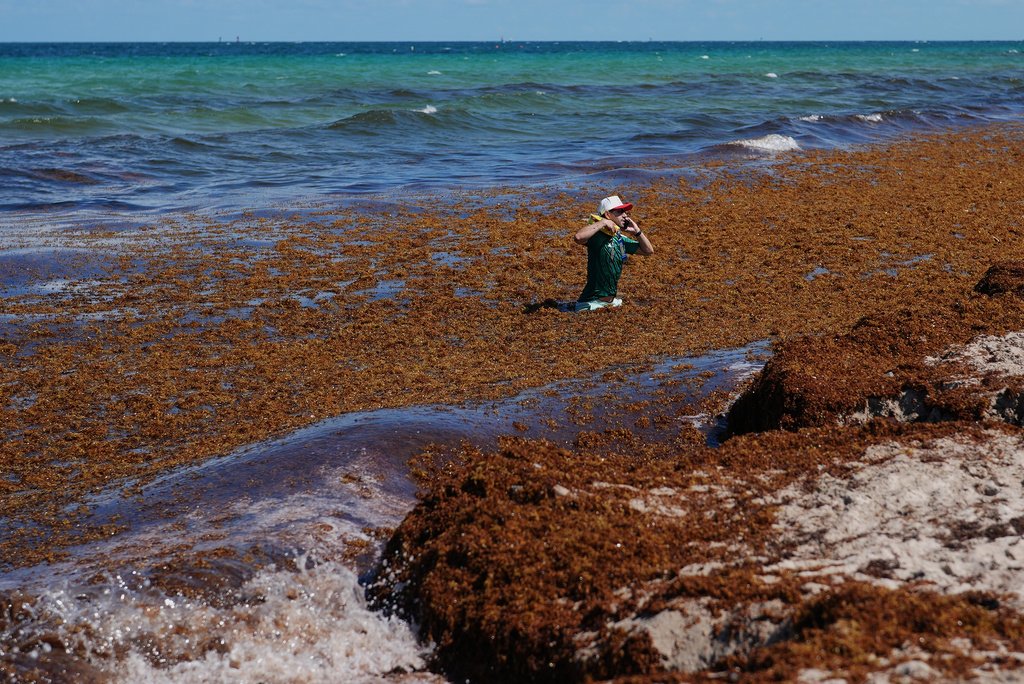
Florida’s beaches are being overwhelmed by a historic sargassum invasion, with nearly 29 million metric tons of the foul-smelling seaweed washing ashore from Miami to the Panhandle. The University of South Florida’s Optical Oceanography Lab reports that the bloom, already near record levels, is expected to intensify through June, posing serious environmental and health risks.
The seaweed, which rots on land releasing hydrogen sulfide and ammonia, creates a stench likened to rotten eggs and can trigger respiratory issues, nausea, and headaches. The Florida Department of Health warns against swimming in or touching the mats, which also harbor stinging organisms and leach pollutants like pesticides and heavy metals. Cleanup crews face particular hazards, as prolonged exposure can lead to memory loss and confusion.

Researchers tracking the bloom predict that Texas and Louisiana will be the next states hit, as currents push the sargassum deeper into the Gulf of Mexico. “The year of 2026 is set to be another major Sargassum year,” they noted, “and possibly to be a record year by summer 2026.” The prediction underscores a growing pattern of massive seaweed events linked to nutrient runoff and warming waters.
The crisis has already sparked political and economic concerns in coastal communities. In Florida, where tourism is a key industry, the influx threatens to disrupt summer travel and local business. The state’s Supreme Court recently cleared a GOP-drawn congressional map, but the sargassum issue now adds environmental pressure to the political agenda.
Beyond Florida, the impending arrival in Texas and Louisiana could strain resources in states already grappling with inflation outpacing wages for many middle-class families. Local governments may face tough choices on cleanup funding and public health measures.
Environmental advocates are calling for federal intervention, arguing that the scale of the bloom—exacerbated by agricultural runoff and climate change—demands a coordinated response. The EPA has flagged sargassum’s pollutant-leaching properties, but no national strategy is in place.
For now, beachgoers are advised to keep their distance, and residents near the coast are urged to seal windows to avoid the stench. As the seaweed tide rises, the question is whether Gulf states can mount an effective defense before the next wave hits.