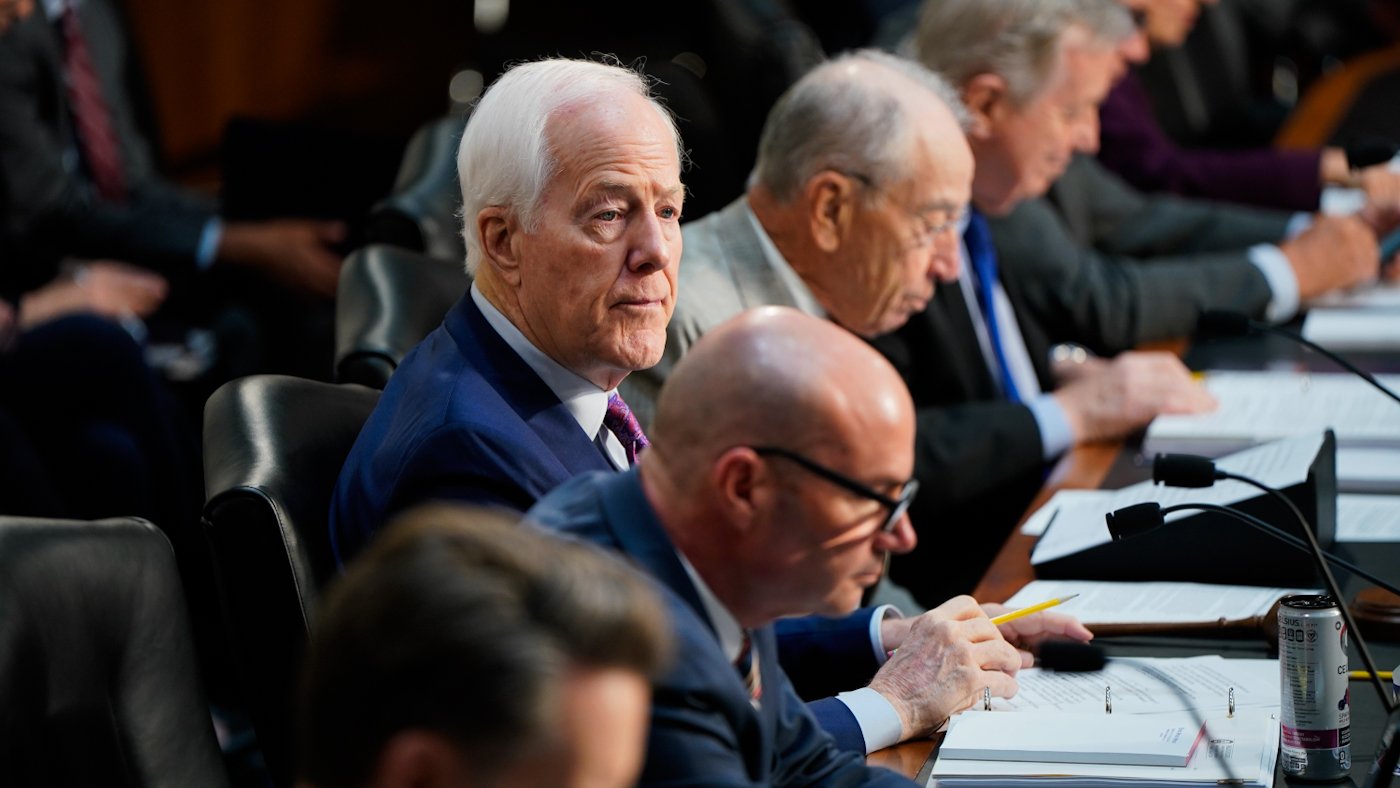
The Senate Judiciary Committee voted along party lines Tuesday to advance Todd Blanche's nomination to be attorney general, setting up a floor vote after Blanche struck a deal with two Republican holdouts over a controversial fund. The 12-10 vote came after Blanche signed an order rescinding the $1.776 billion “anti-weaponization” fund, a move that won over Sens. John Cornyn (R-Texas) and Thom Tillis (R-N.C.), both of whom are leaving Congress at year's end.
But the committee's morning session was dominated by Democrats who argued the agreement was riddled with loopholes, leaving the fund and a separate immunity deal vulnerable to revival. Sen. Sheldon Whitehouse (D-R.I.) dismissed the documents as “decorative,” saying they “have no legal effect whatsoever.” Sen. Dick Durbin (D-Ill.), the panel's top Democrat, noted that the rescission order was not signed by the parties to the underlying settlement and could be overturned by the president.
“To state the obvious, Mr. Blanche’s statement on the slush fund and the IRS immunity agreement are not signed by the parties to the settlement agreement and are therefore unenforceable,” Durbin said. “The parties could still sue to enforce the agreement, and the cop beaters fund can easily be revived with a new order from the Department of Justice 15 minutes after Mr. Blanche is confirmed as attorney general. Indeed, the president himself has loudly telegraphed that’s his plan.”
The deal also leaves intact a memo granting sweeping immunity to Trump, his adult children, and their business from government investigations into past conduct, including IRS matters. Sen. Cory Booker (D-N.J.) quipped, “It’s hard for me to say this as a plant-based guy, but where’s the beef?” He added, “We got nothing, no guarantees whatsoever that this slush fund still can’t go forward. We got nothing that the president of the United States can’t cheat on his taxes and have no accountability.”
Cornyn defended the agreement, saying his insistence on a signed order was not “nitpicking,” and expressed confidence that the DOJ would honor the fund's termination in future litigation. “They’ve been consistent about their assertion on behalf of the United States of America that [the] weaponization fund is dead,” he said. “We need a stabilizing force at the Department of Justice, and Mr. Blanche deserves the opportunity to provide that.” Tillis echoed that sentiment, saying he was “satisfied” that the fund—which he called a “payout for punks”—was rescinded.
Democrats, however, implied the two Republicans had been outmaneuvered. Sen. Chris Coons (D-Del.) questioned why Cornyn would trust that the fund is dead when the Justice Department has not affirmed that in pending litigation. Trump's legal team recently appealed a ruling critical of his IRS suit as collusive. “Nothing would stop him from doing just that,” Coons said of Blanche potentially revoking the order once confirmed.
The full Senate vote remains uncertain, with several Republicans uncommitted, including Sens. Susan Collins (Maine) and Lisa Murkowski (Alaska). Others, such as Sens. Bill Cassidy (R-La.), Jon Husted (R-Ohio), and John Curtis (R-Utah), have also declined to state their positions. The Blanche nomination has faced hurdles despite the Cornyn-Tillis pact, and Trump has threatened to revive the fund if Blanche is not confirmed.
Meanwhile, the broader legislative calendar is crowded, with a stopgap spending bill and other priorities competing for floor time. Majority Leader John Thune has a packed week ahead, balancing budget votes and the Blanche fight. The confirmation vote could come as early as this week, but the outcome is far from certain given the narrow margin in the Senate.