The Senate on Monday cleared a continuing resolution with overwhelming bipartisan support, funding the government at current levels through December 11 and temporarily averting a shutdown just weeks before the midterm elections. The vote marked a notable departure from the partisan standoffs that produced record-breaking closures in recent years, as Democrats largely embraced the measure despite opposing similar short-term patches under President Trump.
Only three members of the Democratic caucus—Sens. Bernie Sanders (I-Vt.), Tim Kaine (D-Va.), and Elizabeth Warren (D-Mass.)—joined Republican Sen. Rand Paul in opposition. The lopsided tally reflected a shared desire among leaders in both parties to avoid a politically damaging funding lapse ahead of November, and to buy time for full-year appropriations negotiations after the elections.
Senate Majority Leader Chuck Schumer (D-N.Y.) and Appropriations Chair Susan Collins (R-Maine) brokered the deal, which includes a provision blocking a Trump administration rule that would give the Office of Management and Budget broad authority to approve or cancel federal grants. Democrats hailed that measure as a check on executive overreach, while Republicans downplayed its practical effect.
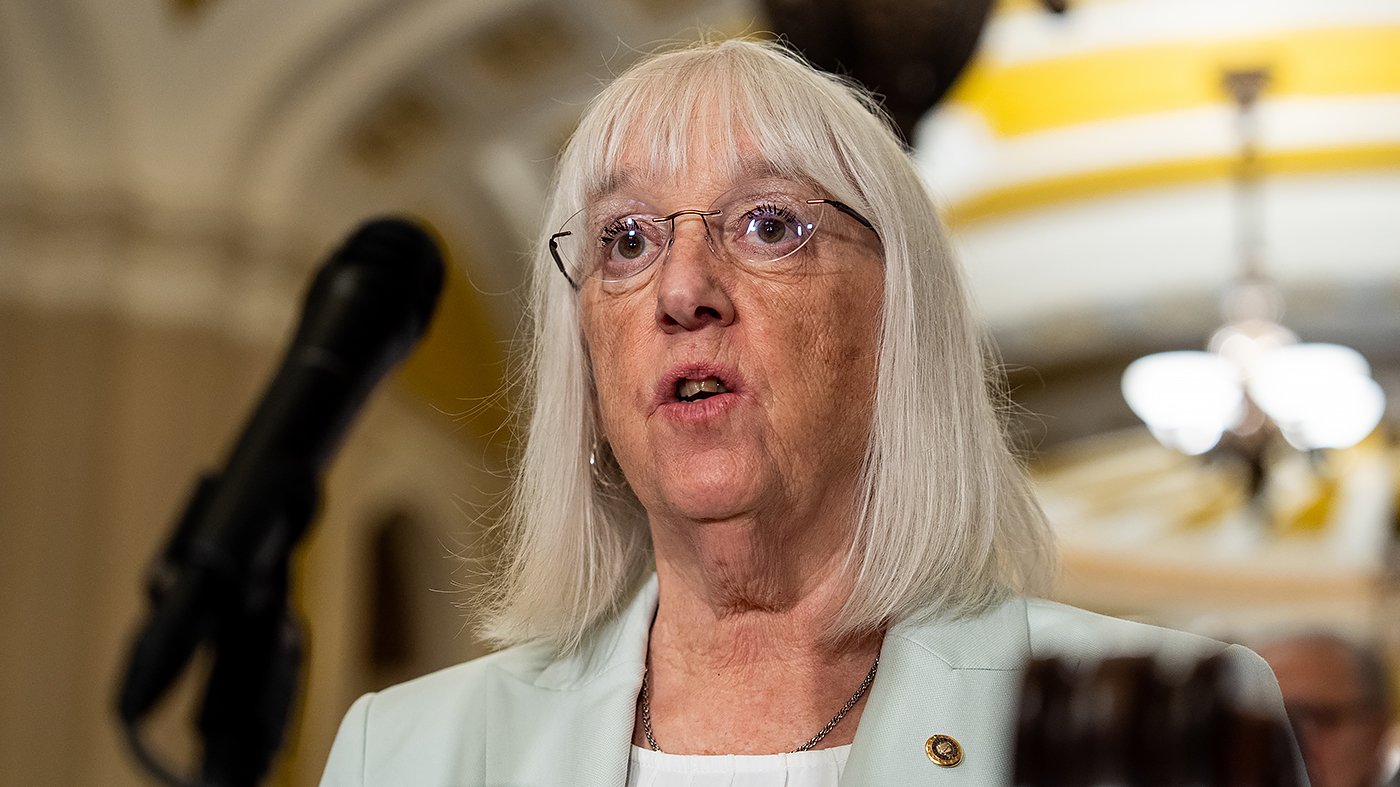
“I believe that we all want to make sure that we have good funding through December 11, and hopefully, we’ll be able to negotiate good bills once the elections are over,” said Sen. Patty Murray (D-Wash.), the top Democrat on the Appropriations Committee, who had pushed for the OMB restriction. She argued the rule would have allowed the administration to “take even more federal funding hostage” by conditioning grants on political alignment, and vowed to “fight like hell” to make the ban permanent.
Republicans pushed back on that narrative. Sen. John Kennedy (R-La.) said he had spoken with OMB Director Russell Vought, who assured him the rule wouldn’t take effect until after the stopgap expires anyway, rendering the provision a symbolic victory for Democrats. “I think Schumer got a lot out of the CR,” Kennedy told reporters. “I don’t think he got as much as he thinks he did.”
Collins, who faces a tough reelection fight in Maine, defended the inclusion of the OMB restriction, calling the rule “deeply flawed” and a threat to Congress’s spending authority. She noted that OMB was not pleased with the provision but said many senators felt strongly enough to insist on it.
Beyond the OMB fight, Democrats pointed to other wins in the stopgap: the absence of $1 billion Trump had sought for new battleships, and language preventing the administration from diverting already-appropriated funds toward immigration enforcement. Sen. Jacky Rosen (D-Nev.), who voted for the CR after opposing a similar measure in March, said the OMB ban was crucial to protecting federal grants for states that didn’t support Trump. “They have to stop doing that,” she said.
Yet the truce is likely temporary. Murray and Collins have yet to agree on a top-line spending number for fiscal year 2027, with Democrats seeking infrastructure investments to offset Republican demands for defense increases. As the Senate GOP spending bill stalls Trump’s bid to control scientific grants, the stage is set for a more contentious battle in December. Meanwhile, GOP senators threaten to hold up recess over voter ID and spending bills, complicating the already tight timeline.
With the House expected to take up the CR before the end of the week, lawmakers are eager to leave Washington for the campaign trail. But the reprieve may be short-lived, as Democrats see midterm opportunity, but internal divisions loom over how hard to push their spending priorities. For now, the bipartisan vote signals a pragmatic pause—but the underlying fiscal and political fault lines remain unresolved.