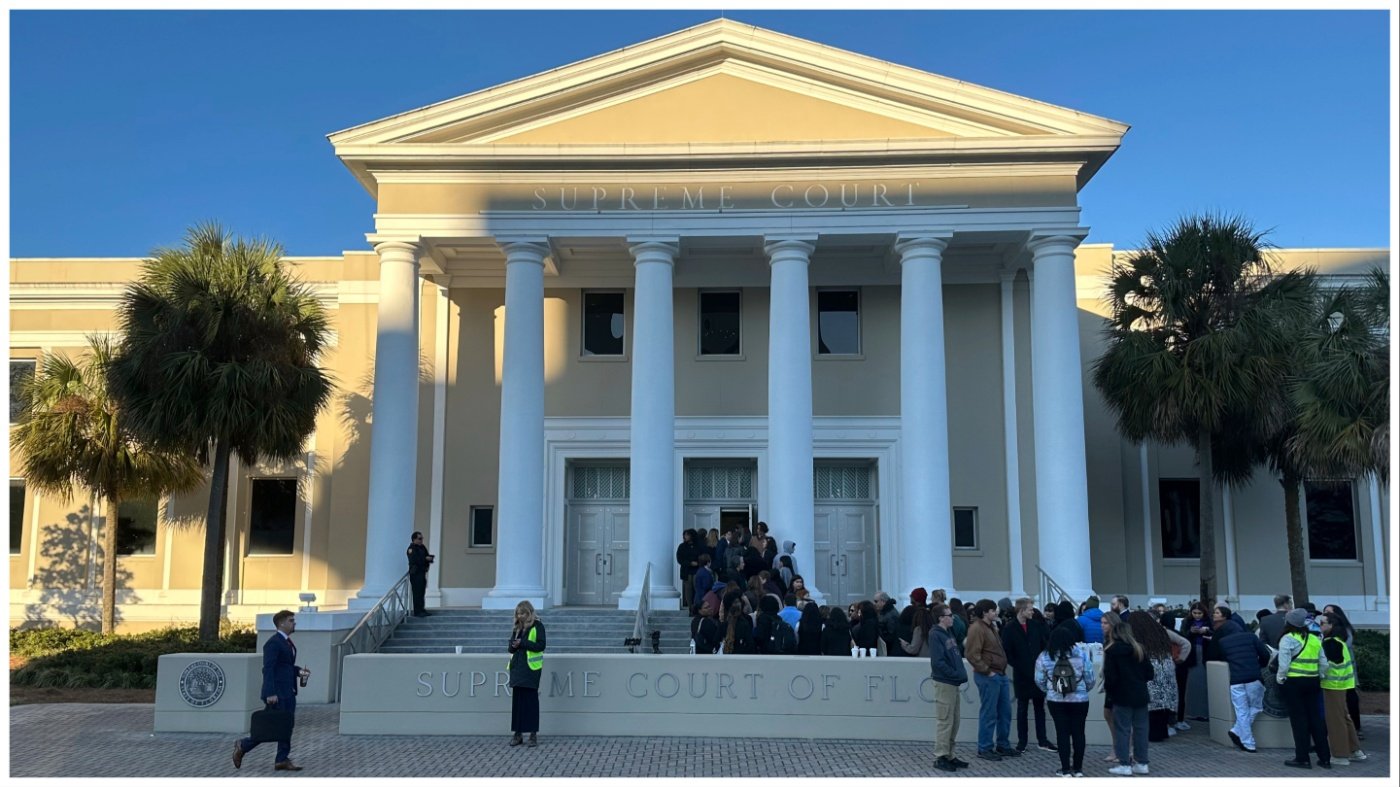
The Florida Supreme Court on Friday cleared the way for Republicans to implement a newly drawn congressional map, a decision that could hand the party as many as four additional seats in the U.S. House after the November elections. The 6-1 ruling rejected a Democratic bid to block the map while a broader lawsuit over its legality proceeds.
Florida's current delegation tilts heavily Republican at 20-8, but the new map, passed by the GOP-controlled legislature earlier this year, could shift that balance to a commanding 24-4 advantage. The court's decision effectively ends Democratic hopes of pausing the map before Election Day, a key objective for the party as it seeks to counter GOP redistricting efforts across the country.

The ruling follows a pattern of judicial setbacks for Democrats on redistricting. Earlier this year, the Virginia Supreme Court overturned a referendum that would have allowed Democrats to gain up to four seats in that state, mirroring the Florida outcome. Together, these decisions highlight the challenges Democrats face in challenging Republican-drawn maps through the courts.
Legal experts note that the Florida case remains pending on its merits, but the high court's refusal to issue an injunction means the map will likely be used in the 2024 cycle. The court's majority, all appointed by Republican governors, did not provide a detailed opinion, but the dissent argued that the map dilutes minority voting strength in violation of the state constitution.
Democrats have decried the map as a partisan gerrymander that packs Black voters into fewer districts, reducing their influence. The lawsuit, filed by voting rights groups, contends that the map violates the Fair Districts amendment, which prohibits drawing districts that favor a party or diminish minority representation. The state has defended the map as compliant with legal standards.
The decision comes amid a broader national debate over redistricting and its impact on electoral competitiveness. In Florida, the new map consolidates GOP strength in several swing districts, including ones currently held by Democrats in the Orlando and Tampa areas. Political analysts predict that the map could make it harder for Democrats to flip the House in a closely divided chamber.
Meanwhile, the U.S. Supreme Court has shown a reluctance to wade into partisan gerrymandering disputes, as seen in recent rulings that left state-level redistricting largely to state courts. Supreme Court rulings on gerrymandering highlight legal nuance, not partisan bias, leaving state supreme courts as the final arbiters in many cases.
Republicans hailed the ruling as a victory for the legislative process and a fair map. "This decision affirms that Florida's redistricting followed the law and the will of the people," said a spokesperson for the state GOP. Democrats vowed to continue the legal fight, arguing that the map undermines democratic representation.
The Florida ruling is the latest in a series of judicial decisions affecting electoral maps. In other states, similar battles have played out, with courts often siding with the party in power. For Democrats, the path to regaining House control now hinges on winning in the few competitive districts that remain, as GOP rift widens as rogue Republicans join Democrats to bypass leadership on floor votes, but the map's structural advantages for the GOP remain formidable.
As the 2024 election approaches, the Florida map will likely be a flashpoint in the broader struggle over voting rights and representation. With the court's green light, Republicans are poised to solidify their hold on the state's congressional delegation, while Democrats and voting rights groups prepare for the next round of litigation.