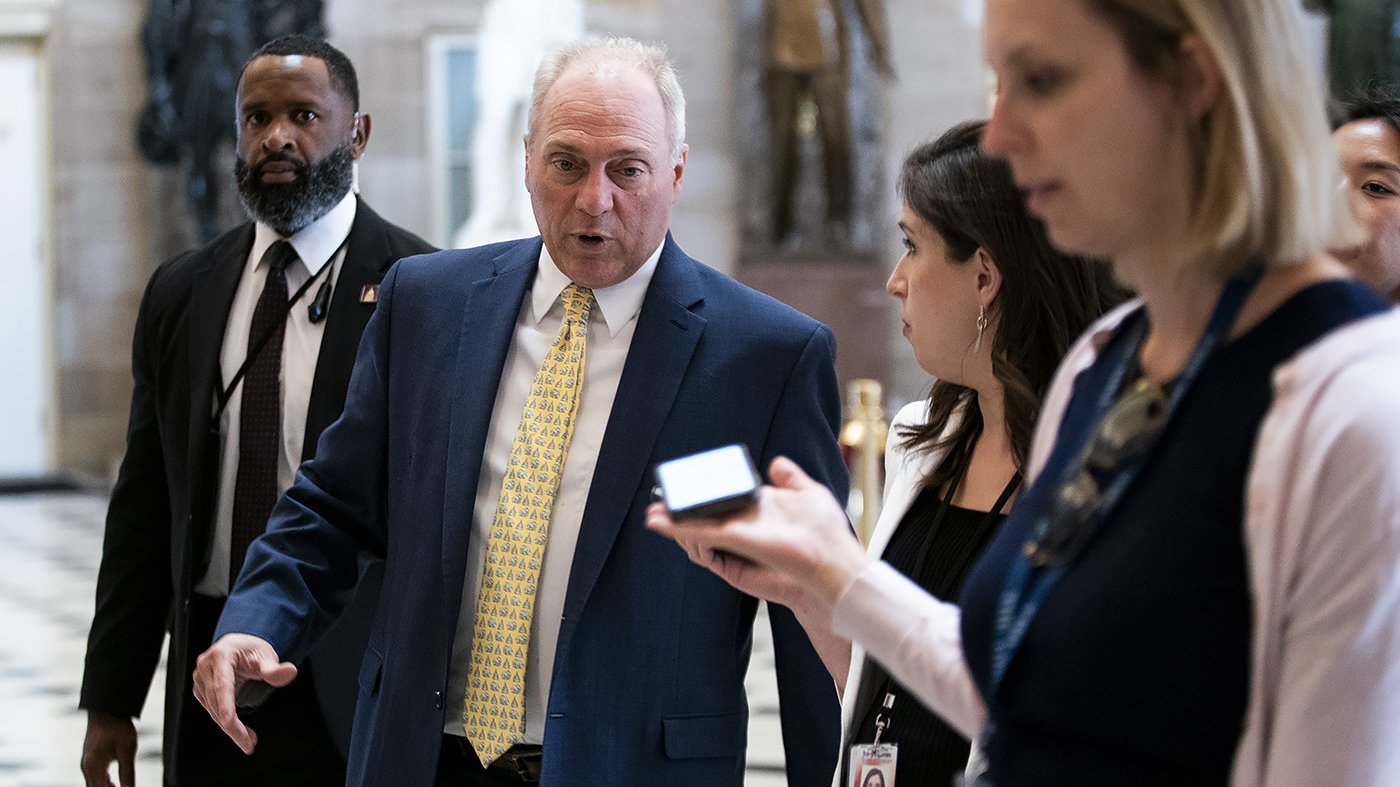
House Republicans are increasingly frustrated as a small but growing number of their own members are collaborating with Democrats on discharge petitions, effectively bypassing GOP leadership and weakening their grip on the House floor. Once a rarely used procedural tool, discharge petitions have been deployed a record number of times this Congress, forcing votes on major legislation including a Ukraine aid package and a labor contracts bill backed by unions.
The trend has sparked internal debate about consequences for those who cross party lines, with some lawmakers calling for rule changes to make it harder for a handful of Republicans to sidestep their leaders. House Majority Leader Steve Scalise (R-La.) expressed his disapproval during a Tuesday press conference, emphasizing the importance of the committee process. As the Majority Leader, when people come to me and they want a bill moved the first thing I always tell them is, go talk to the chairman, work through the committee process. That is what the regular order is around here,
Scalise said.
To force a floor vote through a discharge petition, 218 signatures are needed—a majority of the full House. With Republicans holding a historically slim majority, just a handful of GOP defections can reach that threshold if all Democrats sign on. GOP leaders have urged members in closed-door meetings to avoid signing, warning it effectively hands control of the floor to Democrats. This dynamic has fueled proposals for stricter rules in the next Congress.
Rep. Mike Flood (R-Neb.), chair of the Republican Main Street Caucus, suggested raising the signature requirement by about 25, ensuring that a significant portion of the majority party—not just a sliver—must support a petition to circumvent leadership. His caucus previously pushed for rule changes that increased the threshold for forcing a Speaker recall vote from one to nine members, a move aimed at discouraging rebellions like the one that ousted former Speaker Kevin McCarthy.
In a leadership meeting this week, House Rules Committee Chair Virginia Foxx (R-N.C.) floated the idea of the National Republican Congressional Committee punishing signatories by withholding campaign contributions, according to Punchbowl News. However, punishing rebellious members is politically delicate, as leaders often need their votes on other party-line bills. The tension echoes broader GOP fractures, such as the overhaul of the House Freedom Caucus as six key members exited, and the bipartisan backlash stalling Trump's agenda.
Moderate Rep. Brian Fitzpatrick (R-Pa.), who has signed multiple successful discharge petitions, pushed back against leadership criticism. If the House Floor was managed properly, discharge petitions would never be needed,
Fitzpatrick posted on X. A successful discharge petition is clear and direct evidence of a poorly managed House Floor—because it demonstrates that the will of the majority of the People is being thwarted by the privileged few. Leadership of both parties have been guilty of this for years.
Rep. Riley Moore (R-W.Va.), one of seven Republicans who signed a Democratic discharge petition on the labor contracts bill, acknowledged the gravity of his decision. Look, I don’t like discharge petitions,
Moore said. This is one of those issues that was never going to see the light of day … There’s a lot of frustration on the other side of this as well. I take this very serious, signing on to it. I’ve never done that before. There’s always a risk-reward scenario in any of these things.
Conversely, Rep. Derrick Van Orden (R-Wis.) argued that discharge petitions are being abused. While he supports the labor bill and would vote for it, he refused to sign the petition. During a Tuesday morning GOP conference meeting, Van Orden challenged his colleagues to find any instance where Democrats, when in the majority, allowed a Republican discharge petition to become law. My Republican colleagues are counting on the altruism of the Democrat party. If they take the House, there’s no way in hell Hakeem Jeffries, if he’s the Speaker, would ever let any Republican discharge petition go anywhere,
Van Orden said. They’re being bamboozled.
The surge in discharge petitions underscores deepening divisions within the House GOP, as moderate and conservative members clash over strategy and loyalty. With the next Congress looming, the debate over rule changes—and potential punishments—is likely to intensify.