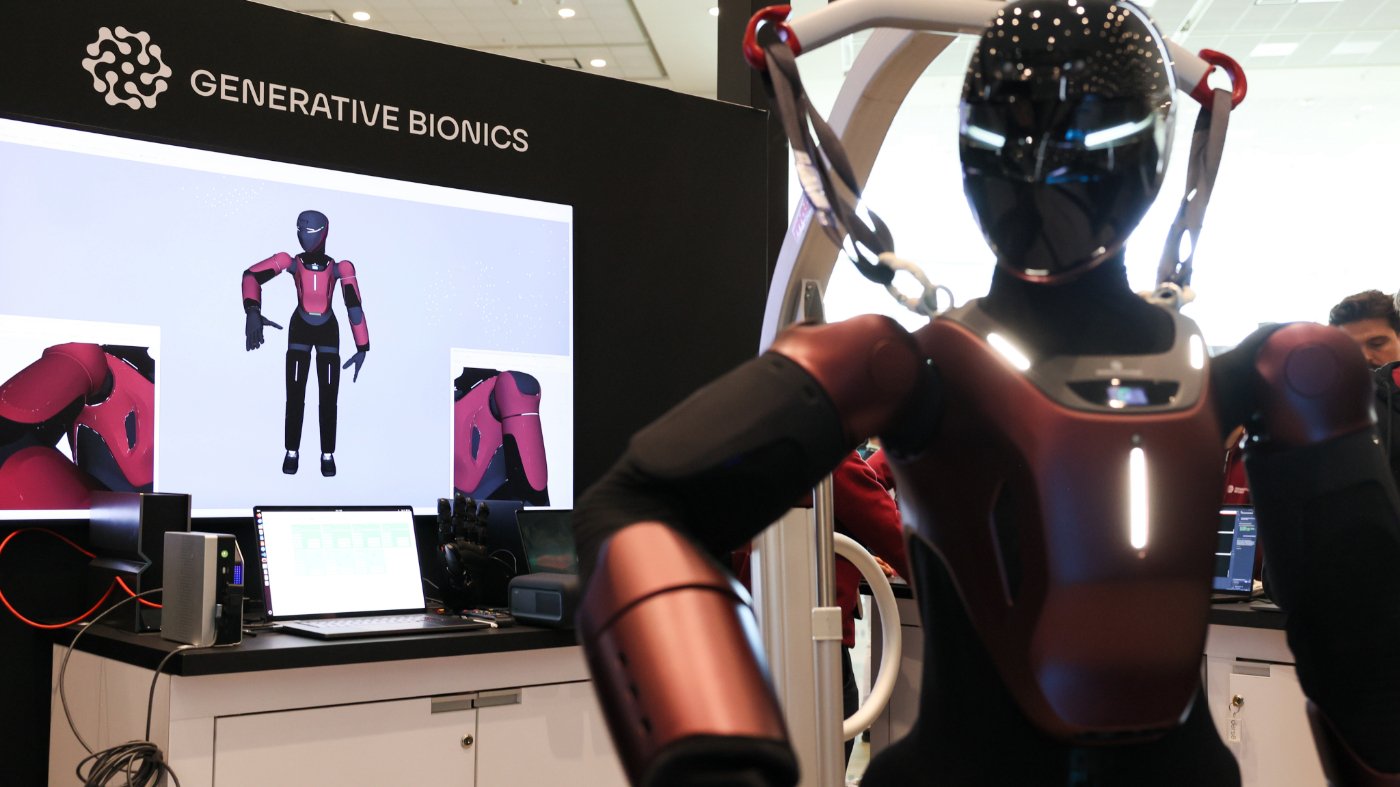
For the first time in decades, America's manufacturing edge no longer hinges on a vast, cheap labor supply like China's. With artificial intelligence and automation, the United States has a once-in-a-generation chance to rebuild its industrial base, even as low unemployment creates labor shortages. The key, according to a growing chorus of policy experts, lies in humanoid robots—intelligent machines that combine AI, advanced sensors, and automation into a flexible workforce capable of taking on the darkest, dirtiest, and most dangerous jobs, freeing humans for higher-value work.
But turning this potential into reality requires a deliberate federal strategy. The U.S. has long funded robotics research through agencies like the National Science Foundation and DARPA, producing impressive prototypes. Yet invention is no longer the bottleneck; deployment is. A mid-sized manufacturer in Ohio or a logistics operator in Georgia can buy a humanoid robot today, but integrating it into existing production lines, retraining staff, and proving return on investment remains expensive, slow, and risky. Most companies simply don't try.

The federal government has a history of using incentives—such as the R&D tax credit and investment tax credits—to push businesses toward new technology. Humanoid robotics deserves similar treatment: a deployment-specific tax credit that rewards companies for putting humanoids to work on factory floors, not just for filing patents. As one analyst put it, invention without implementation is a science project; adoption boosts GDP. Current examples like installations at BMW, Tesla, and Amazon show promise, but most manufacturers are small and mid-sized businesses lacking in-house robotics engineers to evaluate options.
This gap is real but not insurmountable. The Manufacturing Extension Partnership (MEP), a decades-old network of experts in every state, already helps smaller manufacturers modernize. Expanding its mandate to include humanoid deployment specialists—for site assessment, integration planning, and workforce training—could leverage existing infrastructure without massive new spending. The policy levers are straightforward: tax incentives tied to deployment, modernized MEP programs, and interoperability standards set while the market is still malleable.
Safety is no longer the primary hurdle. Through NASA's Robonaut 2, a collaboration with General Motors that deployed the first humanoid in space aboard the International Space Station, early safety standards were established. The next bottleneck is interoperability: Can a humanoid built by one manufacturer work within a factory environment designed around another's hardware, software, and tooling? Without standards, every adopter risks locking into a single vendor's ecosystem, repeating the expensive inflexibility of early industrial automation. The National Institute of Standards and Technology should be tasked with developing not just safety guidelines but interoperability standards covering communication protocols, software interfaces, and robot "hand" attachments.
Some argue the U.S. should focus on what it does best—research and design—and let other nations handle the messy, capital-intensive work of building humanoids, much like semiconductor design versus fabrication. America would own the intellectual property, license technology, and collect royalties while staying nimble. But that argument doesn't hold up. Robotics doesn't separate neatly into design and production; the feedback loop between factory floor and engineering bench is where real learning happens. Solar panels and lithium-ion batteries were American innovations, but manufacturing migrated to China, and within a generation, so did engineering leadership. The idea that we can lead on robotics without actually doing the work is a delusion. China's humanoid development is now largely independent of early U.S. research and accelerating rapidly. At the recent IEEE Robotics and Automation 2026 conference, almost all humanoids on display were from China, and they dominated research papers as well.
What can the U.S. do? The policy levers aren't complicated: deployment-focused tax incentives, modernized MEP programs, and interoperability standards set while the market is still shapeable. None require massive spending or geopolitical confrontation. What they do require is clarity of vision—an understanding that the next industrial era leader won't be decided in a research lab but on a factory floor. The window is open, but it won't stay open forever.