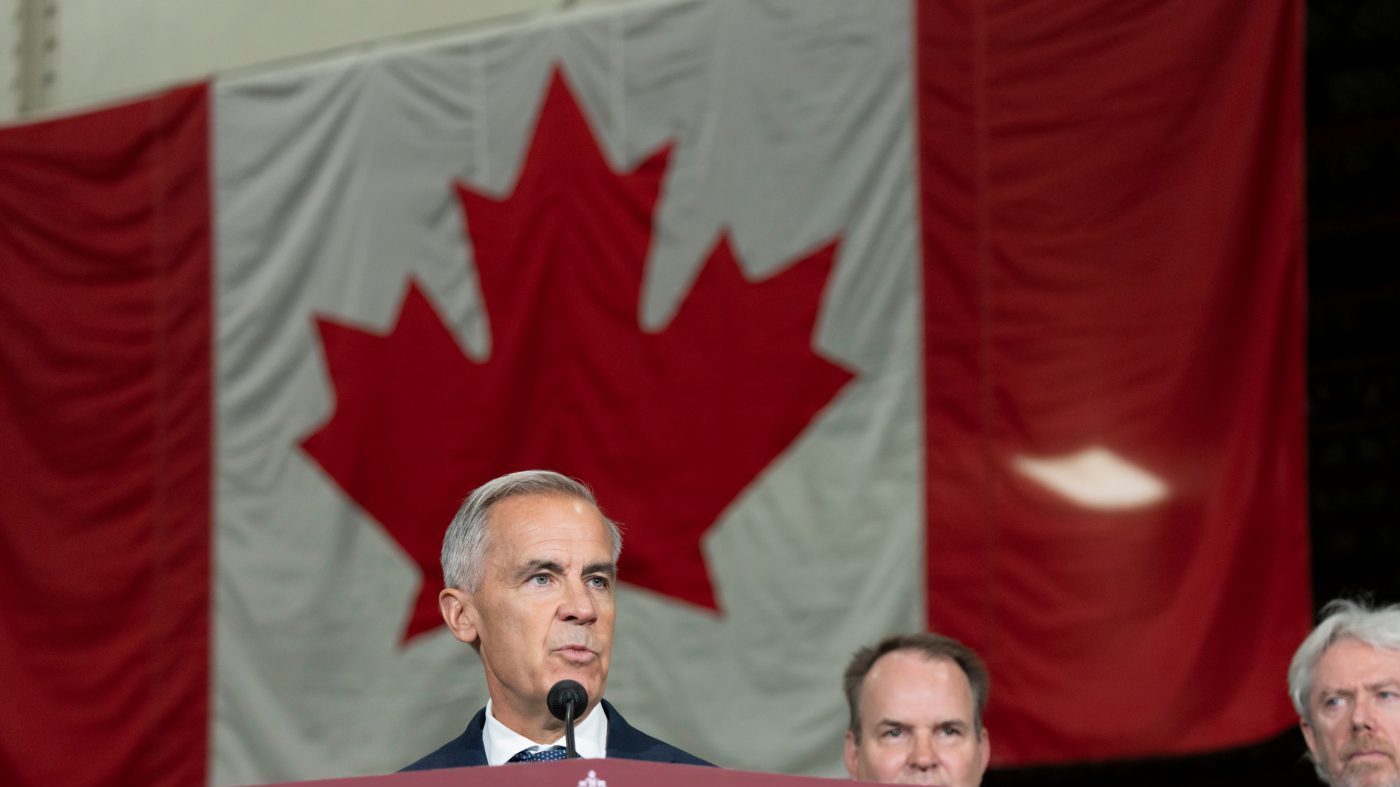
Canadian Prime Minister Mark Carney on Tuesday declared that his country's decades-long reliance on "easy" economic ties with the United States is over, just as Ottawa's retaliatory tariffs on American goods took effect.
"The past 40 years has been a period of deeper economic integration with the United States. Truth is, it was easy business, but it meant we relied too much on one economic partner. It's clear that time is over," Carney said in a video posted to YouTube on Tuesday morning.
The prime minister outlined his administration's new direction, saying, "This is why our plan, since I came into office, has been development and diversification, not denial, waiting to go back to some good old days, and not continued dependence."
The remarks come amid a sharp escalation in trade tensions between Washington and Ottawa. Negotiations broke down in recent weeks, triggering a tit-for-tat tariff war. Canada's latest round of retaliatory measures, which went into effect Tuesday, targets $27.6 billion worth of American products—a move Carney has framed as a "dollar for dollar" response to U.S. tariffs on Canadian goods.
The new Canadian levies, ranging from 15% to 50%, apply to nearly 6% of what the U.S. exported to Canada last year. They hit more than 700 U.S. products, including metals, clothing, appliances, cosmetics, and farming equipment. For a detailed breakdown of the affected goods, see Canada's $27.6B tariff retaliation.
Beyond the economic measures, President Trump has taken symbolic swipes at Canada. He recently signed an executive order renaming Lake Ontario—which shares its name with a Canadian province—to "Lake America." The president has also continued to float the idea of absorbing Canada as a U.S. state, posting a social media map that superimposes the American flag over most of North America, a move that has drawn sharp criticism from Canadian officials.
Carney's comments signal a strategic pivot for Ottawa, which has historically leaned heavily on its southern neighbor for trade. The prime minister's emphasis on diversification suggests that Canada may seek to expand economic partnerships elsewhere, though analysts note that the U.S. remains by far its largest trading partner.
The trade war has already had ripple effects on both economies, with some U.S. industries bracing for higher costs and Canadian exporters facing uncertainty. As the dispute continues, legal challenges are emerging over the scope of U.S. tariffs, with questions about whether they exceed international trade limits. For more on that, see Trump's Canada tariffs face legal test.
Carney's statement reflects a broader political shift in Canada, where leaders are increasingly vocal about reducing dependence on the U.S. Whether that translates into concrete policy changes remains to be seen, but the prime minister's message is clear: the era of easy trade with America is behind them.