Treasury Secretary Scott Bessent's assertion that the United States can simply grow its way out of a $40 trillion federal debt has drawn sharp rebukes from fiscal watchdogs and economists, who say the math simply does not add up.
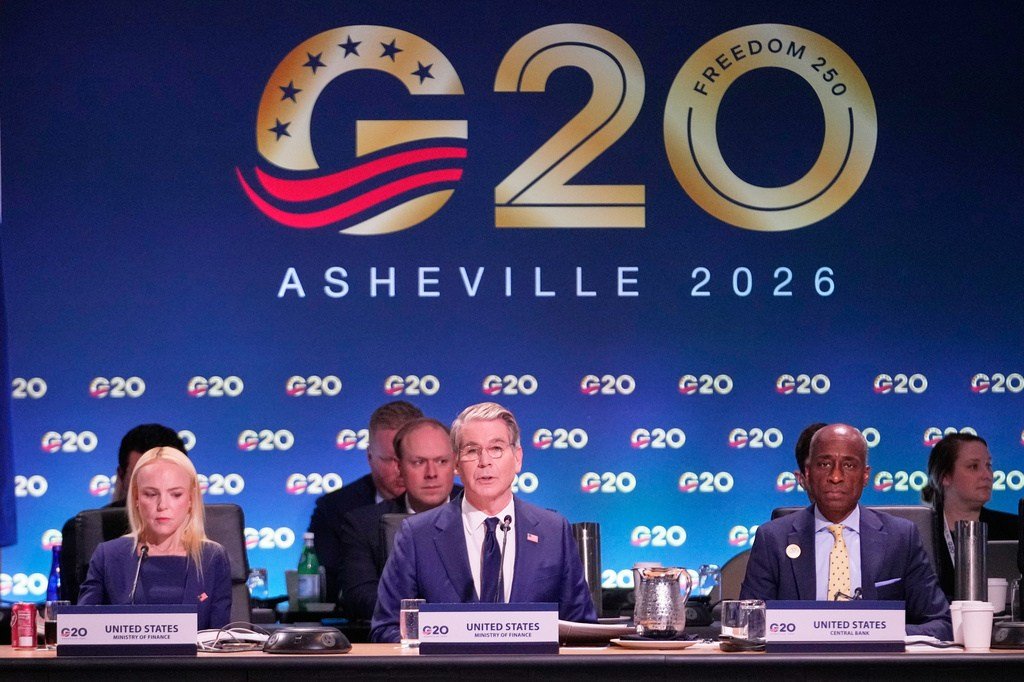
In recent interviews, Bessent told CNBC's Sara Eisen that “there's nothing magic about the $40 trillion number, and we can grow our way out of that.” He echoed the sentiment before the Group of 20 finance ministers meeting in North Carolina, arguing that “the world is awash in debt and the only way for us to get out of this is to grow our way out of this.” Vice President JD Vance has amplified that talking point, telling Newsmax that Bessent's plan is “to get the economy to a point where it is growing faster than our debt,” and insisting “we're on track.”

But the nonpartisan Government Accountability Office (GAO) paints a starkly different picture. Its June report projects that debt held by the public “is projected to grow more than twice as fast as the economy over the next 10 years, reaching 123% of the size of the economy in 2036.” The GAO warns that “the federal government's unsustainable fiscal outlook poses serious economic, national security, and societal challenges.”
The scale of the challenge is staggering. Federal debt now exceeds $40 trillion and is climbing. Even if Congress somehow achieved a $2 trillion annual budget surplus—a far cry from the current $1.78 trillion deficit—it would take two decades to pay off the existing debt, far beyond President Trump's remaining term. In fiscal 2025, the Treasury collected $5.23 trillion in revenue but spent $7.01 trillion, leaving a gap that would require a 70% increase in revenue to flip into a $2 trillion surplus.
Bessent's growth strategy hinges on an economic boom that shows no signs of materializing. Real GDP grew at just 2.1% in the first quarter of 2026 and 1.5% in the second, well below the post-war average of 3.2%. Economist Peter Earle of the American Institute for Economic Research calculates that stabilizing the debt burden through growth alone—without spending cuts, tax increases, or additional borrowing—would require annual real GDP growth of roughly 7.3%, a rate not seen in modern U.S. history.
The administration's spending record undercuts its own narrative. While some entitlement programs face cuts, other areas are seeing increased outlays. The Congressional Budget Office projects total federal debt will reach $56.1 trillion within a decade, and that estimate predates the costs of the ongoing conflict with Iran. As oil price forecasts after the Iran conflict remain uncertain, the fiscal toll only grows.
The Bessent-Vance debt mantra echoes a 2011-era proposal that capping spending growth at 1% annually would allow revenue gains to balance the budget in about a decade. The sequester that followed did cut deficits by half to two-thirds for six years, but the debt still rose—just more slowly. That history offers little comfort to those hoping growth alone can solve the current crisis.
Critics argue that peddling such a plan is not just optimistic but dishonest. Every administration spins its economic record, but claiming that growth can erase a $40 trillion debt without fundamental changes to spending or revenue is a fantasy that voters should reject. As the GOP's spending choices complicate midterm prospects, the disconnect between rhetoric and reality grows harder to ignore.
Merrill Matthews, a Texas-based Republican strategist, wrote in a recent analysis that “if Trump's economists say unbelievable things, you shouldn't believe them.” The administration's growth-out-of-debt claim, he argues, is a diversion tactic designed to obscure the lack of a credible fiscal plan.