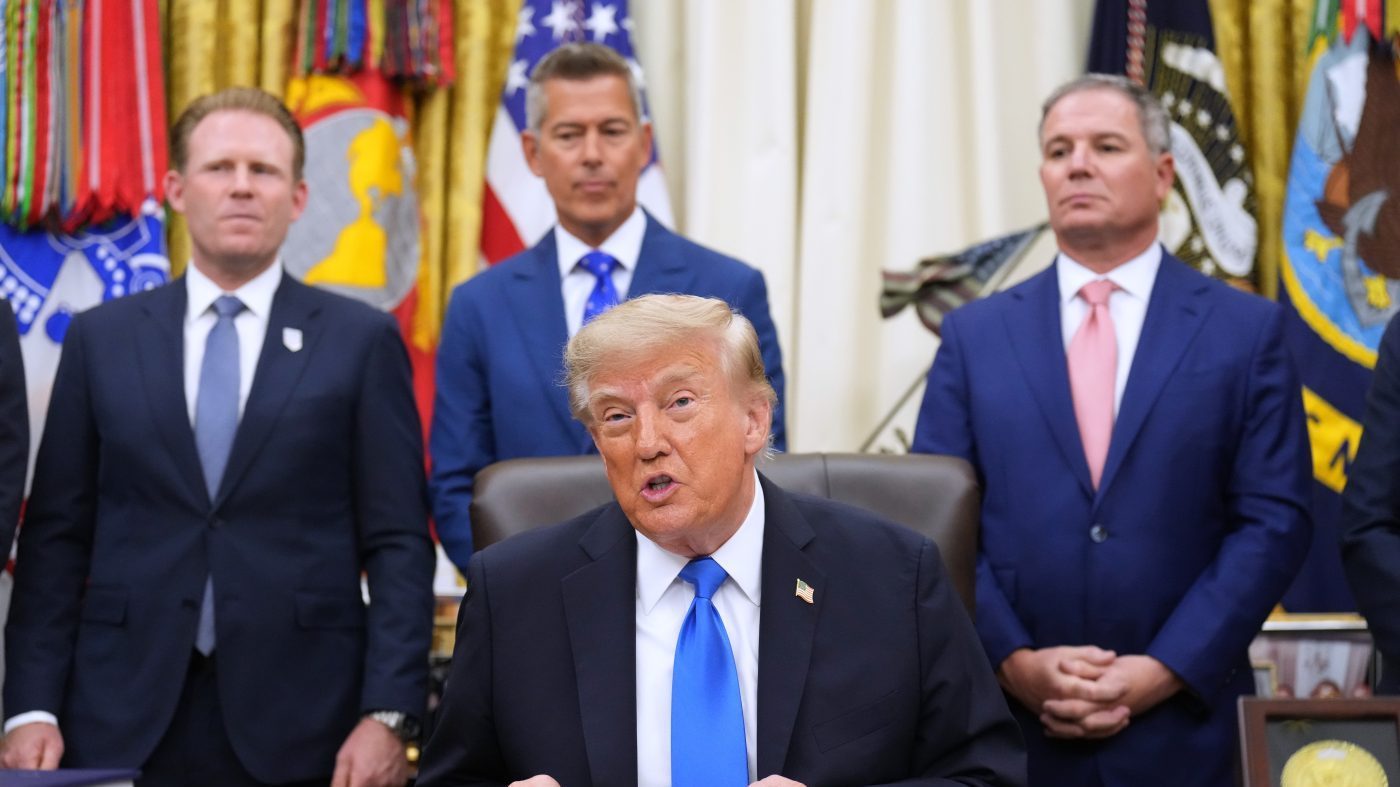
President Trump on Monday morning posted a map on Truth Social that superimposes the American flag over a broad swath of North America, including Canada, Mexico, and parts of Central America, as well as Greenland, Iceland, and several Caribbean islands such as Cuba and Jamaica. The image, which follows a series of similar expansionist gestures, marks a notable broadening of his previously stated territorial goals.
Trump has repeatedly floated the idea of acquiring Canada and Greenland, and has expressed interest in reclaiming the Panama Canal. But the inclusion of Mexico and Caribbean nations in this latest visual is new, suggesting a more expansive vision of U.S. dominance in the Western Hemisphere.
The post comes at a time of heightened friction between Washington and Ottawa over trade. The two countries have recently imposed retaliatory tariffs on each other's goods, and Trump signed an executive order renaming Lake Ontario—which borders the Canadian province of Ontario—to "Lake America." This move has further inflamed tensions, as tariff deadlines loom and the economic standoff continues.
On Sunday, the president posted another map, this time of New Mexico, labeled "New America," following a debunked online rumor that he had signed an executive order changing the state's name. The image featured a large "X" over the word "Mexico" in the state's name, with "America" written below. The White House's official account also shared the image on X.
The New Mexico stunt drew sharp criticism from state officials. Governor Michelle Lujan Grisham, a Democrat, publicly rebuked the president, dismissing the map as a distraction from real issues. Her response underscores the political pushback Trump faces even as he continues to test the boundaries of executive messaging.
Trump's territorial ambitions have been a recurring theme of his presidency, often framed as a revival of American greatness. However, his latest map suggests a more aggressive posture toward allies and neighbors, raising questions about the administration's foreign policy direction. Analysts note that such imagery, while symbolic, can have real diplomatic consequences, particularly with nations like Canada and Mexico that are key trading partners.
The president's focus on territorial expansion also intersects with domestic political dynamics. His recent moves have been seen as an attempt to energize his base ahead of upcoming elections, with some Republicans welcoming the aggressive stance. For instance, Texas GOP figures have embraced Trump's push in their state, signaling that such rhetoric resonates with conservative voters.
Critics, however, argue that these map posts are a dangerous escalation of nationalist rhetoric, potentially undermining international alliances. The inclusion of sovereign nations like Mexico and Caribbean states in a hypothetical American flag could be seen as a provocation, especially amid ongoing trade disputes and migration challenges.
As Trump continues to use social media to project an expansionist vision, the international community watches closely. Whether these are mere rhetorical flourishes or signals of concrete policy shifts remains unclear, but the frequency and boldness of such posts suggest they are a deliberate part of his political strategy.