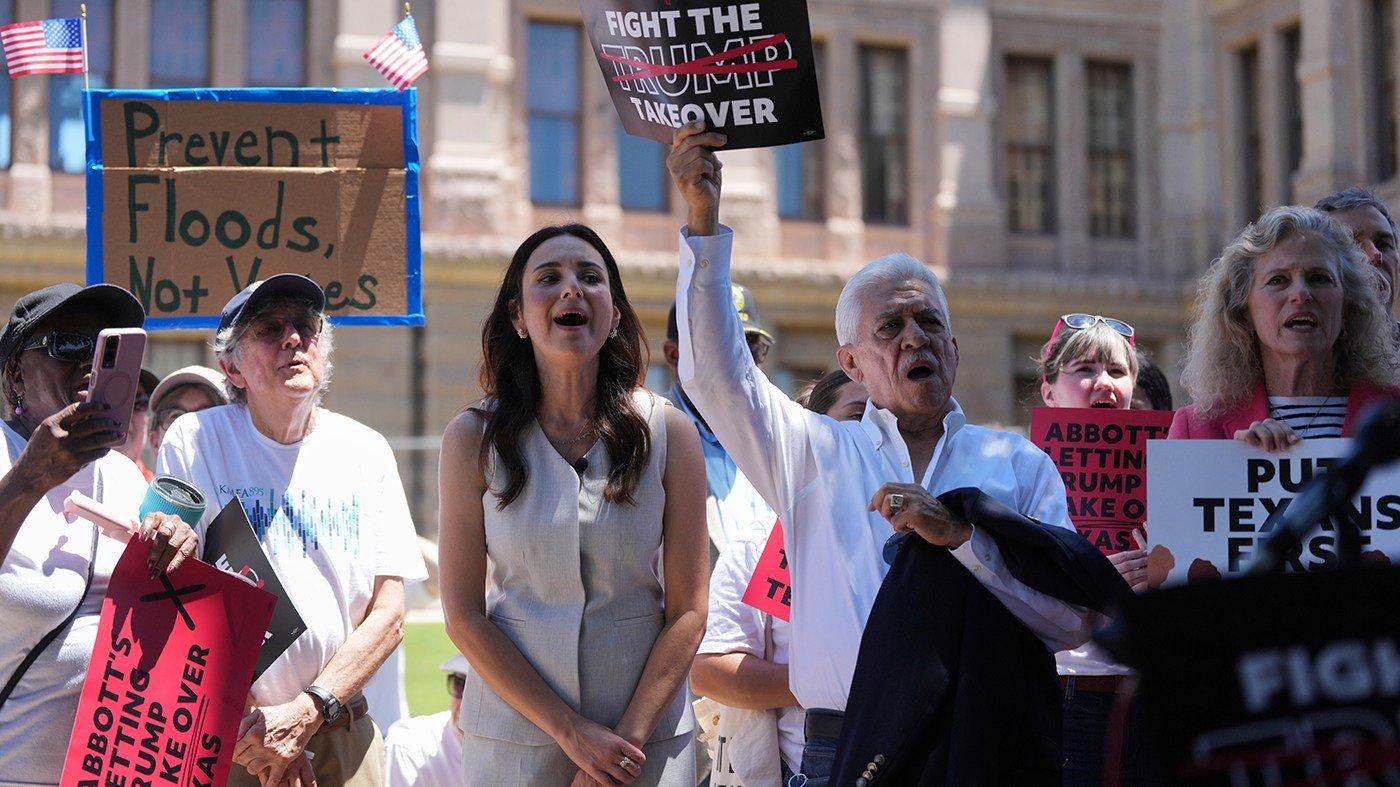
Texas Democratic gubernatorial candidate Gina Hinojosa shrugged off the political weight of a $10 million infusion from President Trump's super PAC into the state's Senate race, arguing the investment signals Republican anxiety rather than strength. In an interview on CNN's State of the Union, Hinojosa said she welcomes the outside attention, framing it as evidence that Texas has become a genuine political battleground.
Host Dana Bash pressed Hinojosa on whether Trump's financial commitment to boost Republican Ken Paxton's Senate campaign could galvanize conservative turnout in a state the former president carried by nearly 14 points in 2024. Hinojosa, a state representative from Austin, rejected that premise outright. “No, actually not at all,” she said. “If you look at the polling, President Trump is underwater, Greg Abbott is underwater and people are tired of this politics as usual. People want change in Texas. They’re galvanizing, organizing. We’re building real momentum in this race.”
The Democrat added: “So, I welcome the attention on Texas. Texas is battleground in 2026. If you don’t believe it, look at what Republicans are doing. But that’s what I hear every day on the campaign trail.” Her comments come as the GOP pours resources into a state long considered safely Republican, but where recent polling has shown competitive races at the top of the ticket.
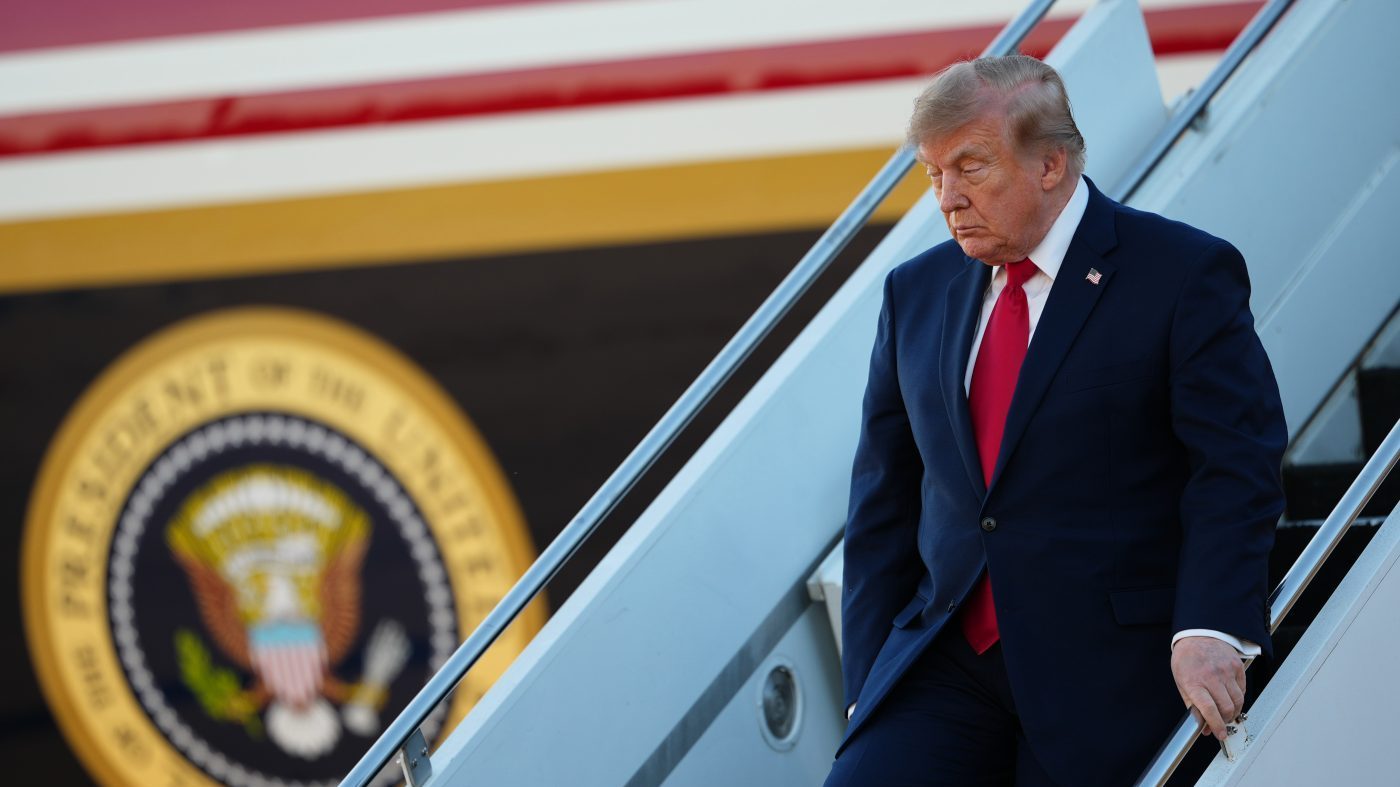
Trump's super PAC, MAGA Inc., reported the $10 million contribution to Paxton's Senate campaign in Federal Election Commission filings released over the weekend. The move underscores Republican concern about the open Senate seat, which has not been held by a Democrat in three decades. Paxton, the state attorney general, faces Democratic state Representative James Talarico, who has polled ahead of him in some surveys.
Hinojosa's own race against incumbent Governor Greg Abbott remains an uphill climb. A late-month poll showed Abbott leading by 7 points, with 48 percent support to Hinojosa's 41 percent. The Libertarian candidate drew 1 percent, while 8 percent were undecided and 1 percent said they would not vote. Despite the gap, Hinojosa insists the dynamics are shifting, pointing to grassroots energy and dissatisfaction with Republican leadership.
The Texas races are part of a broader Democratic strategy to exploit what they see as GOP vulnerabilities heading into the midterms. National Democrats have seized on issues like Trump's data center taunt as a campaign weapon, and the party is planning a counter-offensive during the Republican National Convention in Dallas, as the Paxton-Talarico race tightens.
Hinojosa's optimism is also tempered by recent history. Texas Democrats have struggled to break through statewide, as seen in Beto O'Rourke's narrow but unsuccessful 2018 Senate bid against Ted Cruz. Still, Hinojosa argues that the political climate has changed, and she points to Trump's own actions as proof that Republicans no longer take Texas for granted.
The upcoming RNC in Dallas will test both parties' organizing muscle, with Trump expected to headline events even as international crises and economic concerns weigh on voters. For Hinojosa, the influx of national money and attention is not a threat but a validation. “The more they invest, the more they reveal their fear,” she said.
Political analysts note that while Texas remains a Republican stronghold, demographic shifts and suburban discontent have made it more competitive in recent cycles. The 2026 elections could prove pivotal, and Democrats are betting that a combination of grassroots mobilization and Republican overreach will finally tip the scales.