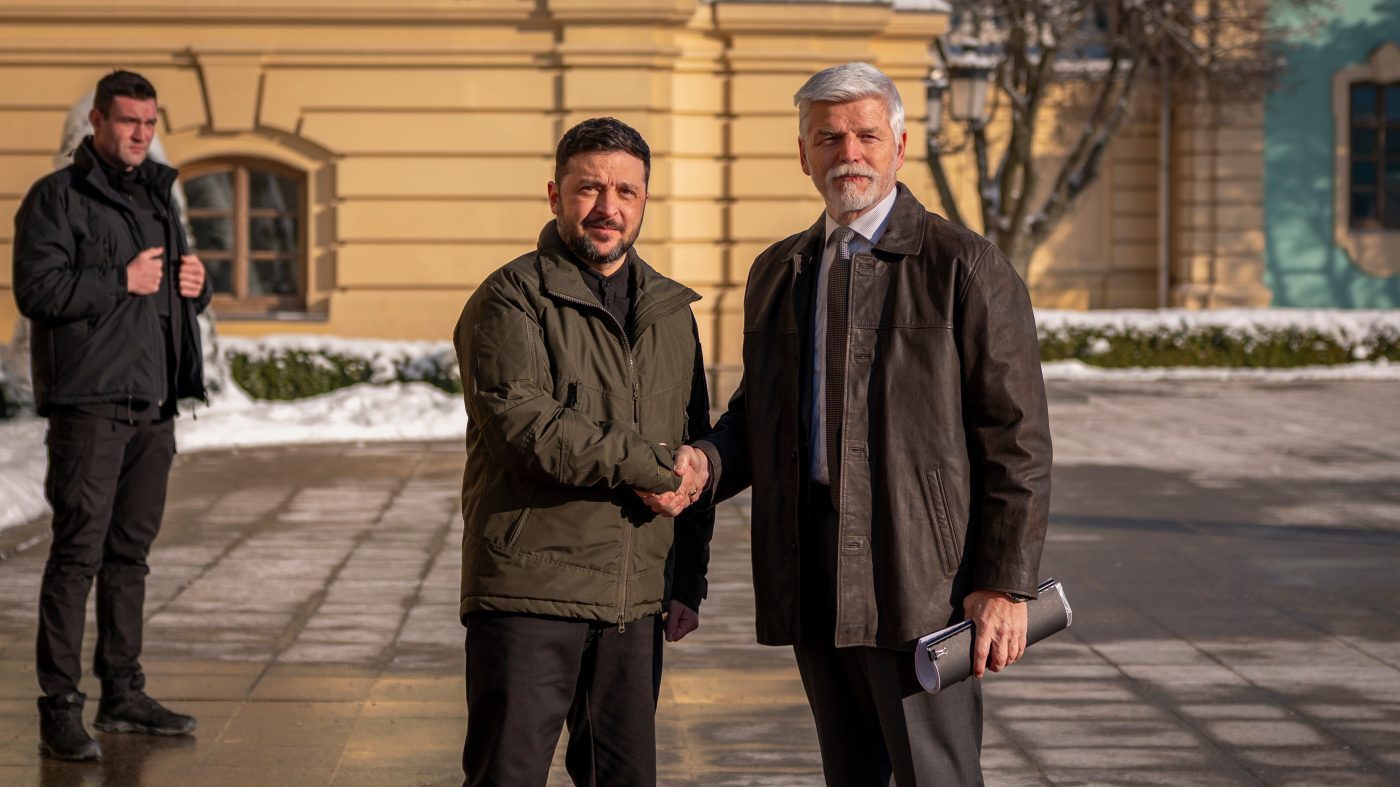
Czech President Petr Pavel on Tuesday blamed President Trump's decision to allow Russian diesel imports for derailing Ukraine-Russia peace negotiations, saying the two sides were "so close" to a ceasefire before the deal was struck.
"It will be much harder now," Pavel told the Axel Springer Global Reporters Network, which includes Politico. "Russia uses this momentum to get out of pressure, and it's kind of a moral boost for them."
Pavel said that U.S. and European sanctions on Russian oil, oligarchs, and other industries had Moscow "under strain," but the deal permitting 300,000 tons of diesel into the U.S. gave Russia "time to breathe."
Speaking to Politico on Wednesday, Pavel offered a nuanced view of Trump's approach, suggesting the American president may be drawn to Putin's strongman persona but ultimately views the war through a transactional lens. "President Trump sees it from a position of a struggle between democracy and autocracies because he's looking at it simply from the point of view of economic prosperity for the United States," he added.
Pavel's government has been a staunch supporter of Ukraine, maintaining close ties with President Volodymyr Zelensky. He dismissed any notion that Ukraine bore responsibility for the conflict. "So, I would be probably the last to blame Ukraine for being guilty of the conflict," he said. "It was not Ukraine who attacked Russia. It was not Ukraine who was threatening Russia."
While declining to label the U.S. actions a betrayal—a term Zelensky used last week—Pavel called the diesel deal and related sanctions waivers a strategic error. "I don't know yet if we can call it betrayal, but I would call it a mistake," he said. "Because... it's now giving Russia a new hope: New hope that they can disregard Europe, they can disregard Ukraine, they can focus on making a deal with the United States, potentially with China, and arranging all things up to their priorities and strategies. I believe that it's clearly against our interest in Europe."
Pavel said European nations would eventually resume buying Russian oil, but only if Moscow changes its behavior. "But Russia is not there yet," he added.
The remarks come amid a flurry of diplomatic activity. U.S. special envoy Steve Witkoff met with Putin on Wednesday to explore trilateral talks with Ukraine, and Putin agreed to resume discussions. Witkoff also praised Putin as a "humanitarian" after securing the release of detained U.S. teacher Stephen Hubbard—a comment that drew sharp rebukes, including from Sen. Thom Tillis (R-N.C.), who wrote on X: "WTF, Steve? Look up the definition of 'humanitarian.'"
The controversy over the diesel deal is part of a broader pattern of Trump's Ukraine policy that has raised constitutional and security concerns among critics. Some analysts point to the impact on diesel prices as evidence of the war's global economic ripple effects.
As the situation evolves, European leaders remain wary of being sidelined in any U.S.-Russia deal. Pavel's comments reflect a growing unease that Washington's overtures to Moscow may come at the expense of Ukraine and its European allies.

