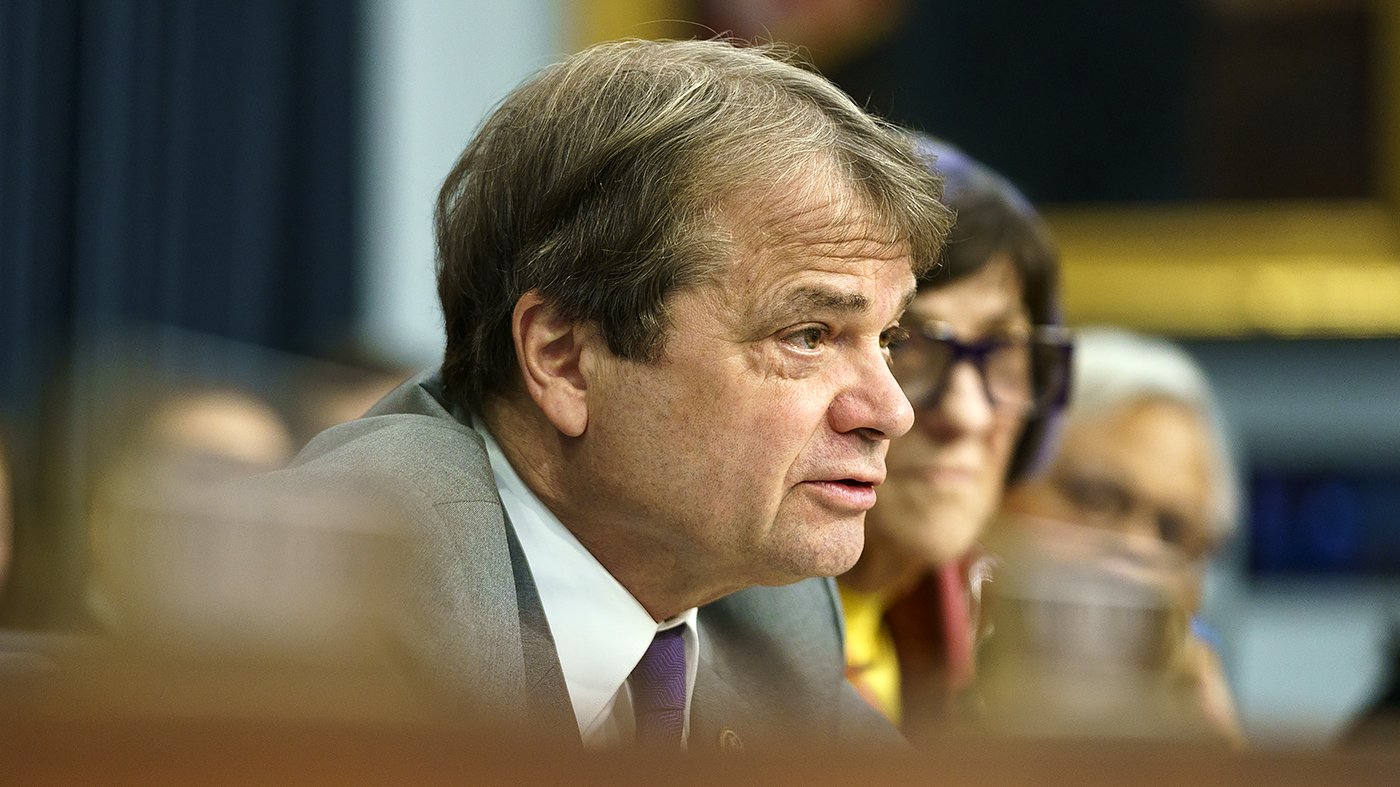
Democratic Representative Mike Quigley of Illinois has publicly challenged a provocative claim from Senator John Fetterman of Pennsylvania, who suggested that members of their own party are actively "cheering" for Iran amid the ongoing military conflict. In an interview on CNN's 'The Arena,' Quigley framed Democratic skepticism not as support for Tehran, but as widespread constituent opposition to another protracted and expensive foreign war.
"No, I think what we're hearing from our constituents when we go back is that they don't want another bloody, endless, costly war," Quigley told host Kasie Hunt, directly rebutting the premise of her question. His comments follow Fetterman's sharp criticism of the party's posture, in which the senator argued last Friday that "a lot of people" in the Democratic ranks have "turned Iran into the underdog."
A Clash Over Party Sentiment and War Powers
The exchange highlights a visible rift within Democratic circles regarding how to articulate opposition to the Trump administration's military engagement with Iran. Fetterman, employing vivid rhetoric, compared some Democrats to fans of the underdog football story 'Rudy,' saying, "They're like Rudy and putting him up on their shoulders and cheering for Iran, at this point. It's absurd."
Quigley offered a starkly different interpretation. He countered that public disapproval is driven by the war's human and economic toll, including the deaths of seven U.S. service members from Iranian attacks and six more in a related aircraft crash. "We could have taken care of our own people," Quigley stated, invoking President Trump's "America First" slogan to argue the conflict diverts resources from domestic priorities.
The legislative record underscores the party's institutional stance. An overwhelming majority of congressional Democrats have supported war powers resolutions intended to halt hostilities until Congress provides explicit authorization. Fetterman was the sole Democratic senator to break with his party on such a vote, while in the House, only outgoing Representative Jared Golden of Maine dissented from a similar measure last week.
Framing Opposition as Patriotism, Not Support for Iran
In his rebuttal, Quigley meticulously reframed the nature of Democratic criticism. "So, no one's cheering on Iran," he asserted. "We're cheering against a president who's doing something that's illegal, it's costly, we've already lost service members." He linked the war to broader national security and economic concerns, noting it "wreaks havoc on our economy" and "threatens us in the homeland with terrorist attacks" due to regional instability.
"I think it's patriotic to cheer for peace and to cheer for common sense and to cheer for diplomacy," Quigley concluded, positioning Democratic calls for restraint as a constitutional and pragmatic imperative. This debate occurs as other Democratic challenges to Trump's executive authority continue to escalate on multiple fronts.
Public opinion data appears to bolster Quigley's argument about widespread discontent. An NBC News poll conducted from March 30 to April 13 found 54% of respondents strongly disapprove of President Trump's handling of the conflict, with only about a third expressing any level of approval. The human cost has been severe; according to the U.S.-based Human Rights Activists News Agency, at least 1,701 Iranian civilians, including 254 children, had been killed by April 7.
The conflict's economic impact is also being felt domestically. The Islamic Revolutionary Guard Corps's restrictions on shipping through the critical Strait of Hormuz have contributed to increased fuel prices, directly affecting American consumers. As the temporary ceasefire announced by Trump approaches its expiration, the political debate over the war's justification and management is intensifying, revealing deeper fissures within the Democratic coalition over national security and the limits of presidential power.