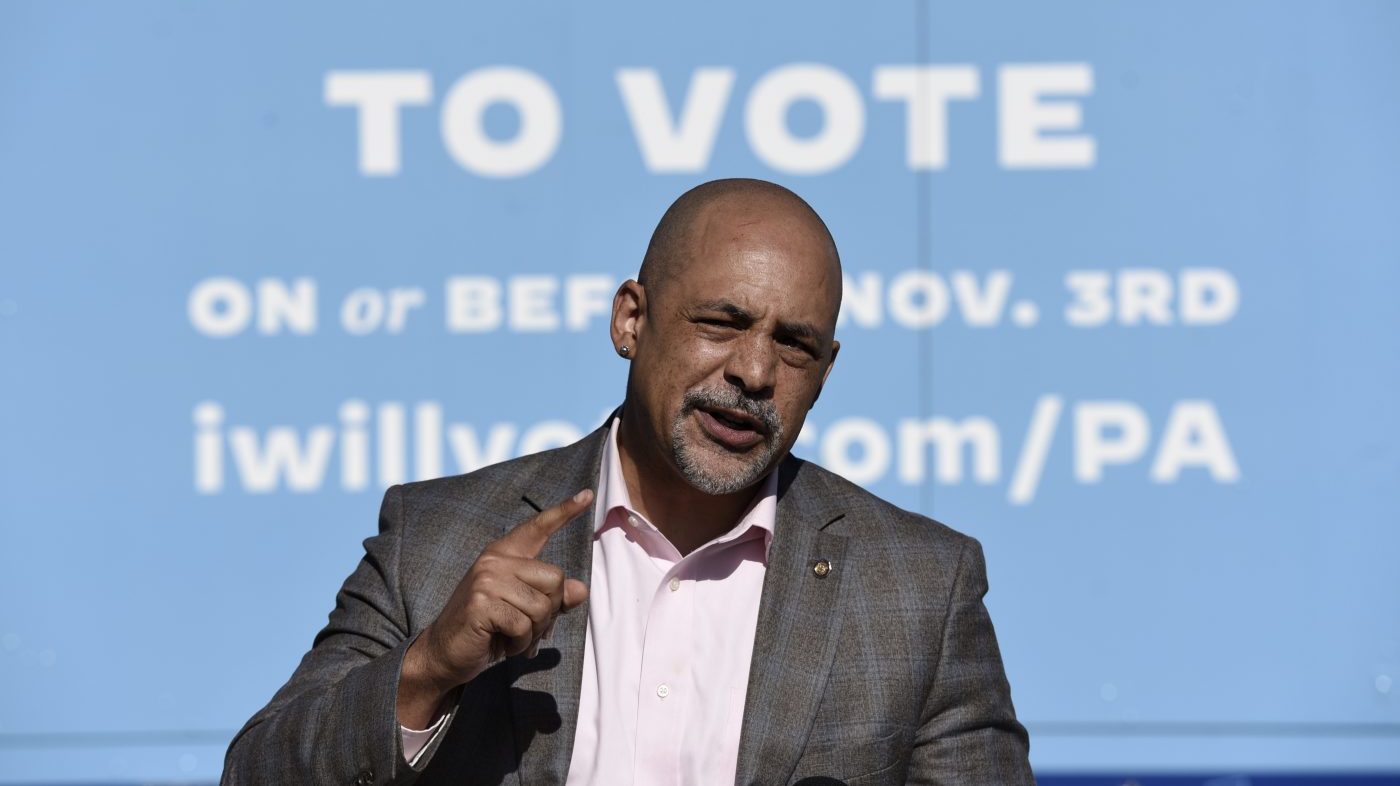
The political arm of the Congressional Progressive Caucus formally entered a competitive Philadelphia House race on Monday, endorsing State Representative Chris Rabb in the Democratic primary for Pennsylvania's solidly blue 3rd Congressional District. The endorsement signals a clear ideological battle within the Democratic Party as it prepares to select a successor for retiring Representative Dwight Evans.
A Progressive Champion
In a joint statement, CPC PAC co-chairs Representatives Pramila Jayapal of Washington, Greg Casar of Texas, and Maxwell Frost of Florida praised Rabb as a legislator who has consistently challenged both Republican opponents and powerful financial interests. They highlighted his background as a social justice advocate and educator, specifically noting his role in organizing approximately 1,500 adjunct professors into a union. The statement framed Rabb as a candidate committed to building a political system that serves the broader public rather than a narrow wealthy elite.

"I am honored to receive this endorsement," Rabb stated in response. "The Congressional Progressive Caucus stands at the forefront in Congress, advocating for the ambitious and fundamental changes that working families in Philadelphia and nationwide require." This endorsement from a major national progressive group follows earlier support from organizations like Justice Democrats and the Pennsylvania Working Families Party, solidifying Rabb's position as the race's standard-bearer for the party's left flank.
A Crowded Field and a Clear Divide
The primary, scheduled for May 19, features a crowded field vying for the safe Democratic seat. Key contenders include former Pennsylvania Democratic Party chair and State Senator Sharif Street, and Dr. Ala Stanford, founder of the Black Doctors Consortium. The contest has crystallized into a proxy war between the party's establishment and progressive wings, a dynamic seen in other races like recent progressive primary victories that have signaled shifting momentum.
Street has consolidated significant local establishment support, securing endorsements from the Philadelphia Democratic Party and former Governor Ed Rendell. This sets the stage for a classic intra-party struggle over direction and resources, reminiscent of factional clashes within the GOP, such as when hardline members rebuff leadership-backed strategies.
The district's overwhelming Democratic lean makes the primary winner the overwhelming favorite for the November general election. In 2024, the district supported Vice President Kamala Harris by a staggering margin of 77 percentage points. The outcome will therefore determine who represents the Philadelphia-area constituency for the foreseeable future.
National Implications
The CPC PAC's move is part of a broader national effort by progressive groups to elect aligned candidates to Congress, shaping the Democratic caucus's future ideological composition. This endorsement battle occurs alongside other high-stakes primary fights where external groups and figures are playing decisive roles, similar to former President Trump's aggressive endorsement campaigns in GOP primaries.
The primary also unfolds in a political environment where congressional attention is fractured by numerous high-profile issues, from government funding to international conflicts. This local race for a safe seat may seem insulated, but it contributes to the larger narrative of party identity. It echoes the way other caucuses stake out positions, much like the Democratic Women's Caucus defining its budgetary priorities well in advance.
With the primary just months away, the endorsement provides Rabb with crucial national credibility and potential access to progressive donor networks. However, Street's deep local roots and institutional backing ensure a highly competitive race that will test the strength of Philadelphia's progressive movement against its traditional party machinery. The result will offer a telling indicator of the Democratic Party's balance of power in one of its most important urban strongholds.