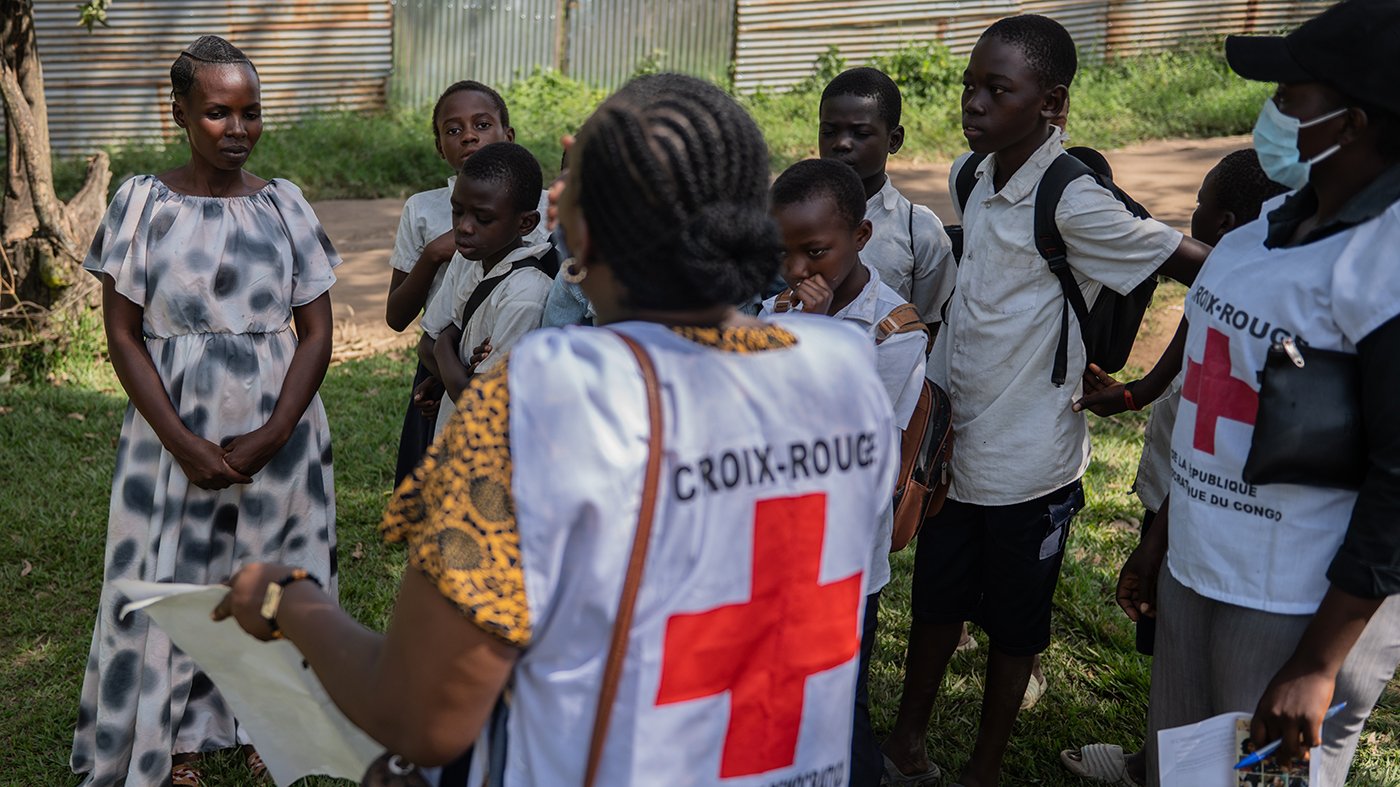
Senior Trump administration officials confirmed Thursday that no American who has been exposed to Ebola will be permitted to re-enter the United States. Instead, a 50-bed field hospital quarantine facility for U.S. citizens is set to become operational on Friday at the Kenyan Air Force's Laikipia Air Base, outside Nanyuki.
If any quarantined individual tests positive or shows symptoms, they will be transported to an undisclosed location for advanced medical care. Officials declined to specify where those patients would go, but made clear it would not be inside U.S. borders. The Centers for Disease Control and Prevention and the State Department are currently working to identify tertiary care facilities capable of handling such cases.
The facility will eventually include biocontainment and isolation units to hold infected or symptomatic individuals until they can be moved to more specialized centers. However, officials did not provide a timeline for when those units would be ready.
Initial staffing includes 30 U.S. public-health officers—physicians, nurses, therapists, and technologists—who completed three days of training earlier this week and are now en route to Kenya. Officials pushed back against criticism that the training was insufficient, noting that some team members responded to the 2014-2015 Ebola outbreak and worked in a field hospital in Monrovia, Liberia.
“These individuals received extensive training in the use of PPE, in the use of proper quarantine techniques, and care specific for individuals if they do test positive and develop symptoms for Ebola,” one senior administration official said. “Part of them are individuals who have already cared for Ebola in the past. They faced this threat, they know what they’re doing. This is an incredibly high level of care.”
During the 2014 outbreak, staff received 8 to 10 days of intensive classroom and hands-on instruction, including time treating actual Ebola patients. Unlike the Kenyan facility, the Monrovia field hospital was built to treat international and Liberian healthcare workers, not Americans.
This approach marks a significant departure from previous Ebola outbreaks, when exposed Americans were typically flown back to the U.S. for quarantine or treatment at specialized facilities. The Trump administration has been reluctant to repatriate infected or exposed citizens, a stance President Trump voiced forcefully in 2014, when he criticized the Obama administration’s repatriation efforts. “Stop the EBOLA patients from entering the U.S. Treat them, at the highest level, over there. THE UNITED STATES HAS ENOUGH PROBLEMS!” he posted at the time, adding: “The U.S. cannot allow EBOLA infected people back. People that go to far away places to help out are great—but must suffer the consequences!”
Administration officials on Thursday denied any political motivations, framing the decision as a matter of expediency for transporting patients quickly. But they did not explain why asymptomatic Americans—including anyone potentially exposed to Ebola—should quarantine for 21 days in Kenya rather than at home.
The administration has already evacuated one infected American doctor to Germany and sent another exposed doctor to Prague. Jeremy Konyndyk, president of Refugees International and former USAID Ebola response lead in 2014, noted: “The U.S. has world-leading Ebola treatment capacities, and in the 2014 outbreak we made very sure that any American infected during the response would have a way to get home and get the highest quality treatment here.”
The only domestic transmission of Ebola in the U.S. occurred in 2014, when a Dallas man infected during a visit to Liberia developed symptoms after returning. Hospital officials faced intense scrutiny for initially misdiagnosing his symptoms. Two nurses who treated him also became infected; both were transferred to specialized U.S. facilities and survived.
Meanwhile, the administration is also facing other political battles. House Democrats have demanded a Government Accountability Office probe into Trump’s disaster aid denials, and the president recently launched a new child savings program. The broader political landscape remains contentious as the administration pushes forward with its Ebola response strategy.