A Palm Beach County traffic stop that went viral took an absurd turn when a deputy ticketed a woman for holding a phone in her right hand—which she doesn’t have. The citation was later dropped after the deputy who issued it requested dismissal, according to court records.
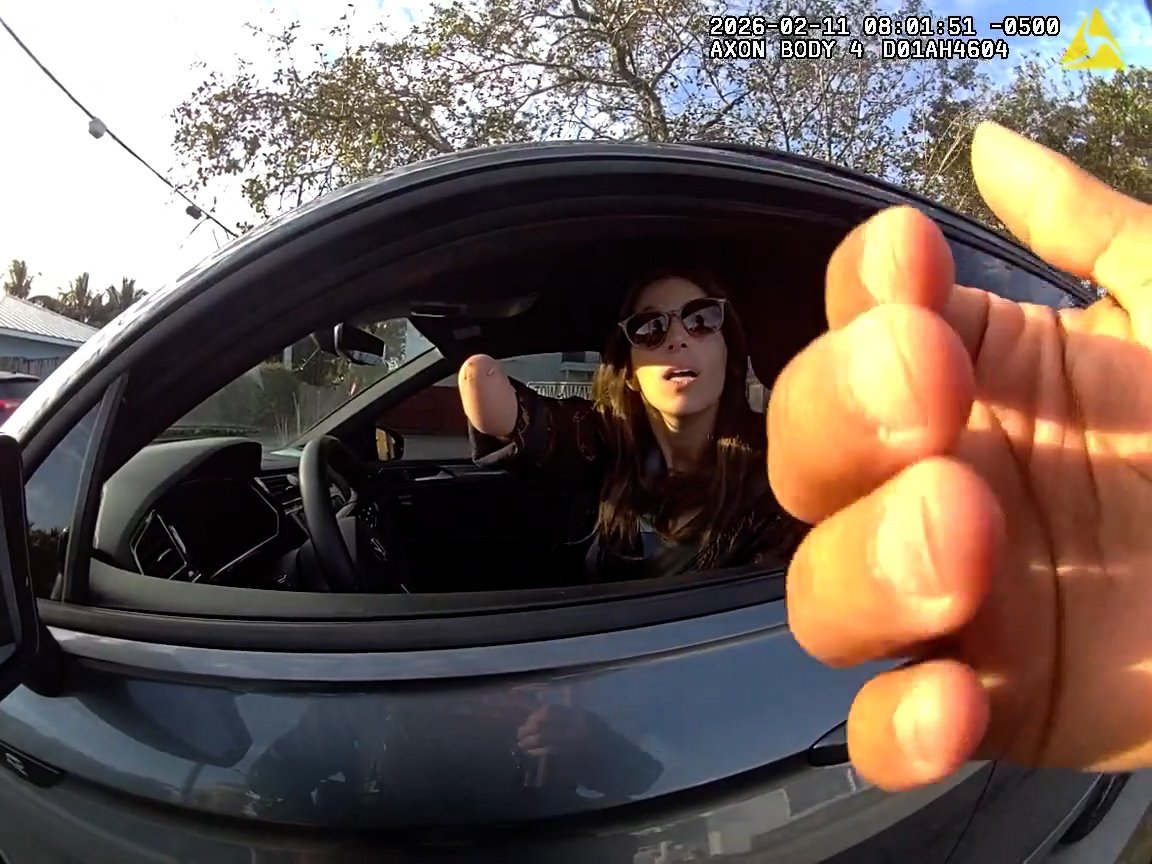
Body camera footage from February 11 shows a Palm Beach County Sheriff’s Office deputy approaching driver Kathleen Thompson. The deputy claimed he saw her manipulating a phone with her right hand. Thompson raised her right arm, revealing a prosthetic where her hand should be.

“So do you just want to call this a day?” Thompson asked.
“I don’t want to call it a day,” the deputy replied. “You had a hand up manipulating your phone.”
Thompson pointed out the contradiction: “You just said my right hand.” The deputy insisted he thought he saw a hand, but Thompson denied holding the phone at all. When pressed, she raised her right arm again, saying, “Hand to God.”
The deputy then asked her to raise her other hand before requesting her license and registration. He issued a citation for violating Florida’s wireless communications while driving law.
Thompson posted the encounter on TikTok, asking viewers for their take. The video quickly drew widespread attention, highlighting the deputy’s error and the law’s application.
The sheriff’s office explained that the deputy acted on his real-time observation, but after reviewing Florida statutes 316.305 and 316.306, the agency found “lack of clarity on how violations are labeled in our citation software.” The citation was dismissed, and the department emphasized that deputies must make split-second decisions.
This incident comes as Republicans eye the 2026 midterms, where law enforcement policies and government overreach are likely to be flashpoints. It also echoes broader debates about policing discretion and the need for clearer traffic enforcement guidelines.
In a separate but related case, Florida’s attorney general is probing the NFL’s Rooney Rule compliance, another example of how state officials are scrutinizing institutional practices. The Thompson stop, though small, underscores the potential for flawed observations to lead to unjust citations.
The sheriff’s office said it stands by its deputies’ need to make quick judgments, but in this case, the evidence—Thompson’s missing hand—made the citation untenable. The episode serves as a cautionary tale about the limits of visual policing and the importance of verifying assumptions before issuing penalties.