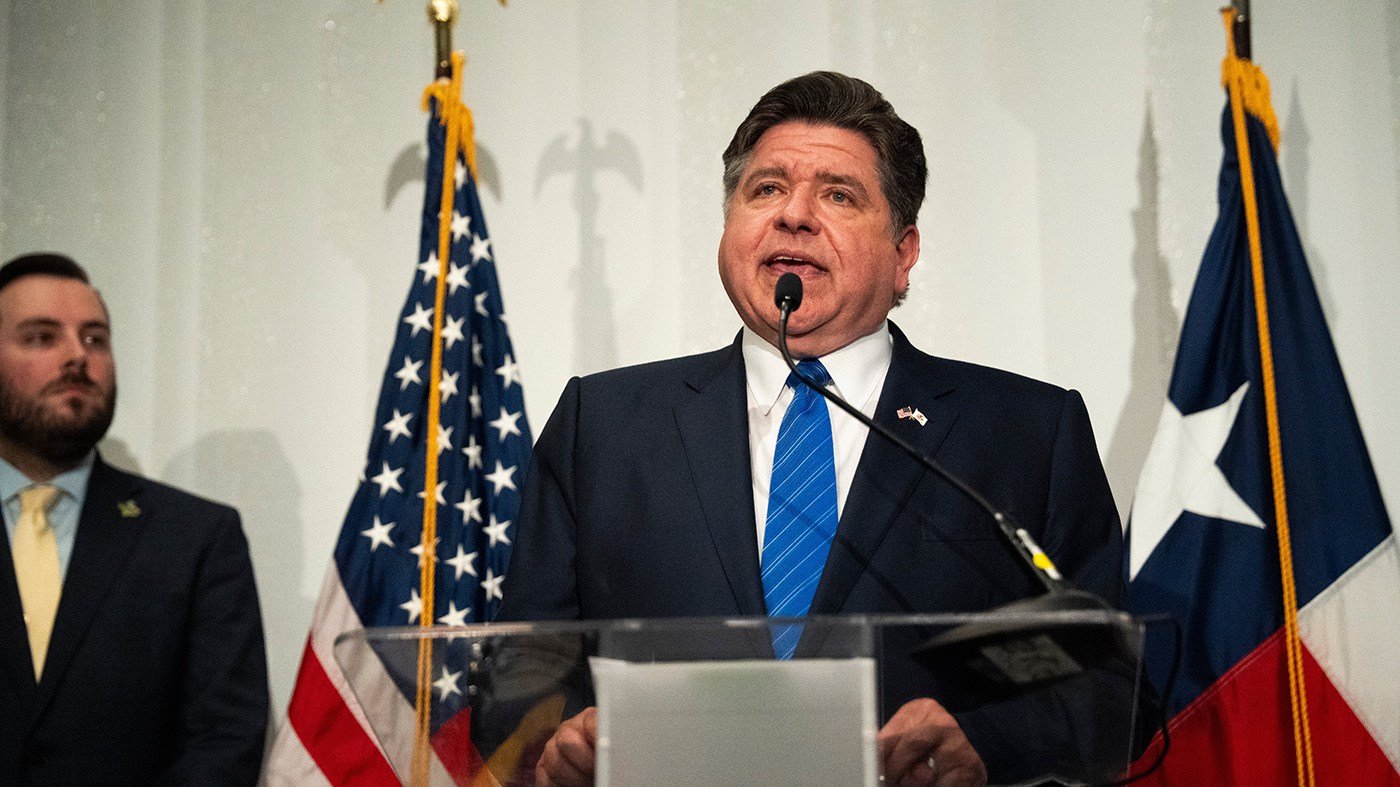
Illinois Governor JB Pritzker has visibly transformed over the past two years, shedding 80 pounds with the help of a GLP-1 medication to manage his diabetes. The change has not gone unnoticed, prompting the Democrat—who is weighing a 2028 presidential bid—to address the topic directly in interviews and an essay, insisting that health concerns, not political ambition, drove the decision.
His weight loss has nonetheless sparked fresh conversation among political strategists about the role of appearance in presidential campaigns. In an era where voters increasingly value authenticity, candidates are adapting their public personas—filming their own content, appearing on informal podcasts, and adopting more casual styles—to seem less packaged.

How a candidate looks can signal vitality and stamina, particularly after the last election cycle where age and mental acuity became central issues. Democratic strategist Jamal Simmons noted that while voters do respond to appearance, traditional assumptions may be shifting. “People are looking for candidates that don’t fit the traditional mold,” he said, adding that physical presentation might be part of that.
Still, Simmons emphasized that health and endurance are non-negotiable. “Candidates have to be healthy enough to work at a pace that is unreal to most people,” he said. Pritzker, in a CBS Mornings interview, acknowledged the speculation linking his weight loss to a potential run, but stressed it was personal. “I’ve been driven my whole life to lose weight,” he said, crediting the availability of GLP-1 drugs for his success.
Pritzker is not alone among potential contenders in undergoing a physical transformation. Senator Elissa Slotkin of Michigan and Minnesota Governor Tim Walz have also slimmed down recently, while former Transportation Secretary Pete Buttigieg has grown a beard. California Governor Gavin Newsom, another 2028 prospect, has long cultivated a polished image that allies see as an asset. Garry South, a former Newsom adviser, argued that “appearance does matter when people are voting for president,” though he acknowledged that aesthetics can be a double-edged sword.
Critics have already seized on Newsom’s image, pointing to a 2004 Harper’s Bazaar photo shoot with then-wife Kimberly Guilfoyle as ammunition. One strategist predicted it would be used to paint him as an “out-of-touch pretty boy.” Meanwhile, former President Trump has mocked Pritzker’s weight, once calling him a “big, fat slob.” Trump himself has famously avoided rigorous exercise, contrasting with predecessors like Clinton, Bush, and Obama, who prioritized fitness.
Laurie Essig, a sociology professor at Middlebury College, said such biases are deep-rooted. “We associate fat with moral failing,” she said, noting that cultural judgments about bodies date back over a century. Yet she acknowledged Trump as an exception, suggesting the rules may be evolving.
Pritzker, however, remains unfazed. “I think it’s more like the content of your character matters more,” he told the Chicago Sun-Times, adding that he ignores critics who focus on his weight. As the 2028 race takes shape, the debate over candidate appearance is likely to persist, intersecting with broader questions of health, authenticity, and voter expectations.