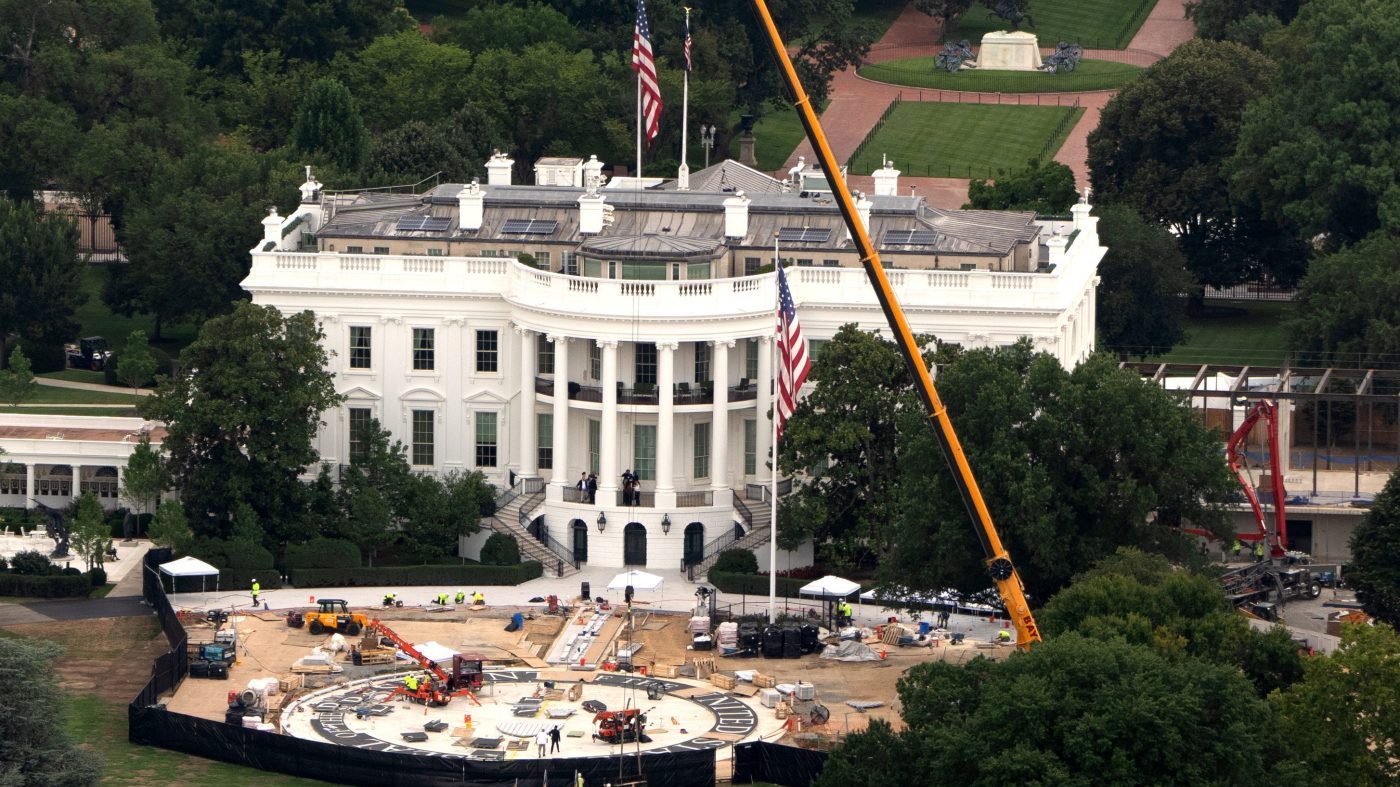
The National Trust for Historic Preservation on Tuesday urged the Supreme Court to reject the Trump administration's emergency plea to allow construction to proceed on the new White House ballroom, calling the request "astonishing." The filing is the latest twist in a legal battle that has pitted the president against preservationists over a 90,000-square-foot project.
The administration wants the justices to lift a lower court order that would halt all above-ground work starting Friday. The U.S. Court of Appeals for the District of Columbia Circuit ruled 2-1 that President Trump needs additional congressional authorization for the project, rejecting arguments that private funding makes it permissible.

In their response, lawyers for the National Trust for Historic Preservation wrote: "Petitioners, however, insist they will keep building — no matter what anyone says." The group argues that the administration is trying to bypass judicial review and usurp Congress's exclusive powers.
The Justice Department has increasingly framed the ballroom as a national security necessity, citing threats and shootings near the president. The government has disclosed plans for a drone port, military-grade ventilation, and missile-resistant steel columns as part of the structure. Trump has publicly criticized the lawsuit, accusing the group of revealing "Top Military Secrets" in a Truth Social post.
In its new filing, the preservation group countered: "If Petitioners believe there is a pressing need for a ballroom, nothing prevents them from asking Congress for one — today, tomorrow, or any time in the future." They added that the administration should not be rewarded with a stay that allows completion of a project it lacked authority to begin.
The case is on the Supreme Court's emergency docket, where justices handle urgent interim matters. The administration has a chance to reply, and a ruling could come as soon as this week. If the court decides to hear the case on its regular docket, the trust has indicated it would not oppose an expedited schedule, allowing arguments this fall and a final decision by next summer.
The administration has long argued that the trust lacks legal standing to sue over the project. Trump has repeatedly attacked the group, labeling critics as disloyal amid the legal fight. The case has broader implications for executive power, as it tests the limits of presidential authority over federal property and spending, a theme explored in recent analyses of the ballroom dispute.
Legal experts note that the outcome could set a precedent for how courts review presidential actions that bypass Congress. The administration's reliance on national security justifications is reminiscent of arguments in other cases, such as challenges to executive orders on citizenship. Meanwhile, the Supreme Court has recently shown willingness to check presidential overreach, as seen in the Carroll verdict ruling.
The trust's filing emphasizes that the administration should not be allowed to complete a project while litigation continues, arguing that the stay would effectively moot the case. The group also rejects the national security rationale, suggesting that security concerns can be addressed without a ballroom.
As the justices weigh the emergency request, the political stakes remain high. Trump has made the ballroom a symbol of his agenda, while preservationists frame it as an overreach of executive authority. The decision could arrive at any moment, potentially reshaping the balance of power between the White House and Congress.