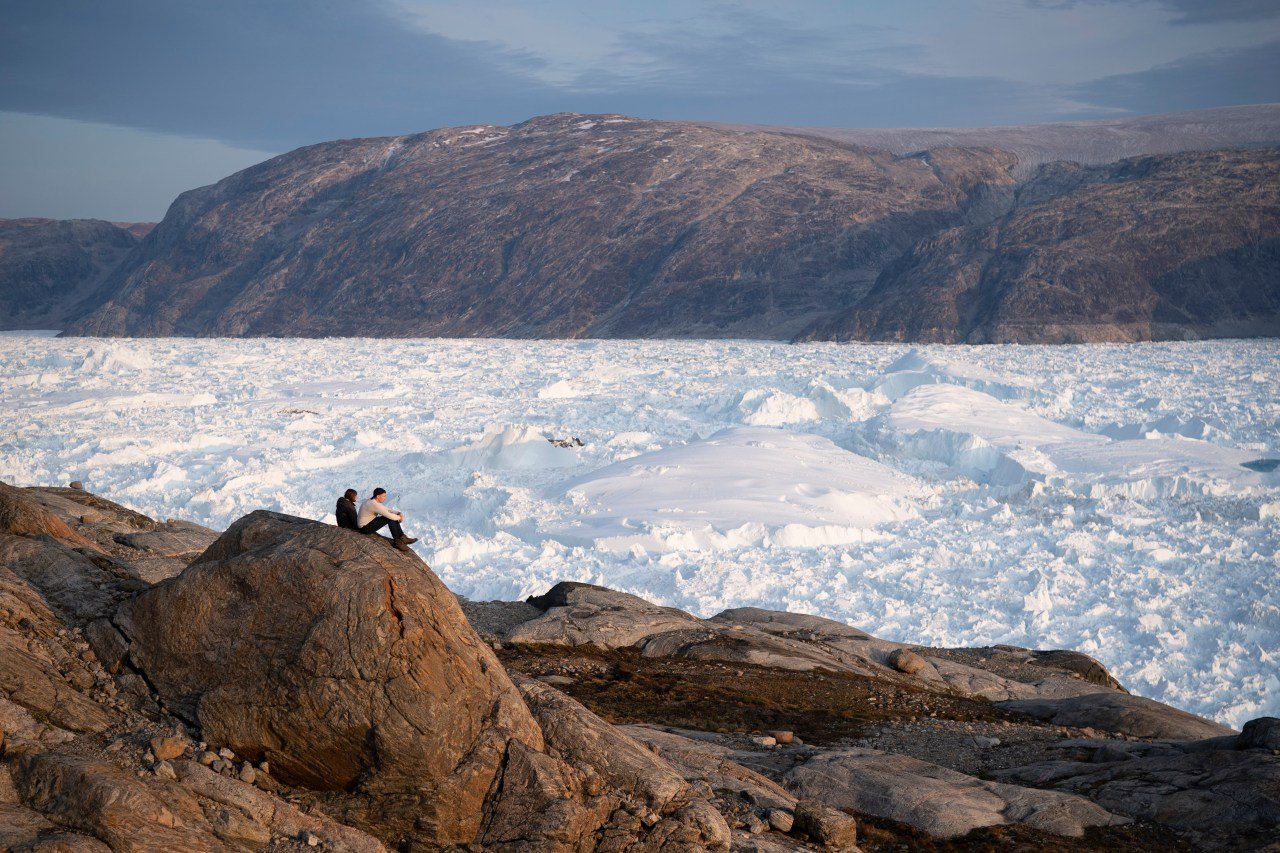
New satellite analysis shows that Greenland and Antarctica have shed a staggering 12.5 trillion tons of ice since 1979—enough to bury the continental United States under five feet of water. The findings, published Wednesday in the journal Scientific Data, underscore how rapidly the planet's largest ice reservoirs are responding to climate change.
Researchers from the European Space Agency's Polar Science Cluster, drawing on 27 satellites and 45 independent surveys, found that the vast majority of the loss—about five-sixths—is not from warmer air melting ice from above, but from warmer ocean waters eroding ice sheets from beneath and at their edges, sending glaciers surging into the sea. This dynamic process is more abrupt and harder to predict than gradual surface melting, raising concerns about potential tipping points.

“The ice sheets are melting away fast,” said Eric Rignot, an ice scientist at the University of California, Irvine, and a co-author of the study. “We are melting the polar regions, sea level is rising worldwide and will exacerbate the vulnerability of coastal regions.”
The melt has poured nearly 3 quadrillion gallons of fresh water into the oceans, contributing about an inch of global sea level rise since 1979—on top of other climate-driven increases. While an inch may seem modest, lead author Ines Otosaka of Northumbria University noted that for every third of an inch of rise, an additional 2 to 3 million people face annual flooding. “The numbers are both mind-bogglingly huge and deceptively small,” she said.
The study extends earlier satellite records back to the 1970s, revealing that the ice sheets were relatively stable until the 1990s, then began losing mass at an accelerating rate, particularly in the 2010s. “There is a clear trend that the ice sheets are losing more mass and it has been increasing from decade to decade,” Otosaka said. “And that’s quite clear that there’s a link to climate change.”
Co-author Andrew Shepherd, also at Northumbria, warned that the changes are “tracking decades behind global warming,” meaning even if emissions were halted now, the ice sheets would continue to shrink for decades. “That’s something to be concerned about,” he added.
While the accelerating loss appeared to pause between 2020 and 2023, the authors attribute that to short-term weather variations, not a reversal. Otosaka said subsequent measurements show the trend has resumed. East Antarctica’s record snowfall temporarily offset losses from the unstable West Antarctic Ice Sheet, creating a “bump in the record,” Rignot said. “The long rise is climate and the threat is crystal clear.”
Scientists are particularly worried about the dynamic processes driving the melt, which could lead to a collapse of ice sheets. New York University’s David Holland, who was not involved in the study, said the findings “give me greater confidence in the result. The upward trend is real.” University of Colorado’s Ted Scambos echoed the concern: “The ‘wild cards’ of Antarctic mass loss continue to pose a challenge for human management of the planet—a clear and present danger, but many decades in the future. We are now as a society smart enough to know the future, but not prudent enough to act upon the knowledge.”
This research comes amid broader political debates over climate action, where scientific warnings often clash with policy inertia. The findings also highlight the need for energy transition strategies that could reduce greenhouse gas emissions driving the warming.