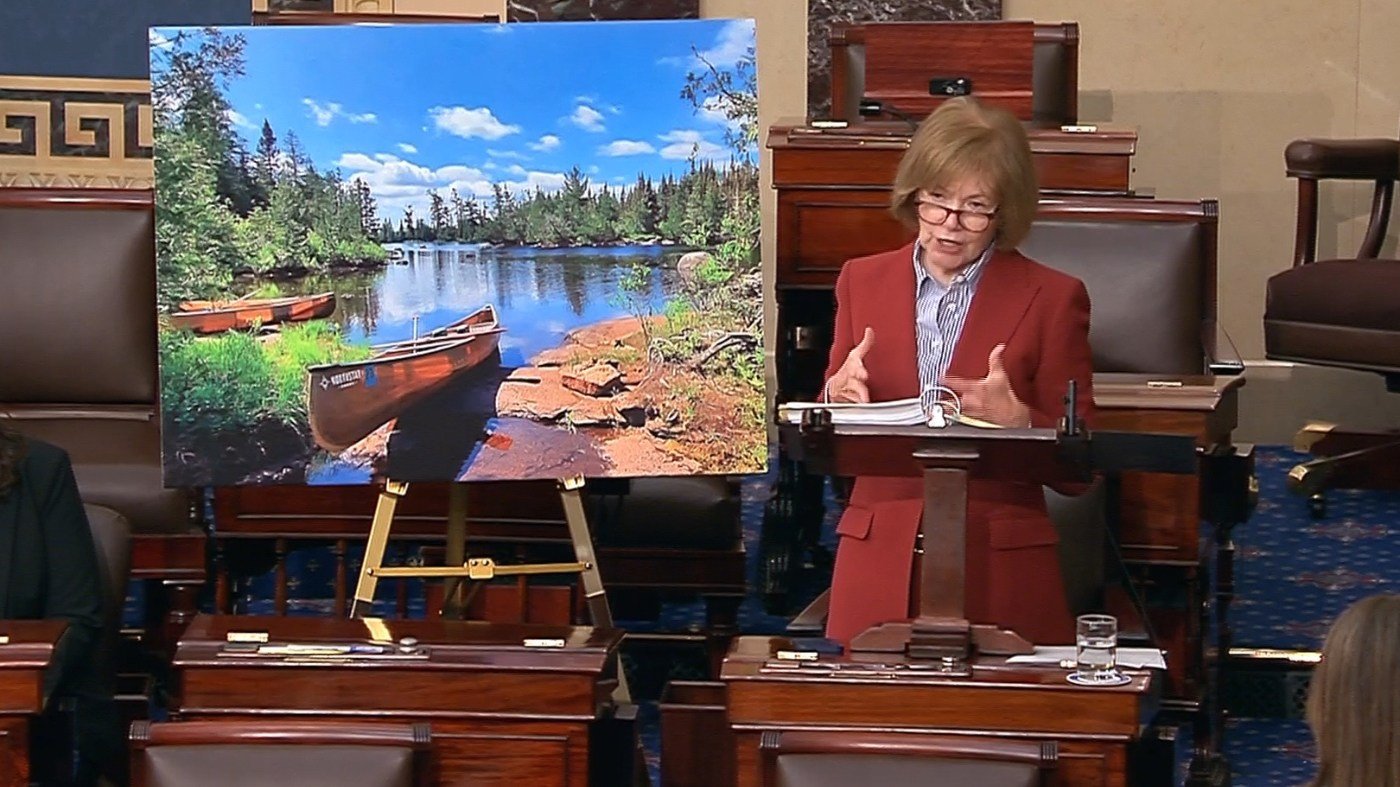
As lawmakers return to Washington after the midterm elections, one of their first items of business is a permitting reform bill that could have profound consequences for some of America's most treasured public lands. The Bipartisan American Affordability and Jobs Act, which has gained bipartisan momentum, includes provisions that would make it extremely difficult for future administrations to revoke or alter mining leases on federal lands. For Minnesota, that means the Boundary Waters Canoe Area Wilderness — a pristine 1.1-million-acre expanse of lakes and forests — is in the crosshairs.
The bill's "Project Certainty" language would bar federal agencies and courts from canceling, suspending, or amending mining leases like those held by Twin Metals Minnesota, a subsidiary of Chilean mining giant Antofagasta. Even if those leases were found to have been issued unlawfully, the bill would prevent corrective action. This effectively locks in a decision by the previous administration to reinstate two expired leases, a move that was later reversed by the Biden administration but could now be made permanent.

The stakes are particularly high for the Boundary Waters, which draws about 150,000 visitors each year and supports a $1.1 billion outdoor tourism economy in northeastern Minnesota. The region's boreal forests are home to wolves, moose, and deer, and its waters flow into Voyageurs National Park and eventually Hudson Bay. For more than six decades, both parties have protected this area from industrial development. But the pending legislation would upend that legacy.
Copper-nickel mining, which Twin Metals proposes to build in the watershed, is a far cry from the iron-ore mining that has long been part of Minnesota's economy. The process generates sulfuric acid and heavy metals, and has a track record of contaminating water and degrading ecosystems. A spill could be catastrophic. The pollution would likely flow directly into the Boundary Waters, permanently harming its water quality and wildlife.
The bill also tilts the legal playing field. While companies like Twin Metals could sue the government for damages, public interest groups, Tribal Nations, and citizens would face significant barriers to court access. Even if they succeeded, judges would be barred from vacating or enjoining the leases, no matter how egregious the violations of environmental law.
Proponents argue that permitting reform is essential to boost domestic energy and infrastructure projects, and the Senate has advanced an energy permitting overhaul with bipartisan support. But critics say this bill goes too far in sacrificing public lands for private profit. As the permitting reform push reaches a critical moment, the question is whether lawmakers will protect a national treasure or hand it over to a foreign corporation.
Former Minnesota Governor Mark Dayton, who authored a recent op-ed on this issue, called the bill "intergenerational theft." He noted that 74% of Minnesotans support a permanent ban on copper-nickel mining in the Boundary Waters watershed, reflecting a rare bipartisan consensus. President Theodore Roosevelt, who established the Superior National Forest that encompasses the Boundary Waters, called these lands "sacred heritage."
If the Bipartisan American Affordability and Jobs Act passes, it would make that heritage vulnerable to irreversible damage. Lawmakers face a choice: uphold a century of conservation or enable a mining project that could poison one of America's most beloved wilderness areas for generations to come.