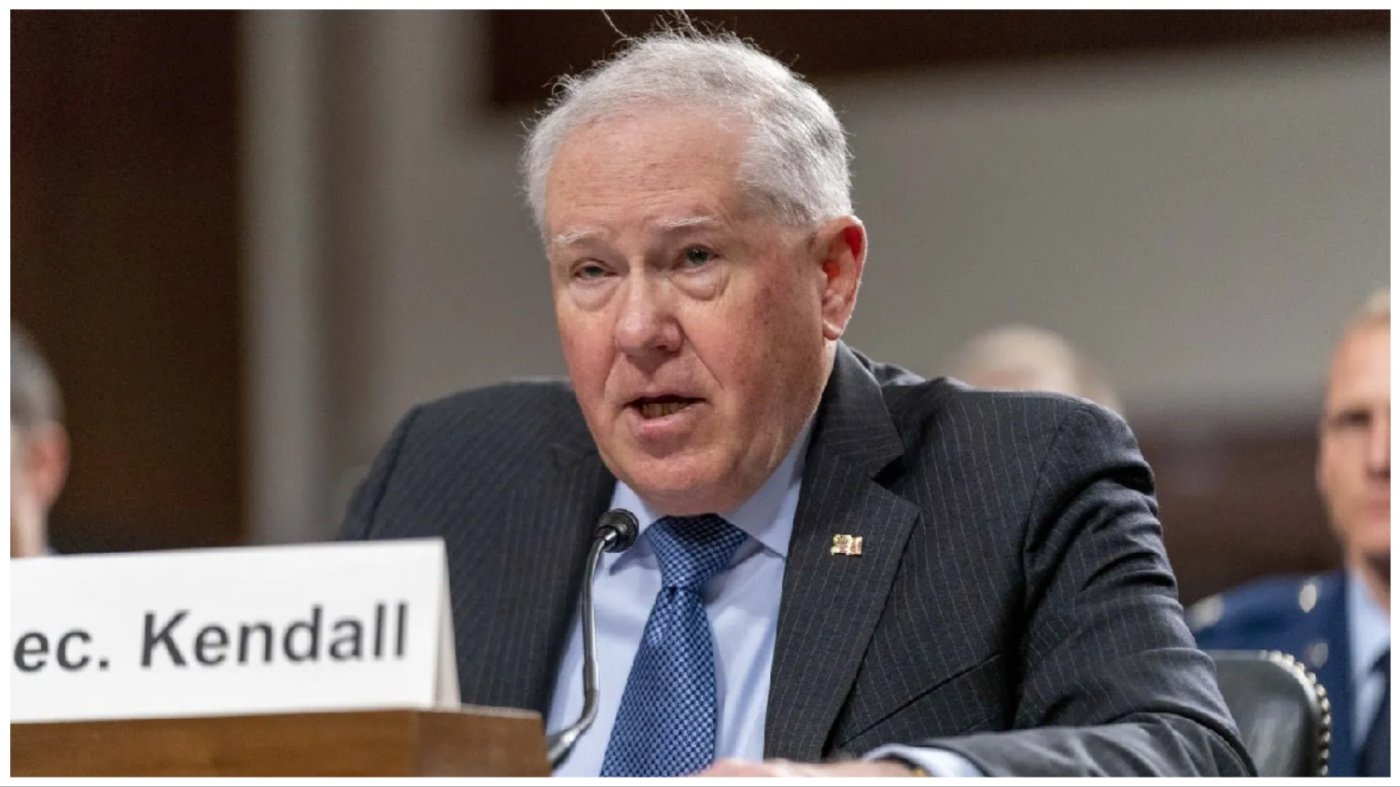
The Pentagon on Friday evening moved to revoke former Air Force Secretary Frank Kendall's eligibility for classified information, alleging he made an "unauthorized disclosure of classified information regarding Air Force One's capabilities" to a media outlet. The action also strips Kendall of his "ability to hold any sensitive position," according to Defense Department chief spokesperson Sean Parnell.
In a post on X, Parnell emphasized the gravity of the breach, stating, "Safeguarding classified information is a non-negotiable duty. Those who violate that trust forfeit the privilege of access and any role requiring it." Kendall, who did not immediately respond to requests for comment, served as the Air Force's top civilian leader from 2021 to 2025 under the Biden administration. A trained lawyer and engineer, he previously held senior national security posts for decades and is now a senior fellow at the Center for American Progress, a left-leaning think tank.

The Pentagon's action comes amid a broader administration crackdown on press freedom, highlighted by recent subpoenas issued to reporters from The New York Times. Those subpoenas are part of a leak investigation triggered by the Times' reporting on safety concerns regarding the new Air Force One, which was converted from a Qatari luxury jet gifted to the U.S. The Times reported that the Secret Service advised President Trump not to depart a NATO summit in Turkey on that aircraft because it lacked the defensive countermeasures—including advanced antimissile systems—found on the older presidential plane.
Trump ultimately chose to fly out of Ankara on the older jet, citing an abundance of caution over a potential threat from Iran, though he denied that security concerns drove the decision. The president was reportedly furious over the coverage, ordering the leak probe that led to the subpoenas and the surrender of White House officials' phones.
Kendall's case adds a new layer to the ongoing tension between the Pentagon and the press, raising questions about the administration's use of security clearances as a political tool. The move also underscores the high stakes surrounding the retired Air Force One's legacy and the scrutiny of presidential travel security.
Critics, including press freedom advocates, have decried the administration's tactics, arguing that subpoenaing journalists over national security leaks sets a dangerous precedent. Meanwhile, the Pentagon's action against Kendall—a prominent figure in defense policy—signals that the administration is willing to target former officials who may have spoken to the press.
The Defense Department's decision comes as part of a wider pattern of efforts to limit media access and control information flows. The administration has also moved to restructure military commands and escalate conflicts with oversight bodies, reflecting a broader assertiveness in executive power.
As the story develops, observers will watch whether Kendall challenges the revocation and whether the leak investigation yields further consequences. For now, the Pentagon's message is clear: those who handle classified material do so at their peril.