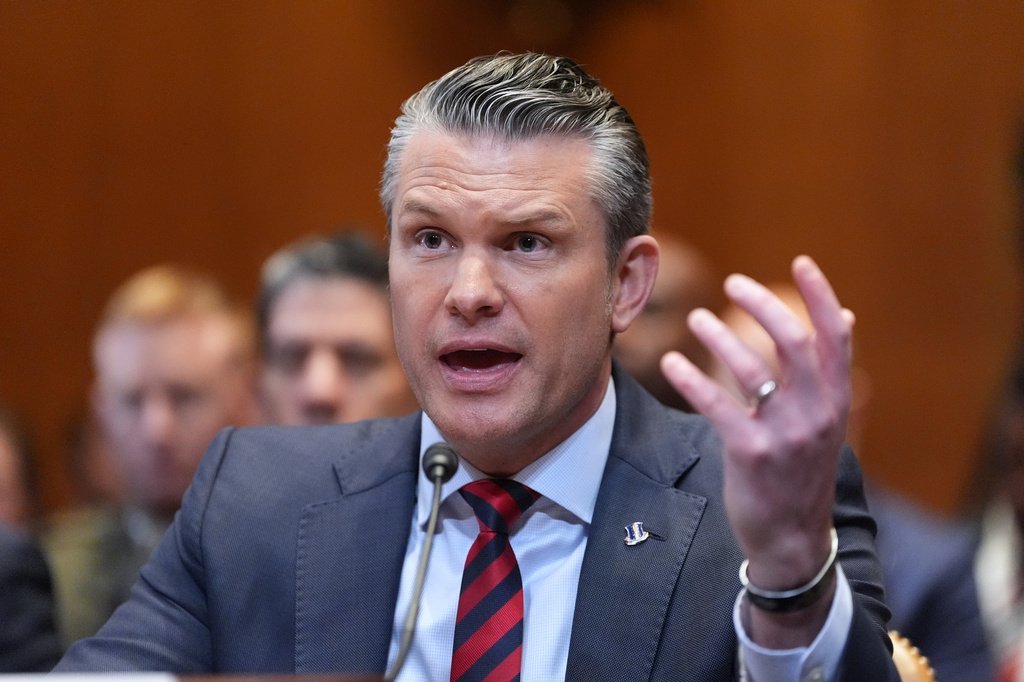
Defense Secretary Pete Hegseth is drawing sharp criticism for what critics describe as an effort to impose his personal evangelical Christian beliefs on the Pentagon, culminating in a controversial reclassification of religious affiliations that has blurred distinctions among faith groups and threatened religious liberty.
Hegseth, who identifies as an evangelical Christian, has used his government platform to promote his religious views in ways that go beyond the personal beliefs of previous officials, according to observers. While past leaders like President Joe Biden maintained a separation between personal faith and public policy—Biden, for instance, kept his Catholic opposition to abortion from shaping policy—Hegseth has actively translated his evangelical convictions into Pentagon practice.

Last year, Hegseth launched a monthly religious devotional at the Pentagon, which he personally hosts. He invited his own pastor to speak at one session and has employed explicitly Christian language to justify military action. At one prayer meeting, he recited a prayer that included: “Let every round find its mark against the enemies of righteousness and our great nation.” He has also called on Americans to pray for the military “in the name of Jesus Christ.”
Though the prayer meetings are officially optional, service members have reported feeling pressured to attend, with some alleging that the Pentagon tracks attendance. This has fueled concerns about coercion in a setting where rank and hierarchy carry immense weight.
The latest flashpoint involved a Pentagon effort to determine which religions are Christian, resulting in the Church of Jesus Christ of Latter-day Saints being labeled non-Christian—a move that prompted a backlash from LDS leaders and led the Pentagon to backtrack by removing all faith designations from the list. Critics argue this approach diminishes the diversity of religious practice within the military.
Beyond the LDS issue, Hegseth’s reclassification has lumped distinct traditions under broad categories—such as merging Reformed and Orthodox Judaism into a single “Judaism” label, or grouping conservative Lutheran Church-Missouri Synod members with their more progressive counterparts in the Evangelical Lutheran Church in America. For believers, these distinctions matter deeply, but the new system erases them.
The Pentagon has defended the changes, claiming they “will provide chaplains with clear, readily available information that will better enable them to anticipate the religious support needs of service members.” But critics counter that chaplains, who typically understand the nuances of different faiths, require specific details to offer effective counsel. Broad categories, they say, hinder rather than help.
Richard Davis, a professor emeritus of Political Science at BYU and author of books on politics and religion, argues the most neutral approach is simply listing the names of actual religious organizations, as was done previously. “The Pentagon should return to that list and drop the attempt to blur the distinctions that are real in the lives of military members,” he said.
The controversy extends beyond the walls of the Pentagon. Hegseth’s promotion blocks have already sparked outrage among ex-military brass, and his aggressive rhetoric on Iran—including vows of “strong and clear” strikes—has raised the stakes for U.S. defense policy. Meanwhile, the broader push to inject religion into government operations has revived debates about the separation of church and state.
If Hegseth will not voluntarily separate his personal faith from his official duties, Congress may need to step in. As critics see it, the secretary of Defense has no business promoting a particular religion—or religion at all—through the machinery of government. The current trajectory, they warn, is a direct threat to the religious liberty of service members and the constitutional principle that bars the establishment of religion.