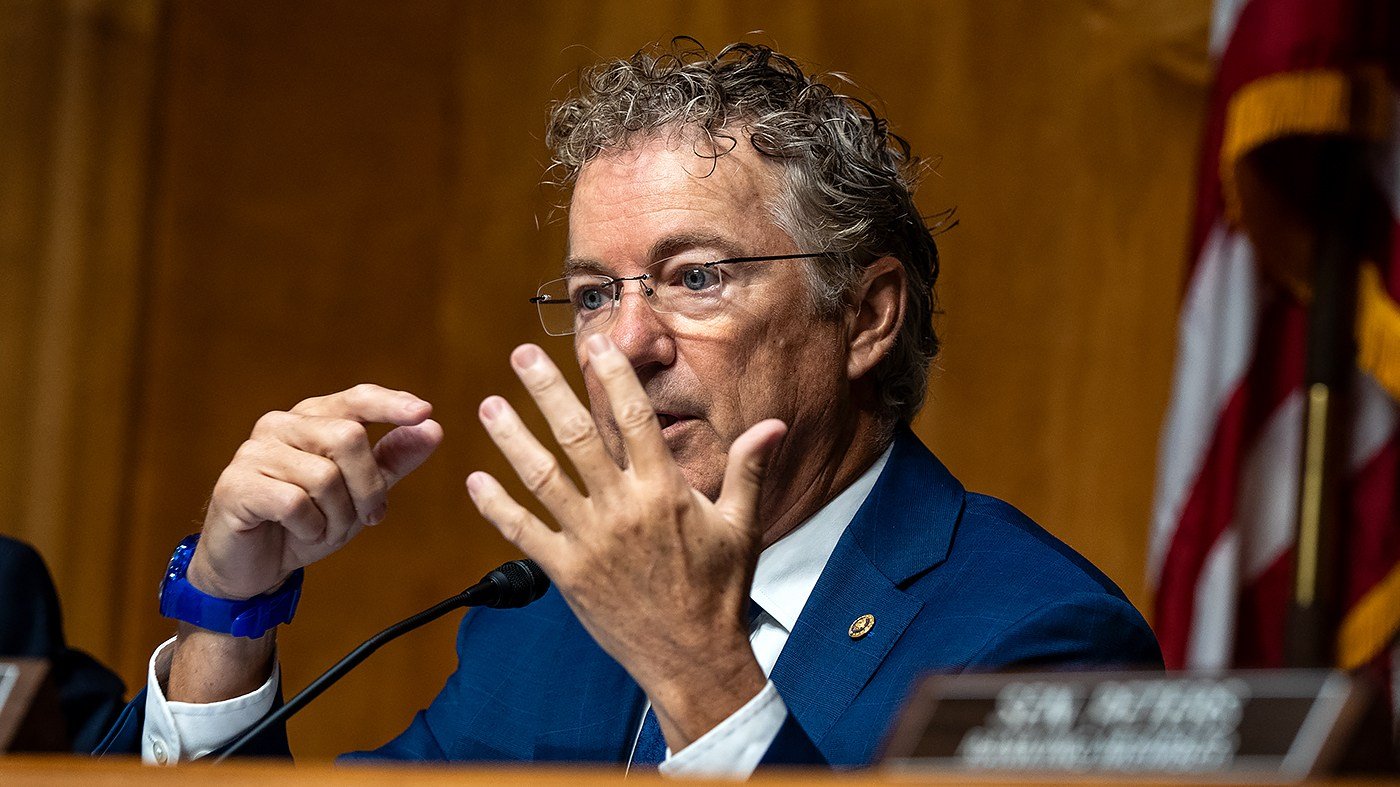
Sen. Rand Paul (R-Ky.) announced Wednesday his bid to become the ranking Republican on the Senate Committee on Health, Education, Labor and Pensions (HELP) for the next Congress, a move that would reshape the panel's GOP priorities and set up a high-stakes confrontation with the committee's incoming Democratic chair.
Paul, an ophthalmologist and the most senior Republican on the committee, currently chairs the Senate Homeland Security Committee. He would relinquish that post to take the health panel's top GOP slot, a transition that underscores the shifting political landscape following the GOP's bruising midterm losses.
The committee is undergoing significant turnover: current HELP Chair Bill Cassidy (R-La.) lost his primary earlier this year, and several other Republican members, including Sens. Susan Collins (R-Maine) and Roger Marshall (R-Kan.), also lost their seats. That upheaval opens the door for Paul to step into a leadership role.
In a statement, Paul framed his bid as a defense of individual liberty against federal overreach. "As a physician and the author of dozens of bills on health care, education, and labor, I know the issues before this committee affect nearly every American family," he said. "The coming Congress will bring a rush toward socialism unlike anything we have seen. Families, not federal bureaucrats, should make the decisions that shape their lives."
Paul's likely counterpart, Sen. Bernie Sanders (I-Vt.), is expected to take the gavel and has long championed expanding government-run healthcare, including a push toward Medicare for All. The two are poised for sharp clashes over the direction of U.S. health policy, with Paul positioning himself as a staunch opponent of centralized control.
Beyond the legislative arena, Paul's new role would give him a platform to amplify views on medical issues that many scientists consider fringe—an approach he has used to challenge what he sees as institutional bias. His track record on the Homeland Security panel, where he said he "challenged entrenched bureaucracies" and "pulled back the curtain on what Washington tried to hide," suggests he will bring a similar confrontational style.
Paul has been a relentless critic of pandemic-era policies, particularly targeting Dr. Anthony Fauci. He has pushed investigations into COVID-19's origins and sought to hold Fauci accountable, even forcing a contempt resolution after Fauci invoked his Fifth Amendment rights during a hearing.
Political analysts say Paul's move could energize his base while complicating bipartisan efforts on health issues. His leadership ambitions within the GOP may also signal a broader strategy as the party recalibrates after the election.
The committee's agenda will likely include debates over drug pricing, pandemic preparedness, and the future of the Affordable Care Act. With Democrats sweeping Congress on a healthcare backlash, Paul's role as ranking member could become a key point of friction.
As the new Congress convenes, all eyes will be on how Paul and Sanders navigate their ideological divide—and whether Paul's presence shifts the committee's focus toward his signature issues of medical freedom and federal accountability.