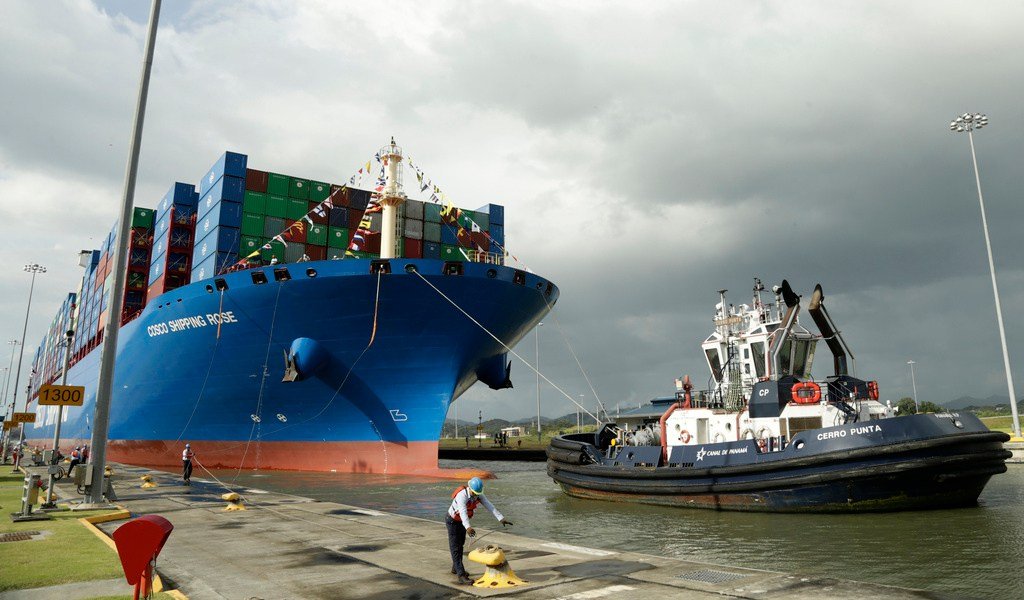
Panama is now feeling the sting of Beijing's displeasure. Recent moves by Chinese authorities to sharply increase inspections and detentions of Panamanian-flagged vessels are widely seen as retaliation for the Panamanian Supreme Court's decision to strike down port concessions held by Hong Kong-based CK Hutchison at the Balboa and Cristobal terminals. While Beijing cites safety concerns, Panamanian officials interpret the actions as punishment for a ruling that undercut China's commercial foothold at both ends of the Panama Canal.
This standoff is just one front in a larger geopolitical contest over influence in the Western Hemisphere. For over two decades, China has methodically expanded its reach across Latin America by financing, building, and operating critical infrastructure—ports, railways, power grids, telecom networks, logistics hubs, and energy projects. These investments have woven Chinese influence deep into the region's economic fabric, extending far beyond mere commerce.
Washington, however, has begun to push back. The Panama dispute offers an early test of how difficult it may be to reverse years of Chinese infrastructure expansion. As one of us, John Spencer, recalls from his Army service in the Panama Canal Zone, the canal is not just an engineering marvel but a symbol of American vision and strategic advantage. Yet that advantage has eroded as the U.S. allowed its attention to drift while Chinese companies steadily pursued projects near this vital maritime chokepoint, less than four hours by air from Miami.
Panama's pivot toward Beijing began in 2017 when it recognized the People's Republic of China, severing diplomatic ties with Taiwan, and joining the Belt and Road Initiative the following year. Chinese firms subsequently pursued major projects, including the proposed Panama City-David railway, the Fourth Bridge over the canal, and the Amador Cruise Terminal. The most contentious were the Balboa and Cristobal terminals, operated by Panama Ports Company, a CK Hutchison subsidiary. While China did not own or operate the canal itself, its companies had gained significant influence over the commercial infrastructure surrounding it.
Panama is hardly alone in this pattern. China's COSCO Shipping built and operates the deep-water port at Chancay in Peru. State Grid of China has invested heavily in Brazil's electricity transmission network. Across the region, Chinese firms have expanded into energy, mining, transportation, and telecommunications. In Venezuela, more than $60 billion in Chinese lending helped secure oil access while propping up the Maduro regime. Each deal had its own commercial logic, but collectively they created a network of Chinese influence spanning ports, power systems, supply chains, and national economies.
Washington increasingly views Chinese influence around the canal as a national security concern. It has pressed Panama on the issue, encouraged American investment, and supported efforts that led CK Hutchison to agree to sell its controlling interest in the terminals to a U.S.-led consortium. When Chinese opposition delayed the sale, Panama's Supreme Court voided the port concessions, clearing the way for new management. Panama also withdrew from China's Belt and Road Initiative, making it the first visible effort to reverse a much broader Chinese strategy built on infrastructure throughout Latin America.
Beijing's response underscores why control of infrastructure matters. Ports move trade, electrical grids power economies, telecommunications systems carry information, and logistics hubs connect global supply chains. Once countries become dependent on these systems, commercial relationships can become political leverage. Panama's shipping registry is now feeling that pressure through delays, inspections, and the possibility that shipowners will move their vessels elsewhere.
Panama will not be the last contest over Chinese infrastructure in the Western Hemisphere. Similar battles are likely wherever ports, railroads, electrical grids, telecommunications networks, and logistics hubs intersect with national security. As the cyber warfare doctrine suggests, China's methods are multifaceted, and its infrastructure investments are a key component of its strategic playbook.
Reversing two decades of Chinese investment will require the U.S. to compete with the same patience and persistence that Beijing has shown. The Panama dispute is a warning shot, signaling that the contest over infrastructure in the Americas is far from over. As the U.S. and China vie for influence, the outcome in Panama could set a precedent for how other nations navigate the competing pressures of these two superpowers.