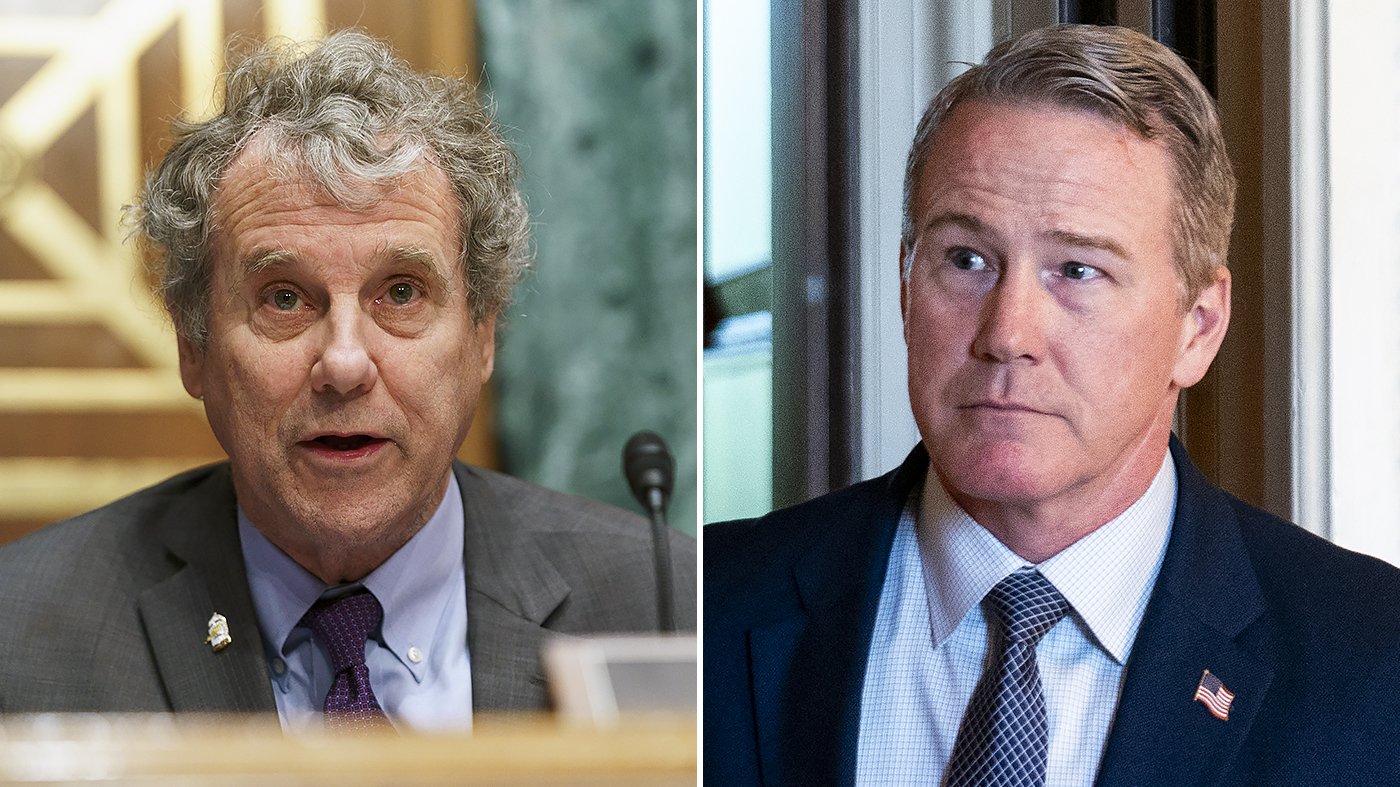
One of the most closely watched Senate races this year has become a flashpoint for the national debate over data centers. In Ohio, incumbent Republican Sen. Jon Husted and Democratic challenger Sherrod Brown are locked in a toss-up contest where the politics of data center development could prove decisive.
Husted, who was appointed in 2024 to finish Vice President Vance's term, is seeking a full term. Brown, a former senator who lost his seat that same year, is aiming for a comeback. The race is pivotal for control of the Senate, and recent polling shows Brown with a lead—53 percent to Husted's 45 percent in a Fox News survey.
Brown's campaign has seized on Husted's record as lieutenant governor from 2019 to 2025, when he championed tax breaks for data center developers. Three ads so far have highlighted those incentives, with Brown arguing that Ohioans are now paying higher utility bills as a result. "Jon Husted led the charge, he was the point man to bring these data centers to Ohio," Brown said at a July rally. "He delivered billions of dollars in sweetheart tax deals. Ohioans now pay thousands more on their utility bills. It's exactly what people hate about politics."
Husted's team counters that he has introduced a federal bill to require data center developers to cover their power costs and return unused electricity to the grid. "Sen. Husted introduced legislation requiring data center companies to pay for the power they use and return excess electricity to the grid—a commonsense solution that supports America's growing technology infrastructure while protecting reliable, affordable energy for Ohio families," said campaign spokesperson Amy Natoce. "Sherrod Brown had three decades in Congress to lead on this issue. Instead, he did nothing and is suddenly pretending to care in the middle of an election year."
Brown's campaign manager, Patrick Eisenhauer, fired back: "Jon Husted led the charge to bring hundreds of data centers to Ohio and blamed families for skyrocketing utility rates that he caused. Now, Husted is so worried about his toxic record that he is begging his special interest buddies and corporate friends to come and bail out his failing campaign. Ohioans—not Jon Husted and his billionaire friends—should get to decide if data centers are built in their community."
The issue's potency is underscored by a private memo from the National Republican Senatorial Committee this week, which warned AI companies that Brown's focus on data centers could turn public opinion against them if Husted loses. The memo urged companies to better explain who benefits, who pays for higher costs, and why communities should welcome data centers.
Republican strategist Chris Johnson of the American Energy Leadership Institute said Husted is playing a long game by avoiding both a moratorium and overhyped promises. "He has the benefit of, it's not in his jurisdiction or purview as a senator," Johnson said. "But I think it's also smart to not go out there and say this is the greatest thing ever... I think the benefits will speak for themselves."
Ohio is home to 240 data centers, with more on the way. This week, Nvidia and OpenAI announced an "AI factory" in Portsmouth, near the Kentucky border. But local resistance is growing: Grove City voters will decide in November whether to require a referendum on large-scale data centers, and a statewide group, Conserve Ohio, is pushing a constitutional amendment to ban facilities using over 25 megawatts per month.
National polling from Public First in July found 41 percent of Americans would oppose a data center near them—a shift from six months earlier, with Democrats more opposed than Republicans. With thousands of data centers operating or under development nationwide, politicians are reversing course. Governors in New York and Pennsylvania have signed restrictions, and Ohio's gubernatorial candidates—Democrat Amy Acton and Republican Vivek Ramaswamy—have both voiced support for limits.
The Ohio Senate race is emerging as a key test of whether data center backlash can sway elections. As both parties pour resources into the state, the outcome could signal how other candidates handle the issue in 2026 and beyond. For more on the broader political landscape, see how governors' races are becoming a Democratic counterweight to Trump, and recent Ohio polling shows both Brown and Acton ahead. Meanwhile, Senate Republicans are bracing for a fall showdown over Trump's agenda, and some argue blocking AI data centers risks America's economic future.