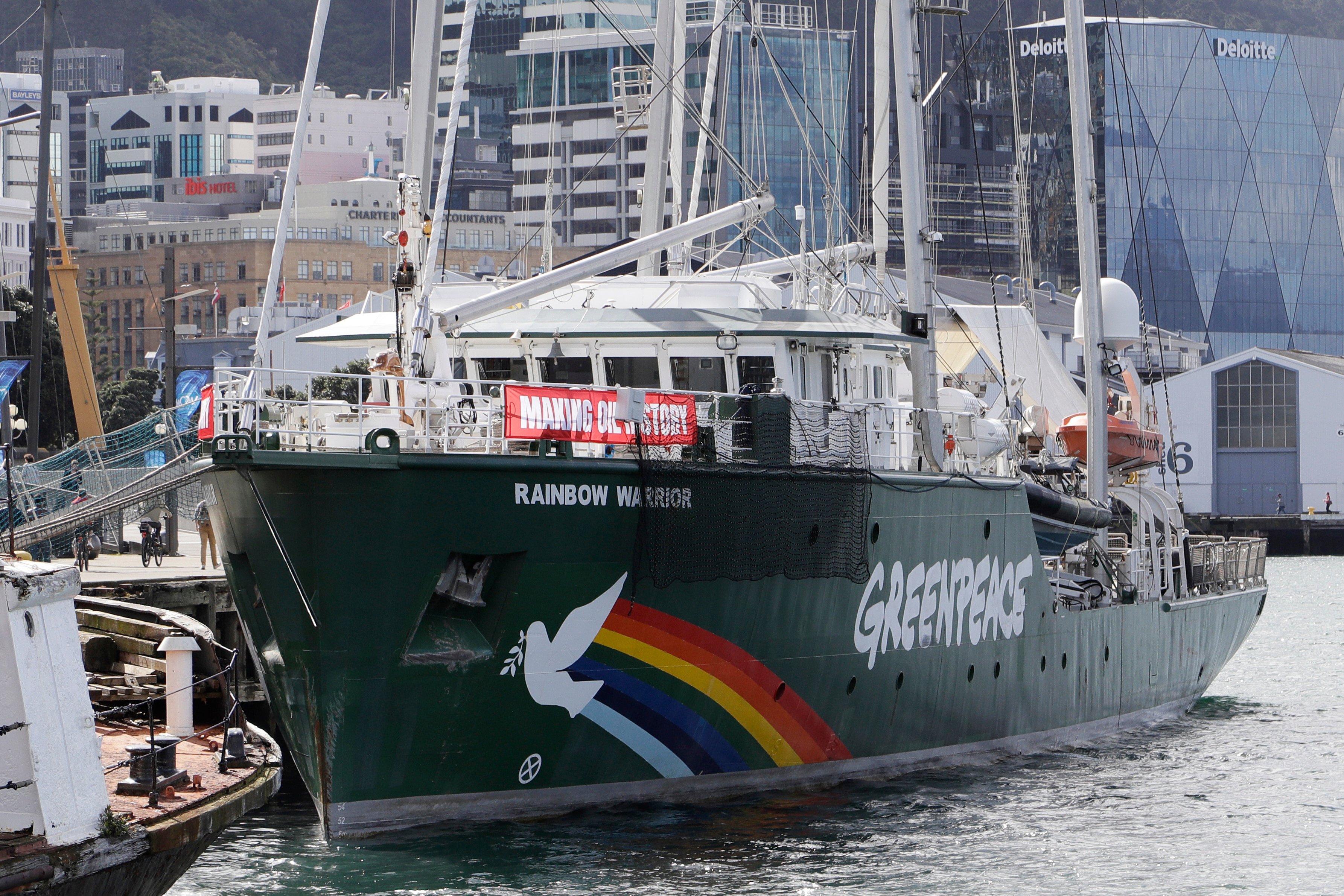
The North Dakota Supreme Court delivered a sharp rebuke to Greenpeace's legal strategy on May 7, ruling four to one that the activist group cannot use a Dutch court to sidestep a unanimous American jury verdict. The decision reinforces U.S. judicial sovereignty and the legal protections for critical energy infrastructure.
The case dates back to 2019, when Energy Transfer sued Greenpeace and affiliated groups over a coordinated campaign against the Dakota Access Pipeline. After six years of litigation and a three-week trial, a North Dakota jury found Greenpeace liable for conspiracy, defamation, and tortious interference, awarding damages exceeding $666 million. Greenpeace International alone faced over $130 million in penalties.

Rather than accept the verdict, Greenpeace International filed a new lawsuit in Amsterdam just two weeks before the North Dakota trial began. The group sought a Dutch declaration that the U.S. case was “manifestly unfounded and abusive” under a new European Union anti-SLAPP directive, aiming to erase the jury's decision and seize Energy Transfer's assets abroad.
The North Dakota Supreme Court saw this as a clear collateral attack. Justice Jerod Tufte, writing for the majority, emphasized that substance matters over labels: any claim requiring a foreign court to find an American jury wrong is an assault on that jury's work. The court ordered a narrow injunction blocking Greenpeace from pursuing parts of its Dutch action that would relitigate the North Dakota verdict.
“Comity expires when the strong public policies of the forum are vitiated by the foreign act,” the opinion stated, meaning foreign courts earn deference only when they respect American legal processes. The ruling applies solely to Greenpeace in North Dakota, leaving the group free to pursue other aspects of its Dutch case.
Federal courts have not yet addressed whether American judges can block foreign attacks on domestic judgments, and appellate circuits are split on how much weight to give international comity. Legal experts warn that other activist groups will likely attempt similar maneuvers, especially as the EU's 2024 anti-SLAPP directive provides a ready-made framework for challenging U.S. verdicts.
The directive's “manifestly unfounded” standard invites foreign judges to second-guess American jury decisions, while Article 17 allows damages claims against those who file such suits. This creates a legal weapon against U.S. energy companies, as seen in the Greenpeace case.
Jason Isaac, a policy advocate, noted that the activist legal industry has discovered a potent tactic: when protests fail and juries rule against them, there is always another forum willing to entertain claims that American energy infrastructure is itself a crime. The goal is not to win on merits but to make building anything in the U.S. so legally treacherous that capital flees and projects stall.
The North Dakota ruling is a victory, but a limited one. Congress should consider a federal statute clarifying that American courts can block foreign collateral attacks on domestic judgments. The Trump administration's energy dominance agenda depends on ensuring that American verdicts carry real weight. Without that certainty, risk premiums rise, capital becomes scarce, and critical infrastructure projects—from data centers to factories—face delays.
Greenpeace lost in North Dakota, and lost again on appeal. But the broader fight against eco-lawfare continues. As Isaac put it, “The next case is already being drafted somewhere, and the activists who brought us a six-year siege of the Dakota Access Pipeline are not going to take this defeat as a final answer.”