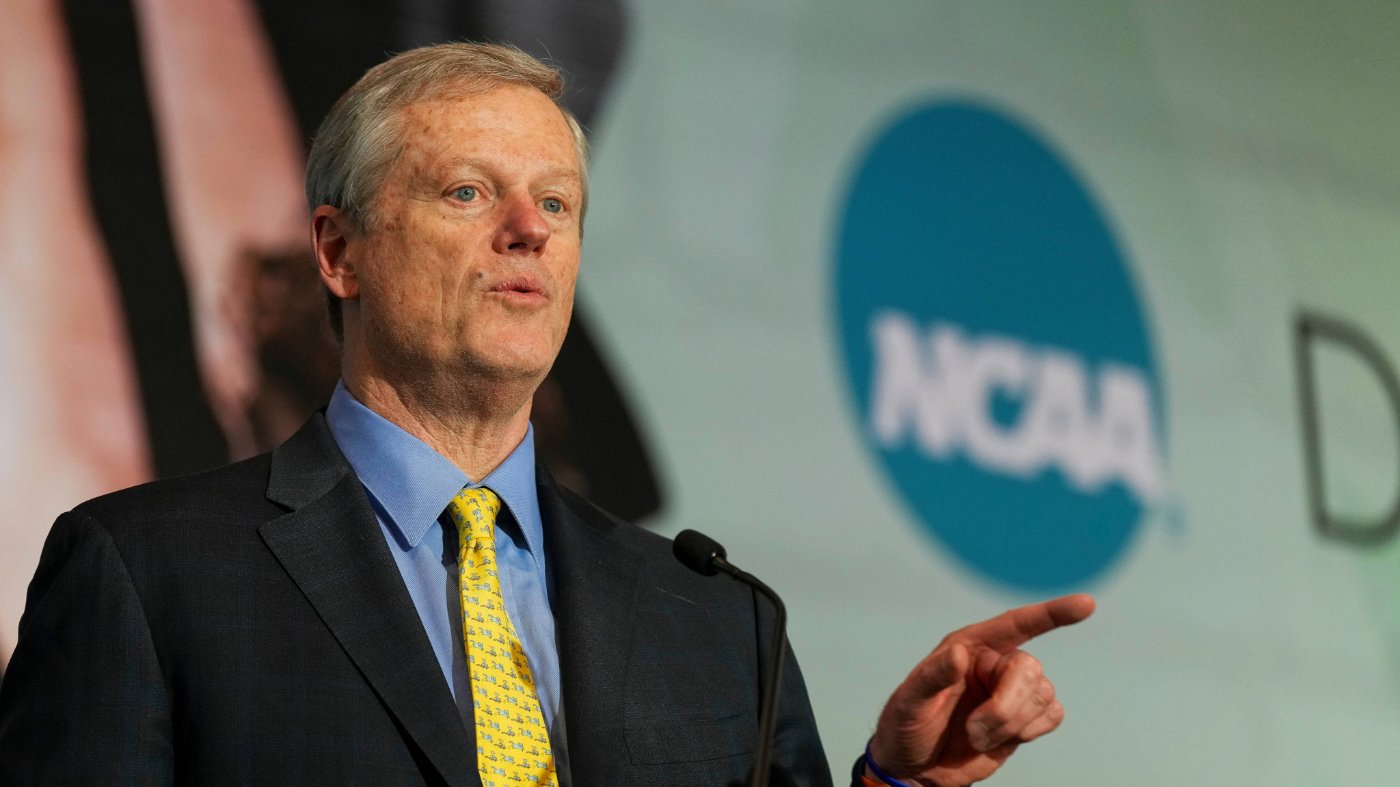
NCAA President Charlie Baker is urging lawmakers not to abandon the bipartisan Protect College Sports Act, arguing that the legislation directly addresses many of the most pressing issues facing college athletics today.
In an interview Sunday on CBS News's "Face the Nation," the former Massachusetts Republican governor described the bill as a critical step toward establishing a national set of rules for college sports. "What we're really trying to achieve is some sort of national framework so that you can have national championships and national competitions, in which, for all intents and purposes, everybody's playing by the same set of rules," Baker told host Ed O'Keefe.

The Senate Commerce, Science and Transportation Committee advanced the Protect College Sports Act last month by a 19-9 vote, with 12 Republicans and seven Democrats in support. The legislation was crafted by committee leaders Senator Ted Cruz (R-Texas) and Senator Maria Cantwell (D-Wash.), along with Senators Chris Coons (D-Del.) and Eric Schmitt (R-Mo.).
The bill would grant the NCAA limited antitrust protection and set new standards on the transfer portal, student athlete compensation, and medical coverage. It also proposes granting student athletes five years of eligibility starting the academic year after they turn 19 or graduate high school—a change the NCAA quickly adopted for Division I sports after the committee vote. Those eligibility changes take effect with the fall 2027 incoming class, with the NCAA saying the move "will align athletics eligibility with enrollment and graduation patterns for the general student population."
Major stakeholders, including the Atlantic Coast Conference, Big 12, and the NFL and NBA players associations, have endorsed the bill. However, the Big Ten and Southeastern Conference—the two most lucrative conferences—said last month that "revisions are needed" before they can offer their support.
Baker acknowledged those concerns during the interview, noting he has his own reservations about the bill. "But to simply walk away from something that deals with a number of the most significant challenges that face college sports at [this] point in time, in my view, would be a mistake," he said.
He emphasized the bipartisan nature of the effort. "These folks crafted a bipartisan bill, really hard to do. Does everybody love everything about it? No. Is the process associated with crafting it done? Also, no," Baker added. "So, let's take seriously this opportunity to support the process, support the effort, support the parts of the bill that we believe in. And then continue to try and work with folks in the Senate, and hopefully ultimately folks in the House to create something that we can all get behind."
The Senate is currently on recess for the July 4 holiday and returns July 13. Lawmakers then face a month-plus recess starting August 8, just weeks before the college football season kicks off. The timeline adds urgency to the push for a deal, as the debate over athlete compensation and eligibility continues to unfold amid broader political battles. For instance, the Supreme Court's recent ruling on transgender athletes in school sports has further complicated the landscape, while state-level political fractures highlight the challenges of bipartisan cooperation.