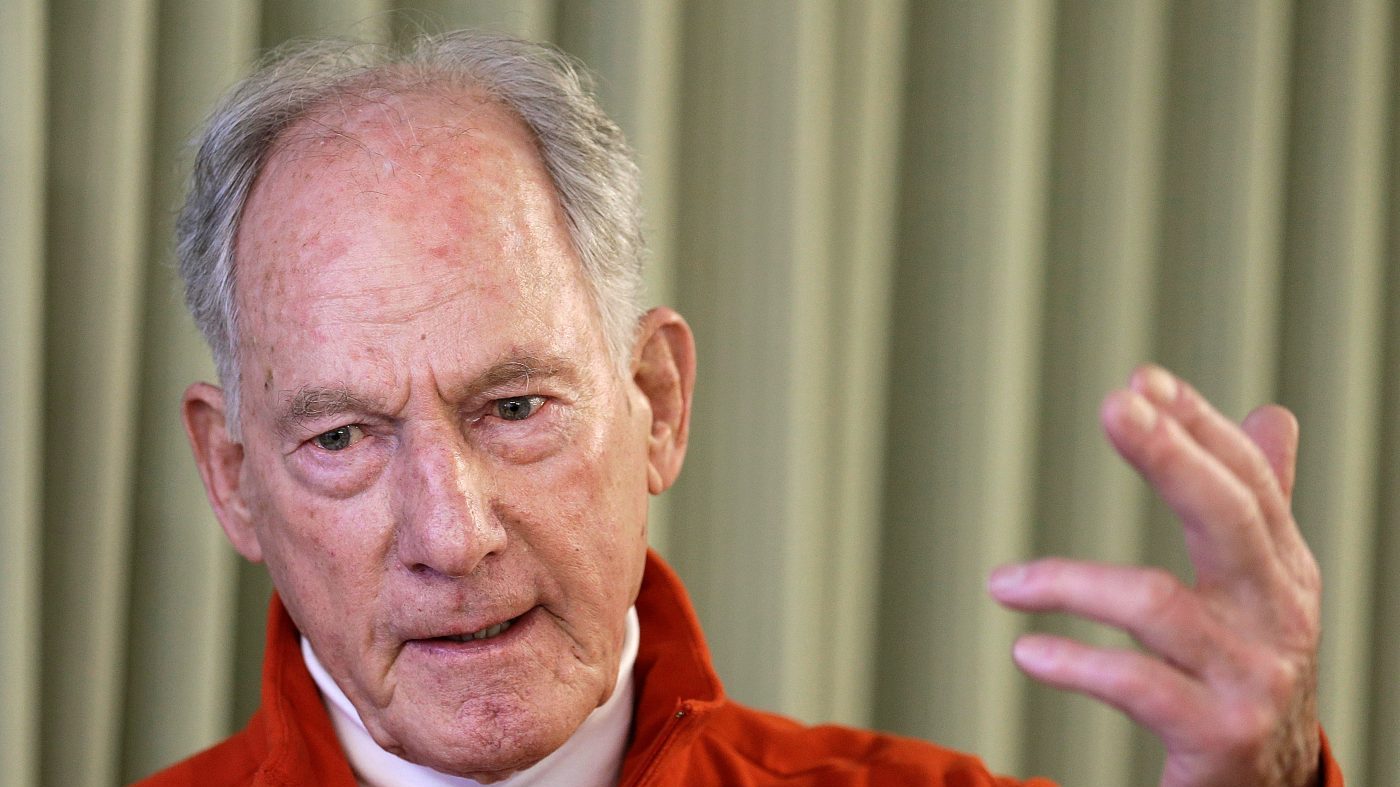
Jim Whittaker, the mountaineer who planted the first American flag atop Mount Everest in 1963, died Tuesday at his home in Port Townsend, Washington. He was 97 years old. His death marks the passing of an iconic figure whose historic ascent transformed him from a reserved outdoorsman into a national celebrity and connected him to the highest levels of American political power.
A Historic Ascent and Political Connections
Whittaker reached the world's highest peak a decade after Sir Edmund Hillary and Tenzing Norgay's first successful summit. The achievement propelled him into prominence, where he developed close ties with political figures, most notably the late Senator Robert F. Kennedy. Whittaker served as state chairman for Kennedy's presidential campaign and became a personal friend, famously guiding the senator up Canada's Mount Kennedy in 1968. The 6-foot-5 climber once described Kennedy as "one of the grittiest little guys you've ever seen," adding that "it's not how big you are but how tight you are wound that counts." He was reportedly devastated by Kennedy's assassination later that year.

Philosophy of Risk and Exploration
Whittaker's climbing career began in Washington's Olympic Mountains as a Boy Scout. He often spoke of mountaineering as a spiritual pursuit that sharpened human perception. "You're in nature, participating in God's creation... it's such a high, such a spiritual thing," he said in a 1981 interview. "When you live on the edge, you can see a little farther." He maintained that mountains were "fair, but they really don't care," acknowledging the inherent dangers that claimed many climbers' lives.
His legacy includes not only Everest but also expeditions to K2, the world's second-highest peak. He shared his elite status with his identical twin brother, Lou Whittaker, who led the first American team to conquer Everest's treacherous north face. Lou Whittaker died earlier this year at 95.
Advocacy and Later Years
Despite his record-setting climbs, Whittaker considered his 1981 leadership of an expedition that brought ten climbers with disabilities up Mount Rainier as one of his proudest accomplishments. For those participants, he noted, "that was Mount Everest." He summited Rainier over one hundred times but never underestimated its challenges, warning that weather "can turn a good climber into a beginner" within hours.
In his later years, Whittaker became a vocal critic of regulatory proposals in mountaineering. In 2007, he opposed mandatory electronic locator devices for climbers on Oregon's Mount Hood, where dozens had perished since the 1980s. Speaking to The Associated Press from a climbing trip in Idaho, he argued such requirements would "take a lot away from the mystique of climbing" and remove personal liberty. "If you take all of the risk out of life, you lose a lot," he said. "You want to go into the wild and enjoy nature and not be followed."
Legacy in a Changing America
Whittaker's life spanned eras of tremendous national change, from post-war exploration to modern debates about safety versus freedom. His resistance to climbing regulations reflects broader cultural tensions between institutional safeguards and individual autonomy that continue to shape American policy discussions. The economic context of his later years also shifted dramatically, with many households now facing structural pressures that threaten middle-class stability, making the pure pursuit of adventure an increasingly rare luxury.
International conflicts that emerged during his lifetime, particularly in the Middle East, have created new global dynamics that affect American life in tangible ways, including rising energy costs that concern most citizens. Meanwhile, domestic policy debates continue to evolve, with recent judicial decisions like those affecting educational materials demonstrating how American institutions grapple with cultural change.
Jim Whittaker once expressed hope that he would "die in my sleep with the television on." His passing closes a chapter in American exploration history, leaving behind a legacy that intertwines physical achievement with philosophical convictions about risk, freedom, and the human spirit's capacity to confront the world's greatest heights.