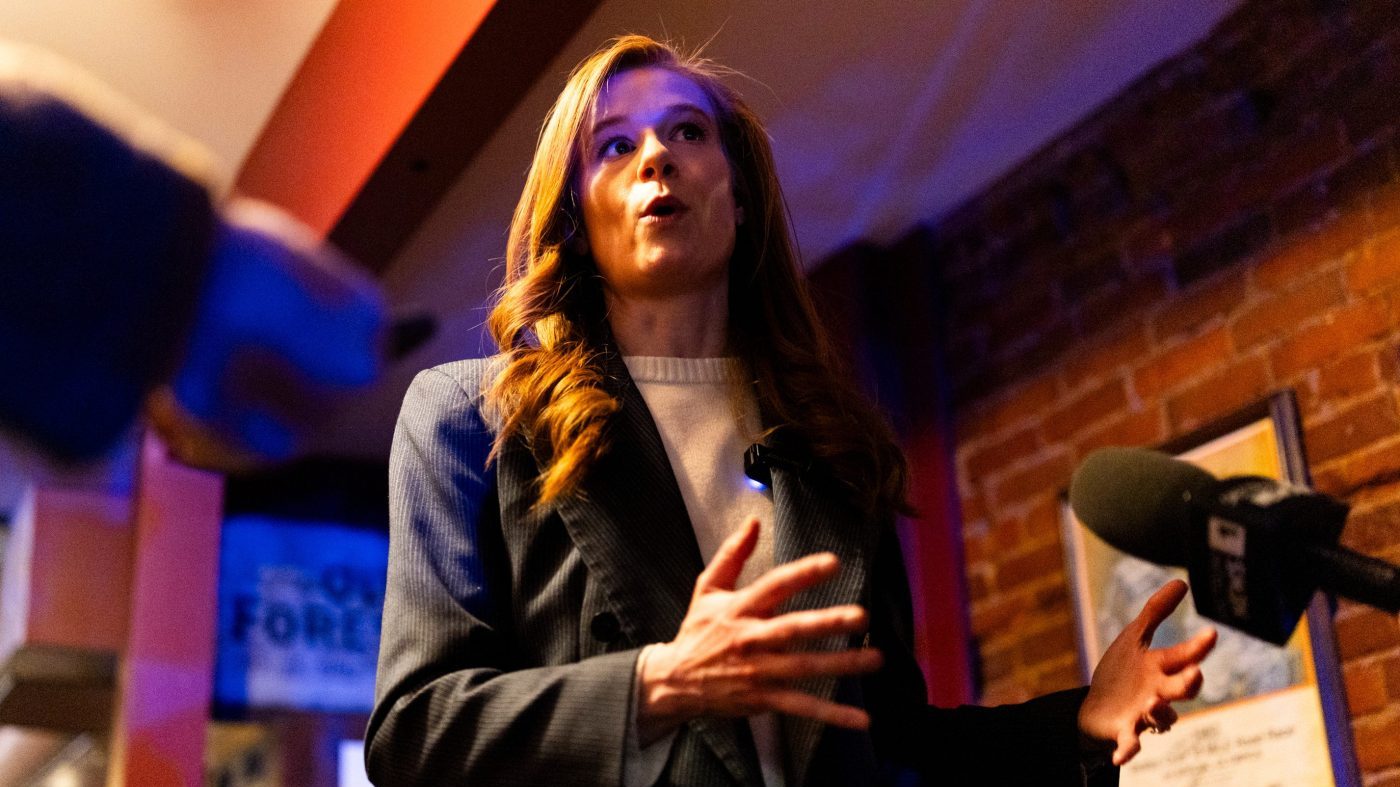
Michigan state Senator Mallory McMorrow ended her campaign for the U.S. Senate on Sunday, bowing out after struggling to gain traction in a crowded Democratic primary. The move reshapes the race to succeed retiring Senator Gary Peters, with two main contenders now vying for the nomination.
McMorrow, who has served as the majority whip in the Michigan Senate since January 2023, announced her decision in a video posted on X, formerly Twitter. “Today, I’m announcing that I am suspending my campaign for United States Senate. And I’m doing it with a deep, deep sense of gratitude,” she said, thanking supporters but offering no detailed explanation for her withdrawal.
Her exit leaves the Democratic primary field dominated by moderate Representative Haley Stevens and progressive Abdul El-Sayed, a former director of health and human services for Wayne County. The primary is set for August 4, and the contest is expected to be a key test of the party’s ideological direction in a battleground state.
Stevens, who represents a suburban Detroit district, has positioned herself as a pragmatic lawmaker focused on economic and industrial policy. El-Sayed, backed by progressive figures including Representative Alexandria Ocasio-Cortez, has run on a platform emphasizing universal healthcare and systemic reform. Ocasio-Cortez has endorsed El-Sayed, boosting his campaign among left-leaning voters.
McMorrow launched her bid in April 2025, hoping to succeed Peters, who announced his retirement earlier this year. Despite her leadership role in the state legislature and a reputation as a rising Democratic star, she failed to break through in a field that quickly consolidated around two more prominent candidates.
The race has drawn national attention as Democrats seek to retain Peters’s seat in a state that has swung between parties in recent elections. The primary outcome will set the stage for a general election fight that could help determine control of the Senate. A recent poll found 29% of U.S. voters open to Democratic socialist candidates, a dynamic that could influence the race’s messaging.
McMorrow’s departure simplifies the Democratic calculus, but it also underscores the challenges faced by candidates who lack a clear ideological lane or strong name recognition. With Stevens and El-Sayed now the frontrunners, the primary will likely intensify as they compete for support from different wings of the party.
This story is developing.