Senior Republican Challenges Party's Orbán Infatuation
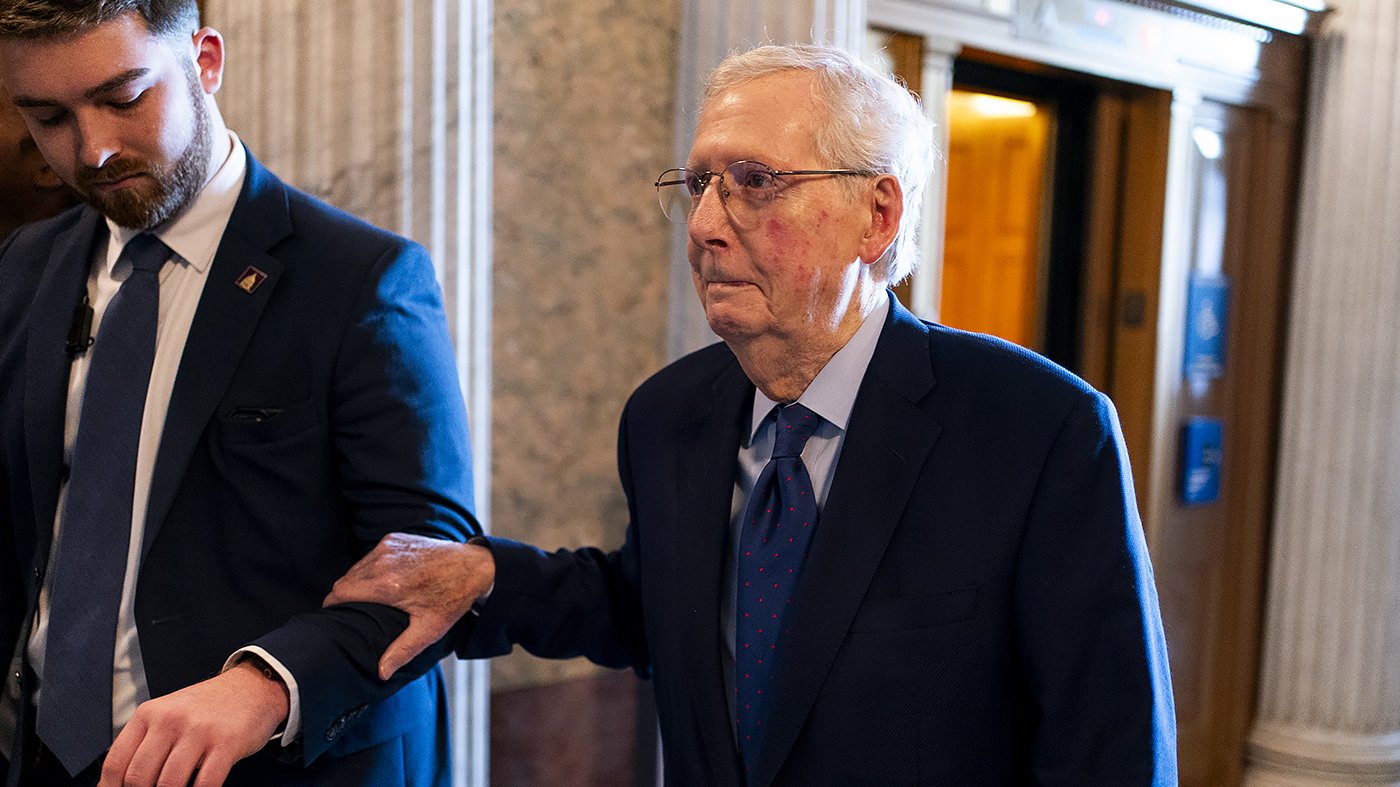
Senator Mitch McConnell (R-Ky.) has issued a sharp rebuke to conservatives within his own party who actively supported Hungarian Prime Minister Viktor Orbán before his Fidesz party lost parliamentary elections this past Sunday. In a pointed opinion piece published by Fox News, McConnell framed the intervention as a departure from longstanding American diplomatic tradition.
The former Senate Republican leader argued that U.S. politicians have historically adhered to the concept that "politics stops at the water's edge," avoiding actions that could be seen as meddling in the sovereign affairs of allied democracies. He expressed bewilderment that Hungarian politics has become "an object of intense fascination" for a segment of the American right over the last decade.
Deconstructing the 'Illiberal' Model
McConnell directly challenged the narrative promoted by Orbán's American admirers, who have often portrayed Hungary under his rule as a bastion of traditional values. "This phenomenon is endlessly puzzling," McConnell wrote, dismissing the portrayal as a myth. He criticized those willing to accept Orbán's "illiberal court-packing, crony capitalism or restriction of free speech" in pursuit of a social agenda, noting that key metrics like religious participation and birth rates in Hungary have declined similarly to trends across the Western world.
The Kentucky senator highlighted Orbán's foreign policy alignments as fundamentally incompatible with American interests, citing his "fealty to Moscow" and close ties to the governments of China and Iran. McConnell asserted these relationships prove Orbán's policies "do not reflect American values."
The criticism follows a campaign trip to Budapest last week by Senator J.D. Vance (R-Ohio), who publicly championed Orbán and criticized the European Union ahead of the vote. McConnell did not name Vance specifically, but the timing and context of the op-ed clearly reference the incident. The election result, which ended Orbán's 14-year tenure, delivered a significant blow to a key international ally of former President Donald Trump.
Strategic Interests Versus Domestic Politics
McConnell framed the core issue as one of strategic priority. "Watching this from Kentucky, it is hard to understand how some on the American right thought that staking U.S. influence on the outcome of a parliamentary election in a small, central European country was putting America's interests first," he wrote. He contended that Hungary's importance to the United States should be judged solely by whether its actions on the global stage align with American strategic objectives, not by its domestic social policies.
The public admonishment underscores a growing rift within the Republican Party over foreign policy direction. While a faction, including Vance, advocates for a more nationalist and transactional approach exemplified by figures like Orbán, establishment figures like McConnell emphasize traditional alliances and a clear stance against adversaries like Russia. This internal debate mirrors other foreign policy fractures, such as the rare criticism Trump received from some allies over his threats toward Iran.
Orbán's loss represents more than a domestic political shift; it recalibrates a geopolitical relationship. His government was notable as the most Russia-friendly within NATO and the European Union, consistently opposing or watering down support for Ukraine following Russia's full-scale invasion in 2022. His close partnership with Trump, who had issued a direct endorsement for Orbán ahead of the vote, positioned Hungary as a central node for a certain brand of conservative politics that often clashes with mainstream Western institutions.
McConnell's decision to publish this critique immediately after the Hungarian election signals an effort to reassert a traditional Republican foreign policy worldview following a high-profile electoral failure for a favored model abroad. It also occurs amid other setbacks for the GOP's populist wing, including a major judicial election loss in Wisconsin. The episode highlights the ongoing struggle to define conservative internationalism in the post-Trump era.