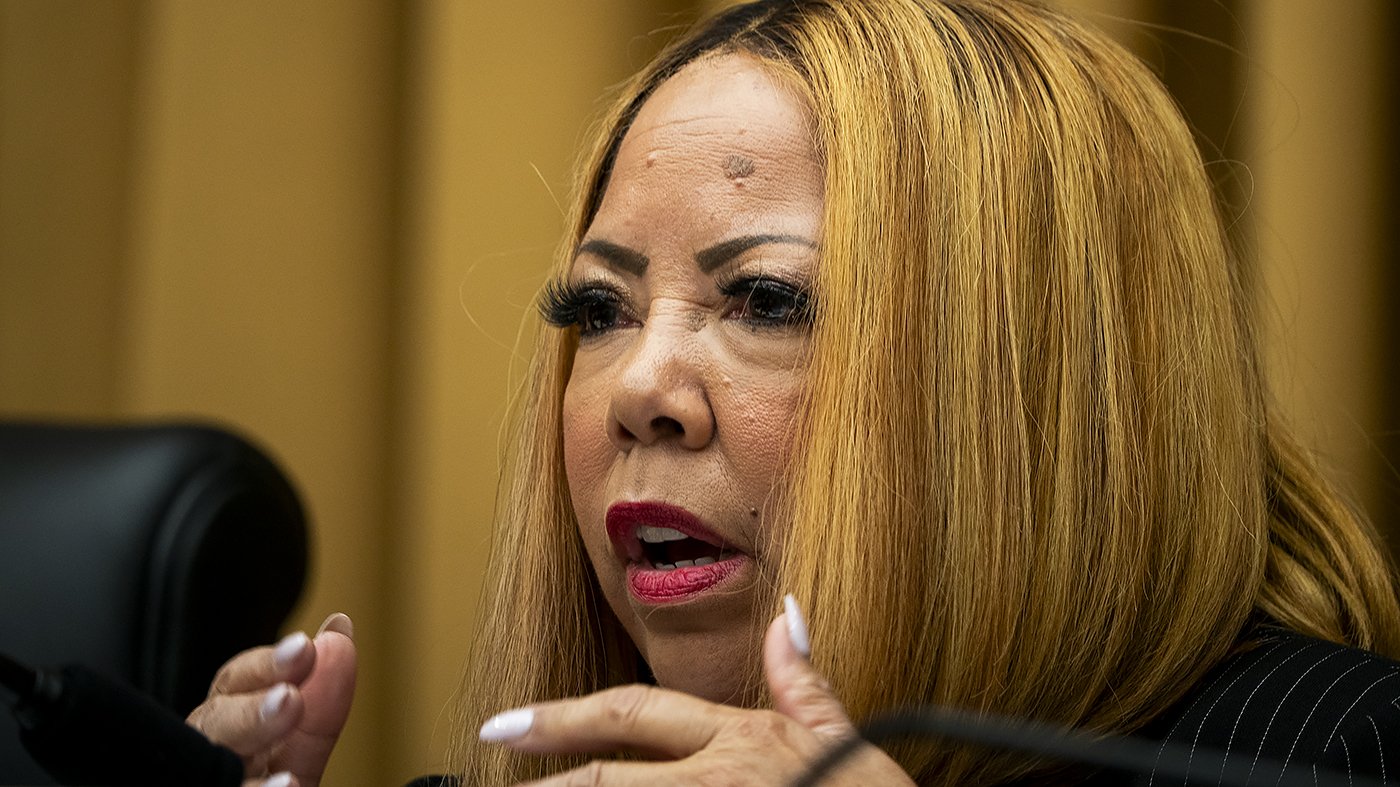
Representative Lucy McBath, a Georgia Democrat, used a Capitol Hill press conference Tuesday to relaunch her push for a federal red flag law, a measure she says is essential to preventing gun violence. McBath, whose son Jordan Davis was fatally shot at a Florida gas station in 2012, framed the legislation as a direct response to tragedies that could have been prevented.
The bill, formally known as the Federal Extreme Risk Protection Order (FERPO) Act, would allow family members or law enforcement to petition a federal court for a temporary order to remove firearms from someone deemed a danger to themselves or others. Under the proposal, those subject to such orders would face federal firearms restrictions, and the Justice Department would create a grant program to help states, localities, and tribal governments implement similar laws.

McBath, who serves as ranking member on a House Judiciary subcommittee focused on crime, argued that red flag laws give families and police the tools to intervene before violence erupts. “These laws empower loved ones and give law enforcement the tools to intervene before the tragedies,” she said.
The legislation first passed the House in 2022 with a 224-202 vote, drawing support from five Republicans. Only one of those GOP backers, Representative Brian Fitzpatrick of Pennsylvania, remains in Congress. The broader political landscape has shifted since then, but McBath signaled she would not abandon the effort. She announced plans to revive a discharge petition to force floor consideration, noting that while “hundreds” of members have already signed on, she intends to court newer representatives.
McBath’s push comes as more than 20 states, plus Washington, D.C., and the U.S. Virgin Islands, have already enacted their own red flag laws, according to the University of Michigan’s Institute for Firearm Injury Prevention. A 2024 poll from the Johns Hopkins Bloomberg School of Public Health found that 77 percent of Americans support allowing family members to seek a temporary court order against an individual they believe poses a risk.
Yet the proposal faces entrenched opposition from Republicans who argue it infringes on Second Amendment rights. Critics on Capitol Hill have repeatedly blocked similar measures, and the current GOP-controlled House is unlikely to advance the bill without significant modifications.
McBath was joined at the event by several Democratic colleagues, including Representatives Teresa Leger Fernández of New Mexico, who chairs the Democratic Women’s Caucus; Mike Thompson of California, chair of the Gun Violence Prevention Task Force; and Debbie Dingell of Michigan, co-chair of the Bipartisan Working Group to End Domestic Violence. Dingell highlighted the intersection of gun violence and domestic abuse, noting that the FBI recorded more than 11,000 domestic violence murder victims from 2020 through 2024, with firearms involved in 13.7 percent of incidents. “When someone is convicted of domestic violence, they should not have access to a firearm,” Dingell said.
The Bipartisan Safer Communities Act, signed into law by former President Biden in 2022, already provides $750 million over five years to support crisis intervention services, including state-level red flag laws. McBath’s bill would build on that foundation by creating a direct federal mechanism.
“The American people deserve better,” McBath remarked. “They’ve been crying out for gun safety, they’ve been crying out for public safety.” She also referenced the ongoing debate over surveillance tools and civil liberties, though she did not draw a direct link to her bill. The renewed push comes as the White House negotiates federal AI preemption for children’s safety and deepfake laws, a separate but related policy arena where technology and rights intersect.