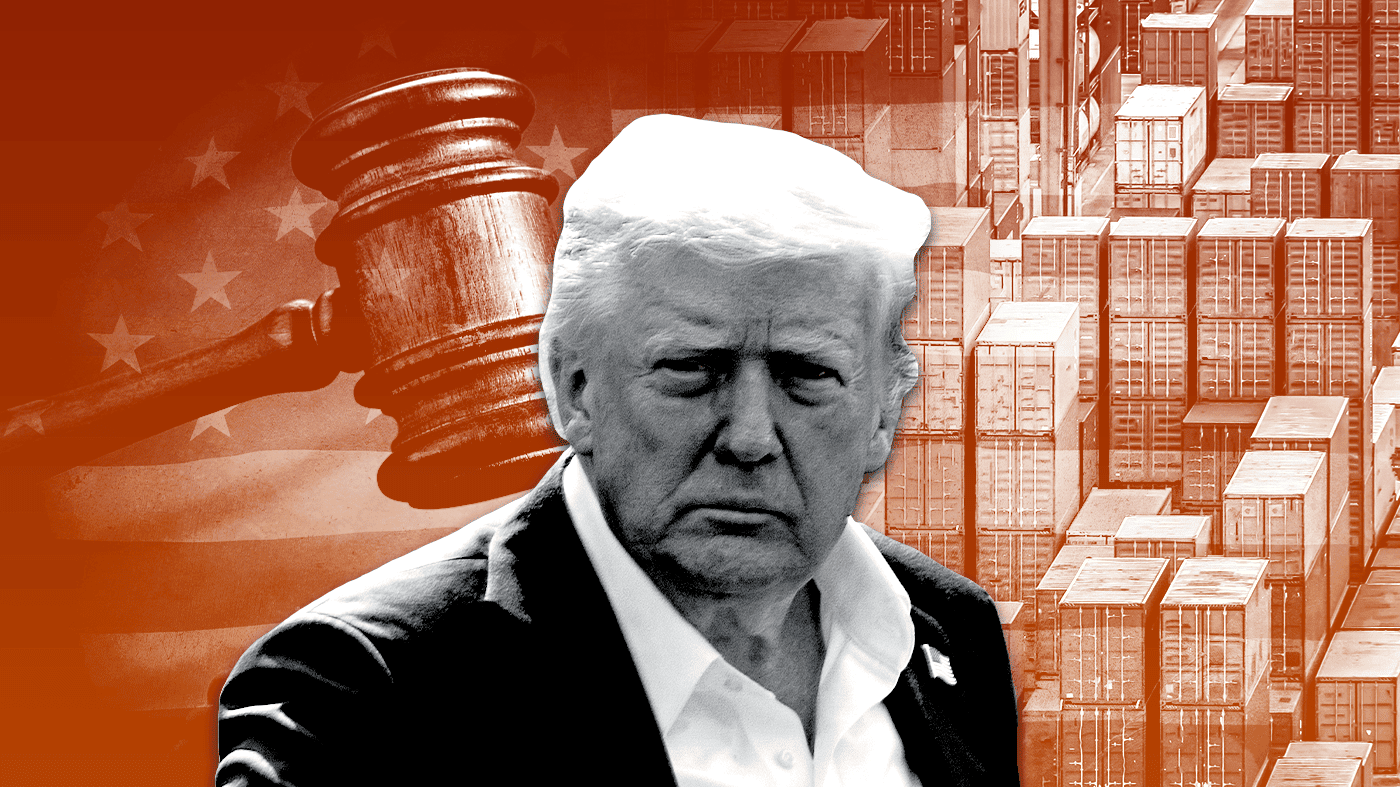
Two small businesses filed a legal challenge Friday against President Trump's newly imposed tariffs, which apply surcharges of 10 to 12.5 percent on goods imported from 60 trading partners. The lawsuit, brought by spice importer Burlap & Barrel and luxury watch retailer Collective Horology, is the latest front in an ongoing battle over the administration's use of trade law to unilaterally raise taxes on imports.
The plaintiffs are represented by the Liberty Justice Center, a libertarian public-interest law firm that was part of the legal team that successfully overturned Trump's earlier emergency tariffs at the Supreme Court earlier this year. That victory set a precedent for challenging executive overreach in trade policy, and the new suit aims to extend that reasoning to the administration's reliance on Section 301 of the Trade Act of 1974.

The administration announced the Section 301 tariffs on Thursday, just as the previous temporary tariffs were set to expire. Unlike those earlier measures, which were imposed under a short-term emergency authority, Section 301 allows for longer-lasting tariffs but requires them to be a response to specific unfair trade practices that burden U.S. commerce. The administration conducted a months-long investigation into forced labor practices overseas, including public comments and hearings, to justify the new levies.
According to the complaint, the administration is stretching Section 301 beyond its intended scope. “It is not a freestanding authorization to tax substantially all imports from substantially all trading partners,” the lawsuit argues. The plaintiffs contend that U.S. Trade Representative Jamieson Greer’s announcement failed to take a “country-specific” approach, instead substituting a generalized assertion that forced labor is harmful worldwide for the statute’s required determination concerning an identified foreign act, policy, or practice.
The lawsuit states: “Section 301 does not permit USTR to substitute a generalized assertion that forced labor is harmful, unfair, or economically distortive worldwide for the statute’s required determination concerning an identified foreign act, policy, or practice and its burden or restriction on United States commerce.”
This legal challenge comes amid a broader pattern of the Trump administration using obscure trade laws to advance its tariff agenda, including the 1930 Tariff Act to redefine the Canada trade conflict. Critics argue that these moves bypass congressional authority and risk undermining global trade norms. The White House has not yet commented on the lawsuit.
The Liberty Justice Center has been a persistent adversary of Trump's tariff policies, and its involvement signals a coordinated effort to test the legal limits of executive power in trade. The earlier Supreme Court defeat forced the administration to abandon its emergency tariff approach, and the new case could similarly constrain the use of Section 301 if the courts find the administration's justification insufficient.
For now, the tariffs remain in effect, but the lawsuit adds to the uncertainty facing businesses that rely on imports from the 60 affected countries. The outcome could have significant implications for the administration's ability to unilaterally impose broad-based tariffs without specific findings of unfair trade practices.