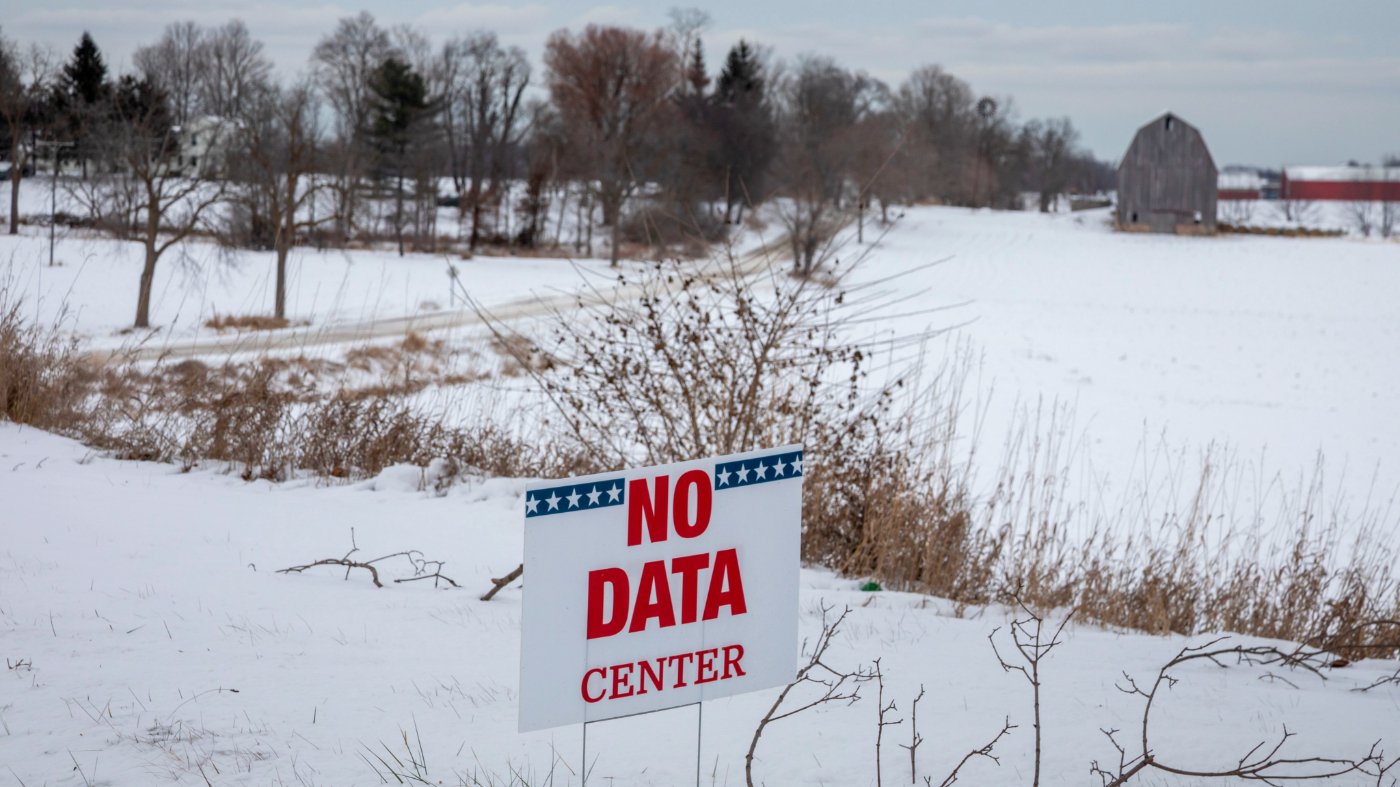
State and local governments are moving aggressively to curb data center construction as public opposition to the sprawling AI infrastructure intensifies. Maine’s legislature last week became the first in the nation to pass a bill banning large-scale data centers, while a Wisconsin city approved a referendum giving voters more control over major tax-funded projects in response to a nearby campus.
The backlash, which has been building for over a year, stems from concerns over skyrocketing electricity bills and environmental damage. “This isn’t just a flash in the pan,” said Ruth Whittaker, director of technology policy at the center-left think tank Third Way. “This is an issue that policymakers need to be paying attention to and taking seriously.”

Data center construction, fueled by the AI race and demand for massive computing power, initially enjoyed bipartisan support. Governors from both parties celebrated projects landing in their states, and both the Biden and Trump administrations pushed to speed permitting. But local communities quickly turned hostile. In 2025, $156 billion in data center projects were blocked or delayed by opposition, moratoriums, and litigation, according to Data Center Watch, a project from AI firm 10a Labs.
“The people who were rolling out the red carpet were the governors and state legislators, who are typically always in a position of genuflecting to any new industry that is promising for better or worse to create jobs,” said John Quigley, a senior fellow at the University of Pennsylvania’s Kleinman Center for Energy Policy. “When the proposals finally hit the host communities, the opposition was immediate.”
At least 11 states have introduced legislation to limit or ban data centers, per Axios. Maine’s bill, which would impose an 18-month moratorium on new facilities using over 20 megawatts, awaits Governor Janet Mills’ signature. Mills, a Democrat, sought an exception for a project on a defunct paper mill site but was rebuffed by lawmakers. She told NBC News she would “read it very carefully” while noting the absence of her requested carveout.
In Port Washington, Wisconsin, voters in early April approved a referendum requiring public approval for tax breaks on projects exceeding $10 million. The measure was prompted by a data center campus receiving roughly $450 million in tax benefits. Meanwhile, Virginia lawmakers are debating whether to eliminate a sales tax exemption for the AI infrastructure. A recent Washington Post-Schar School poll found only 35% of Virginia voters would be comfortable with a new data center in their community, down from 69% in 2023. Support for state tax breaks also collapsed from 61% to 37% over three years, with two-thirds now backing an end to the incentive.
Data center developers and tech companies are scrambling to change the narrative. Microsoft, OpenAI, Google, Meta, Oracle, xAI, and Amazon signed a White House-backed ratepayer protection pledge in March, committing to cover electricity price increases from their projects. “We’re at a really critical inflection point,” Whittaker said. “The tech companies are starting to take it really seriously and do a lot more community engagement and transparency.”
The industry has also moved away from non-disclosure agreements, which previously shrouded projects in secrecy. Microsoft announced this year it would stop using NDAs with local governments. Robert Montejo, a partner at Duane Morris who represents data center developers, stressed the growing importance of community outreach. “Being more intentional in the approach is probably the biggest thing that data center developers can do, and then to lay that approach out at the community level,” he said.