Prominent activists in the "Make America Healthy Again" (MAHA) movement are expressing fury and a sense of betrayal after the Supreme Court ruled Thursday that Monsanto does not have to place a cancer warning label on its Roundup weedkiller. The decision threatens to fray the movement's ties with the Republican Party, especially given the Trump administration's support for the pesticide giant in the case.
Multiple studies, including a major one last year, have linked glyphosate—Roundup's key ingredient—to cancer. Bayer and Monsanto deny any such connection. MAHA followers, long alarmed by these findings, have grown impatient with a White House that has largely resisted their calls for tighter pesticide regulation.
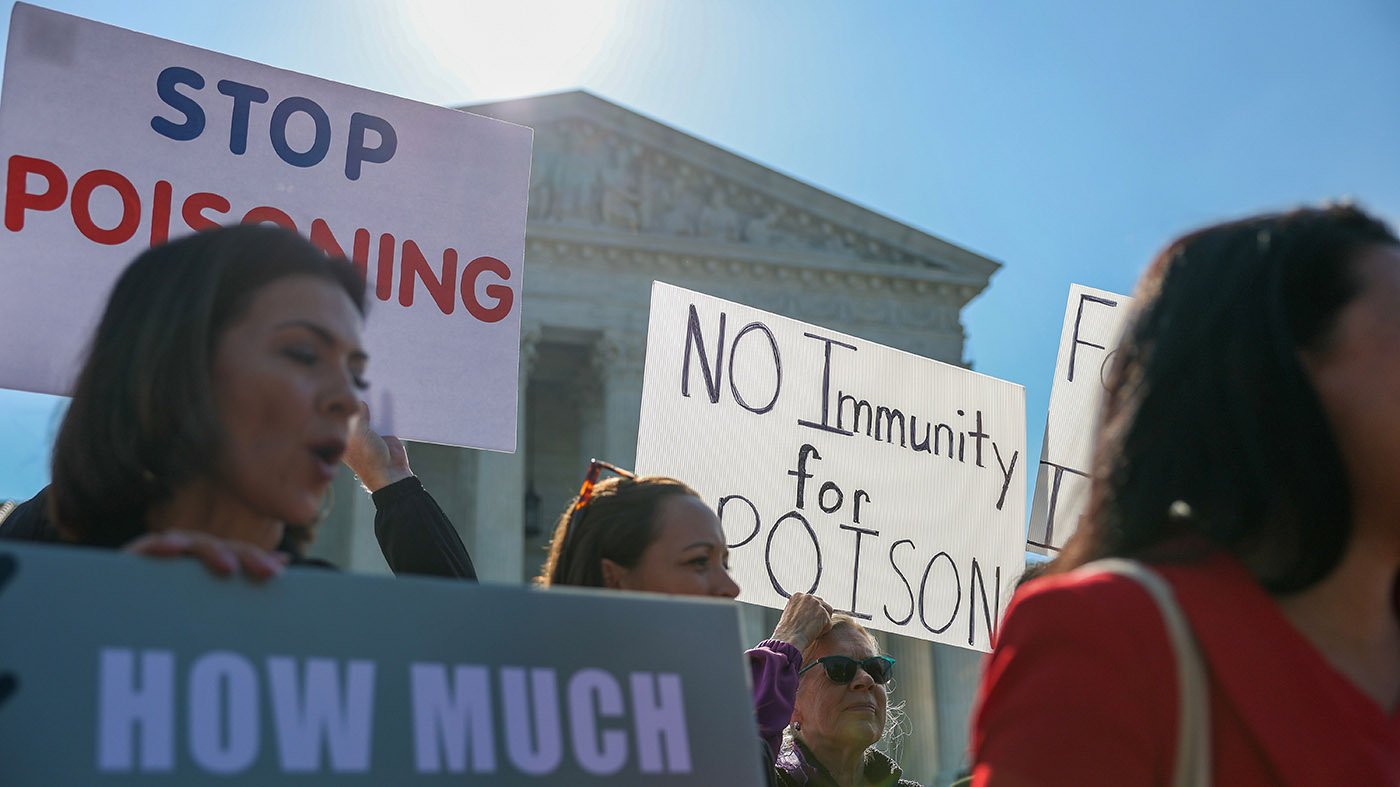
In April, President Trump, Health and Human Services Secretary Robert F. Kennedy Jr., and other top officials held a private meeting with MAHA activists to address their concerns and ease tensions. Later that month, a MAHA-led coalition rallied outside the Supreme Court during oral arguments, demanding that companies be held accountable. Inside, the justices heard arguments—including from the Department of Justice—that companies should be shielded.
For many MAHA supporters, Thursday's verdict confirmed that despite Trump's alliance with Kennedy, the administration prioritizes pesticide makers' interests over public health. "A lot of MAHA voters are realizing they've been snookered, they've been had by Republicans that had no intention of protecting their health. It's just a talking point that they added," said David Murphy, founder of United We Eat and finance director of Kennedy's presidential campaign. Murphy warned the decision could be a tipping point, with some MAHA voters staying home or voting Democrat.
Before joining the Trump administration, Kennedy spent years as an environmental lawyer crusading against glyphosate, including winning a landmark case against Monsanto in 2018. He has repeatedly stated his belief that glyphosate causes cancer. However, Kennedy more recently fell in line with the administration, defending an executive order boosting glyphosate production and the White House's backing of Monsanto. After MAHA backlash, he shifted tone, expressing disagreement with the administration's moves.
The case originated with John Durnell, a Missouri man who sued Monsanto in 2019, alleging two decades of Roundup use caused his non-Hodgkin lymphoma. After a jury sided with Durnell in 2023, the Supreme Court intervened. On Thursday, the justices ruled 7-2 that Monsanto cannot be sued in state courts over a "failure-to-warn" about cancer because federal regulations don't require such labels. The court noted that pesticides only need to list health impacts formally recognized by the EPA, which in 2020 found glyphosate unlikely to be carcinogenic.
Environmental and public health advocates quickly condemned the verdict. "If Make America Healthy Again is going to mean anything, it has to apply consistently, not just when it's politically convenient, but also when powerful political interests and corporate interests are involved as well," said Vin Gupta, a pulmonologist and senior medical correspondent for MS NOW. MAHA influencer Kelly Ryerson, known as Glyphosate Girl, blamed the Trump administration entirely, saying the Justice Department's backing of Monsanto made it complicit. "Going forward, I don't even know at this point what you could do to make up for the fact that the Supreme Court ruling happened," she said.
Lawmakers from both parties are already exploring ways to bypass the decision. Sen. Cory Booker (D-N.J.) announced he will introduce an amendment to the Senate farm bill to strip pesticide companies of liability protection, mirroring a House effort. Rep. Anna Paulina Luna (R-Fla.), who led that House push, said she will introduce a standalone bill. "After today's Supreme Court ruling in favor of Monsanto I will officially be introducing legislation stripping pesticide companies of any liability protections for the harm their products cause the American people," she posted on X.
Bayer, in a statement Thursday, reiterated that glyphosate "remains the most studied crop protection tool in the world" and said the ruling "restores the regulatory clarity that the agricultural sector, the broader food supply chain, and American consumers need." The decision comes amid broader Supreme Court shifts on regulatory power, including rulings that have bolstered Trump immigration policy. For MAHA, the question now is whether the movement can maintain its political influence—or whether this ruling marks a permanent rupture with the GOP.