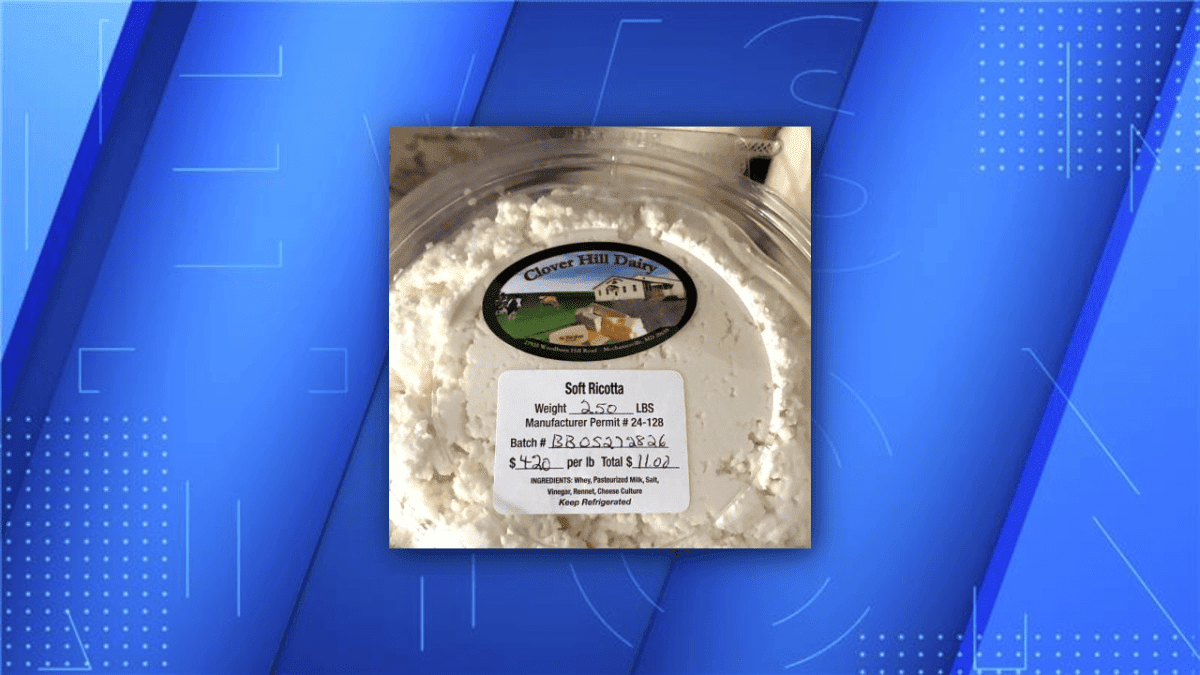
Federal health officials have linked a Listeria outbreak to soft cheese products from Clover Hill Dairy, a Maryland-based producer, resulting in one death and eight hospitalizations across three states. The Food and Drug Administration (FDA) announced the connection on June 3, prompting a voluntary recall of all requesón and soft ricotta cheeses made by the company.
The Maryland Department of Health has suspended Clover Hill Dairy's operating license as the investigation continues. The recalled products were distributed to retailers in North Carolina, New York, Virginia, Maryland, New Jersey, and Washington, D.C. Consumers are advised to check the manufacturer permit number on packaging—specifically looking for "24-128"—as the cheese may be sold under various brand names.
This outbreak highlights ongoing challenges in food safety regulation, particularly for smaller dairies. The FDA has been under pressure to strengthen oversight after previous listeria incidents, including a recent authorization for a generic drug to treat screwworm in pets, which underscores the agency's broader role in public health.
Listeria monocytogenes can cause severe illness, especially in pregnant women, newborns, older adults, and individuals with weakened immune systems. Symptoms include fever, muscle aches, nausea, and diarrhea. The CDC estimates that listeria is the third leading cause of death from foodborne illness in the United States.
Clover Hill Dairy, based in Mechanicsville, Md., has not commented on the suspension or the recall. The company's products are also sold in bulk to restaurants and food service operators, raising concerns about further exposure. The FDA is working with state and local partners to trace the distribution chain.
This incident comes amid a broader debate about food safety funding and the impact of budget cuts on public health agencies. Some lawmakers have argued that reductions in foreign aid have exacerbated health crises abroad, but domestic foodborne illness outbreaks also demand attention.
For consumers, the FDA recommends checking refrigerators and freezers for recalled products and discarding them immediately. Anyone who has consumed the cheese and developed symptoms should contact a healthcare provider. The agency is also urging retailers to remove the products from shelves.
This is the latest in a series of food safety alerts involving dairy products. In 2023, a similar outbreak linked to queso fresco sickened dozens. The FDA has pledged to enhance its surveillance and response capabilities, but critics say enforcement remains inconsistent.
As the investigation progresses, officials expect the number of affected individuals to rise. The three states involved have not been named, but the FDA has confirmed that cases are concentrated in the Mid-Atlantic region. The agency will provide updates as more information becomes available.
For now, the recall serves as a reminder of the risks posed by soft cheeses, which are more susceptible to listeria contamination due to their high moisture content. The FDA advises vulnerable populations to avoid soft cheeses unless they are clearly labeled as made from pasteurized milk.