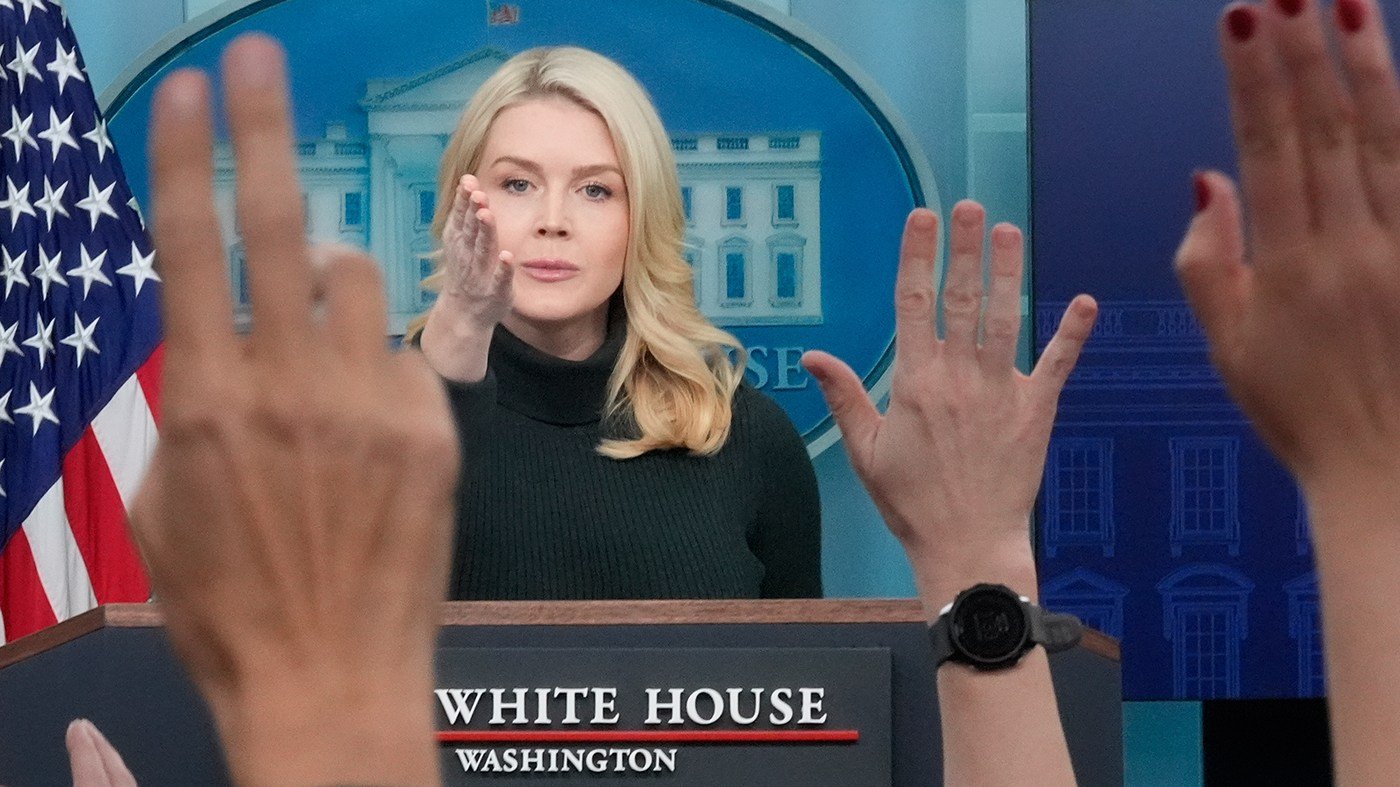
Former White House Press Secretary Karoline Leavitt on Tuesday called on the Trump administration to adopt a more transparent posture in the wake of a series of nationwide technology failures, urging officials to communicate directly with the American public and to do so "wide and loud."
"What I would say to the White House is transparency is key," Leavitt said during an appearance on Fox News. "It's going to help the country grapple with what's going on." She stressed that either President Trump or a senior White House official should deliver a clear message to the public about "what they know and what they believe to be true to really calm the temperature."
The remarks come as Americans continue to grapple with disruptions that have rippled across critical sectors over the past several days, including aviation, banking, and major digital platforms. The most significant incident occurred on Friday when the Federal Aviation Administration issued a rare nationwide ground stop that lasted more than four hours, delaying or canceling thousands of flights and causing ripple effects through the weekend. Authorities attributed the stoppage to an overload of data on routers, a problem that has prompted renewed scrutiny of the agency's aging infrastructure.
Earlier in the week, Microsoft experienced global outages affecting its flagship services, including Outlook and Teams. The company said the disruption, which lasted roughly a day, was "introduced by an issue during an earlier network capacity upgrade that surfaced following a recent network change." The incident left many users unable to access email or collaborate on work projects.
Banking customers also faced difficulties on Monday, with users of Chase, Bank of America, and Wells Fargo reporting problems accessing their accounts. A spokesperson for JPMorgan Chase described the cause as "a temporary issue related to a software bug in on-premise hardware systems," while explicitly denying any "cyber-related" origin.
Homeland Security Secretary Markwayne Mullin weighed in on the outages, suggesting that "super intelligence" could be behind them, though he added that he could say with "98 percent certainty" that the incidents were not the result of a cyberattack. His comments have done little to quell public anxiety over the reliability of critical digital systems.
President Trump, for his part, downplayed the disruptions during remarks on Tuesday, saying "it's fine" and adding, "It's life. When you're big and powerful and have all the money, things like that happen." His dismissive tone drew criticism from some observers, who argue that the administration should take the outages more seriously, especially given the FAA's ground stop and the potential economic impact.
Leavitt's call for transparency echoes broader concerns among lawmakers and industry experts about the need for clearer communication during such incidents. The transportation secretary's push for a $50 billion FAA overhaul has gained traction in Congress, with some Republicans, including Speaker Mike Johnson, backing a modernization effort rather than a formal probe into the outage. Meanwhile, Vice President Vance has downplayed the need for Americans to stockpile supplies, a stance that has been questioned by those who worry about the cascading effects of such disruptions.
As the administration navigates the fallout, Leavitt's advice underscores a growing demand for proactive, clear communication from the White House—particularly when critical services falter. "Transparency is key," she reiterated, "and the American people deserve to know what's happening."