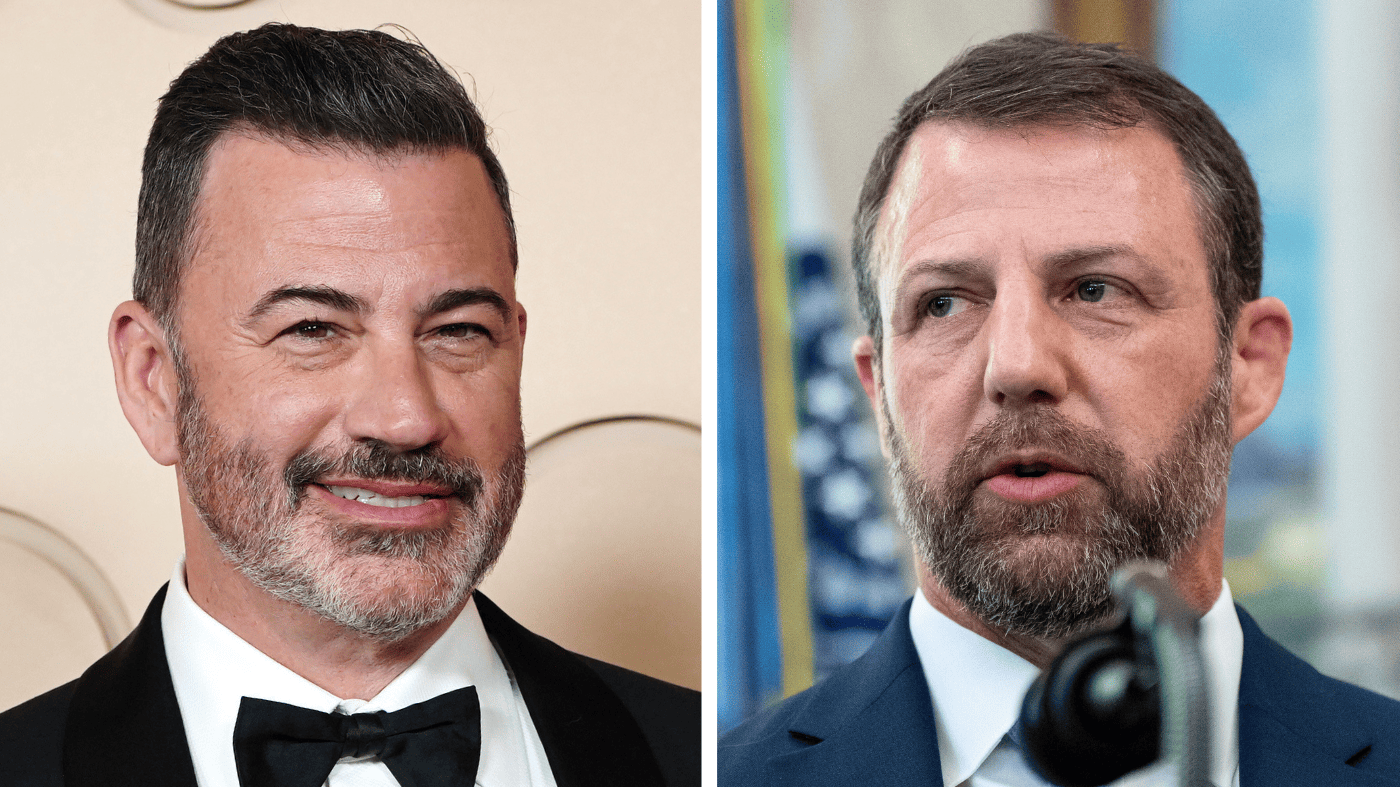
ABC late-night host Jimmy Kimmel has forcefully defended his pointed critique of Department of Homeland Security Secretary Markwayne Mullin's qualifications, refusing to back down despite facing significant backlash from conservative commentators. The controversy centers on Kimmel's characterization of Mullin's pre-political career as insufficient preparation for leading the massive federal agency tasked with national security.
Questioning Executive Credentials
During his Thursday evening monologue, Kimmel directly addressed the firestorm he ignited by scrutinizing Mullin's resume. The DHS chief, who was confirmed as Homeland Security Secretary after serving as a U.S. Senator from Oklahoma, previously worked as a mixed martial arts fighter and operated a plumbing business. Kimmel framed his criticism not as an attack on blue-collar professions, but as a question of relevant experience for one of the nation's most critical cabinet positions.
"Let me make this very clear," Kimmel stated emphatically. "I'm not upset that the head of Homeland Security used to be a plumber. I'm upset that he isn't still a plumber." The comment underscored the host's central argument that Mullin's background lacks the national security, intelligence, or large-scale management experience typically associated with the role. The position became vacant following the abrupt departure of former Secretary Kristi Noem, whom Mullin replaced at President Trump's nomination.
Political and Partisan Backlash
The critique has sparked a fierce response from right-wing media figures and Republican allies of the administration, who have accused Kimmel of elitism and disrespect for non-traditional career paths. This defense of Mullin comes as the secretary faces immediate operational challenges, including a DHS funding shutdown now in its sixth week that has strained agency functions. Mullin recently received a public endorsement from former ICE Director Tom Homan at the Conservative Political Action Conference, signaling establishment support within immigration enforcement circles.
Kimmel's commentary taps into a broader political debate about qualifications for high office, particularly for roles with significant operational and life-and-death responsibilities. The DHS portfolio includes emergency management, cybersecurity, border security, and terrorism prevention—domains where critics argue specific expertise is paramount. Supporters of Mullin counter that his business background and legislative experience provide practical leadership skills, while his supporters point to potential reforms he might implement, including a possible major overhaul of FEMA with accompanying staff reductions.
Broader Political Context
The controversy emerges against a backdrop of intense political maneuvering, including recent Democratic electoral gains that have shifted the power dynamic in Washington. Notably, Democrats flipped a Trump-adjacent Florida district in a special election upset, a result that House Minority Leader Hakeem Jeffries suggested could signal vulnerability in Republican redistricting strategies. This political environment makes executive appointments and their scrutiny particularly charged, as both parties position themselves ahead of the next election cycle.
Kimmel's platform as a prominent cultural figure amplifies this critique beyond typical political discourse, blending entertainment commentary with substantive policy questions. His refusal to retract his statements despite conservative pressure reflects the increasingly blurred lines between media, entertainment, and political analysis in contemporary Washington. The incident also highlights how presidential appointments have become flashpoints in the culture wars, with qualifications often debated through partisan lenses rather than neutral assessment of capability.
The Department of Homeland Security itself remains at the center of multiple policy battles, from immigration enforcement to disaster response coordination. Mullin's leadership will be tested immediately by these ongoing challenges, with his every decision likely to receive heightened scrutiny following the very public debate about his preparedness for the role. How he navigates these initial months may determine whether critiques like Kimmel's fade or gain further traction among both political observers and the general public.