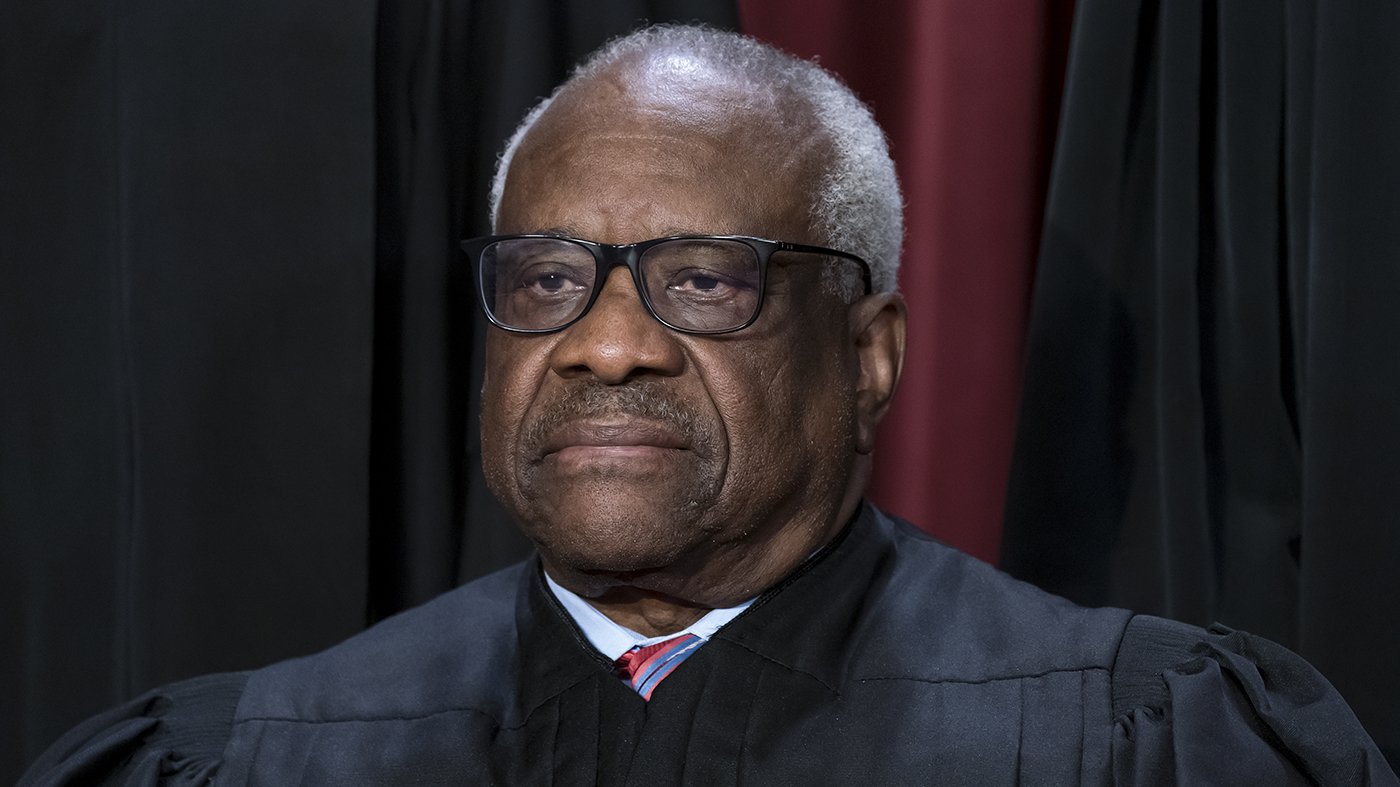
Supreme Court Justice Clarence Thomas issued a stark warning Wednesday that a deepening erosion of civil discourse among younger Americans threatens to compromise the foundational norms of the federal judiciary. Speaking at the University of Texas at Austin, the longest-serving justice expressed apprehension that the polarized climate, amplified by social media, could eventually "infect" judicial institutions.
A Different Era on the Bench
Thomas made his remarks while reflecting on his early tenure on the Supreme Court during a public lecture marking the 250th anniversary of the Declaration of Independence. He contrasted today's environment with the court he joined in 1991, which he described as populated by a "World War II generation" that maintained collegiality despite profound disagreements. "These were people who respected — they were more in that tradition of a civil society and would listen to different points of view," Thomas stated.

He specifically highlighted the late Justice Sandra Day O'Connor, crediting her with reviving the tradition of justices sharing lunch and later championing civics education. "She gets way too little credit for what she did," Thomas said of O'Connor's efforts to foster institutional unity.
Concerns for the Future
The justice's comments came in response to a student question about maintaining friendships across ideological divides in an era of intense political polarization. Thomas expressed uncertainty about how to restore a culture of mutual respect, pointing to contemporary dynamics of "social media and name calling and all people accusing each other of various things and animus."
"I don't know how you do that," Thomas admitted. "And I fear that that's going to infect the institutions such as the court and judges, etc., in the future, because these are young people who will be in these jobs." He directly challenged the student and their peers to consider, "how do you all deal with differences?"
Praise for Civic Education
During his lecture, Thomas commended the University of Texas for establishing its new School of Civic Leadership and for embracing a curriculum focused on Western civilization. He suggested these initiatives could serve as a model for other universities seeking to reform their approach to education and civic engagement.
Thomas's warning about institutional decay comes amid broader national debates over the role and legitimacy of the Supreme Court itself. His concerns about social cohesion mirror warnings from other figures about challenges to American institutions. For instance, a Georgia Republican recently cautioned that politicized personnel decisions within the military could have a damaging "chilling effect" on its leadership. Similarly, international bodies like the IAEA have warned that diplomatic agreements built on weak foundations are illusory, a principle that applies to domestic institutions as well.
The justice's apprehension about generational shifts in conduct also intersects with policy debates on other fronts, such as when a senior advocacy group warns of inadequate benefit adjustments, highlighting how trust in long-standing government programs is crucial for social stability.
The Supreme Court is set to return to the bench Friday, where the justices are expected to issue at least one opinion in a pending case, continuing their work in an environment of heightened public scrutiny and internal pressure.