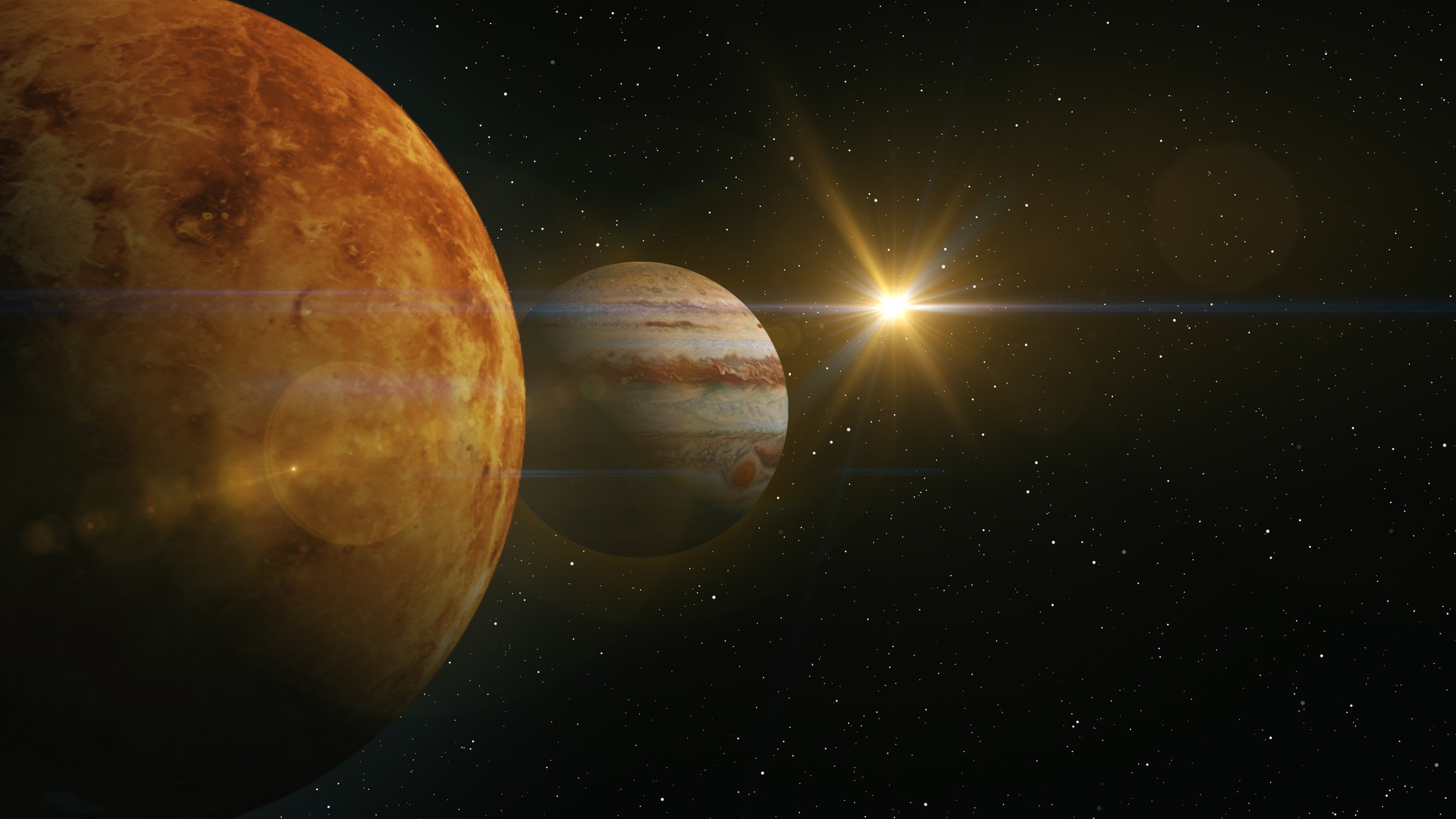
This week, skywatchers are in for a treat as Jupiter and Venus align in a rare planetary conjunction, appearing almost to touch from Earth. The event, set for June 9, requires no telescope or binoculars—just a clear view of the western sky after sunset.
What’s Happening
From our vantage point, the two planets will look incredibly close, but that’s an optical illusion. In reality, they remain millions of miles apart in space. Such conjunctions occur when the orbits of planets bring them into the same line of sight from Earth.
According to Sky & Telescope, the brightness of both planets will make them stand out even in urban areas with light pollution. Venus, often called the “evening star,” and Jupiter, the largest planet in our solar system, will be unmistakable.
Best Viewing Tips
For optimal viewing, find a location with an unobstructed view of the western horizon. The best time is about 45 minutes after sunset, when the sky is dark enough but the planets haven’t set yet. No special gear is needed, but binoculars can enhance the experience.
This conjunction is a reminder of the dynamic nature of our solar system. While such events aren’t extremely rare, they are always noteworthy for those who follow the skies.
Broader Context
Beyond the celestial spectacle, the event offers a moment of reflection on how science and policy intersect. Just as astronomers track planetary movements, policymakers track economic and social trends. For instance, discussions about Canada's redistricting model as a cure for US gerrymandering show how data-driven approaches can address political challenges.
Meanwhile, the conjunction’s visibility without equipment underscores the accessibility of science. It’s a contrast to issues like data breaches affecting millions, where complex systems require careful oversight.
Looking Ahead
For those who miss this event, similar conjunctions will occur in the future, though not always as close. Mark your calendars: the next notable Venus-Jupiter conjunction will take place in 2026.
Until then, enjoy the show. As one astronomer put it, “It’s a reminder that the universe is always putting on a display—we just have to look up.”