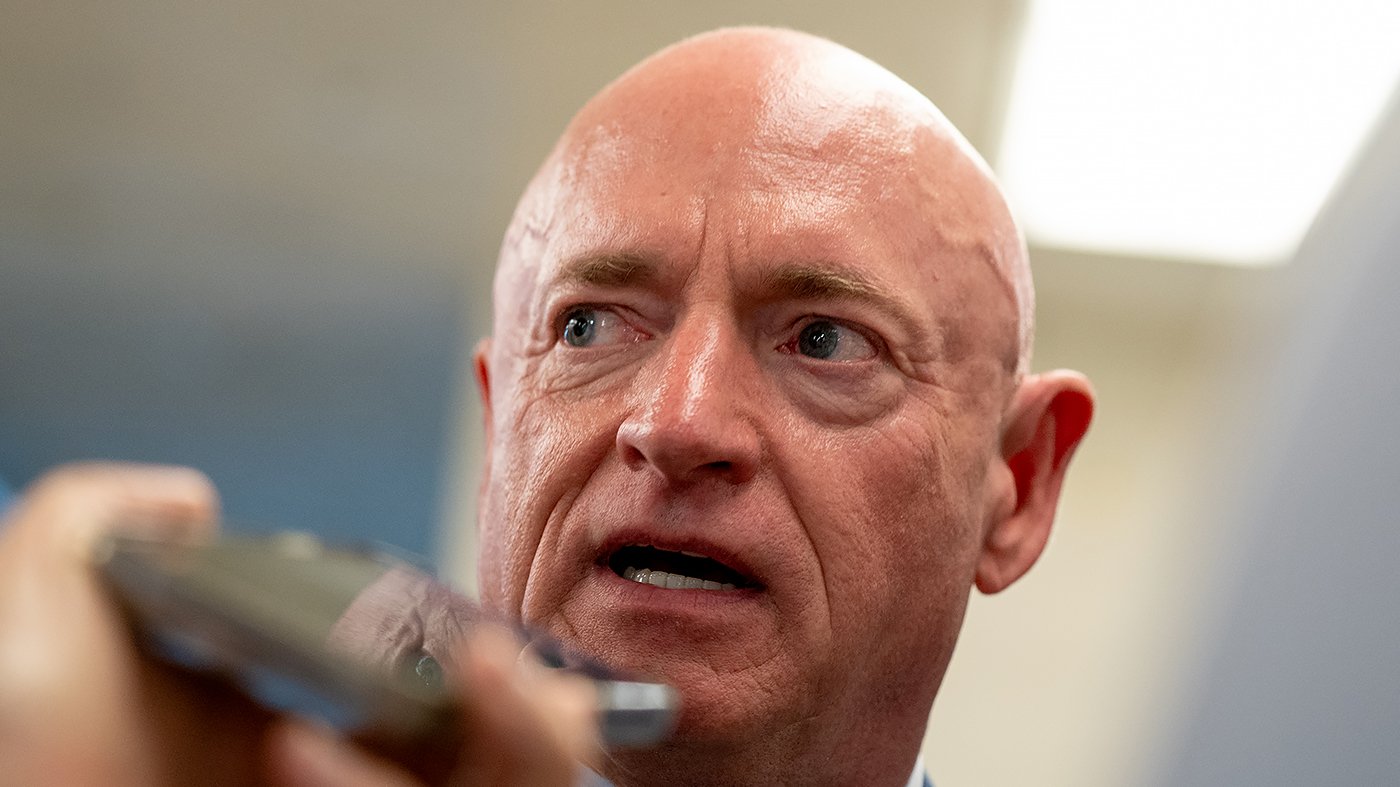
Sen. Mark Kelly (D-Ariz.) took aim this week at Defense Secretary Pete Hegseth's controversial proposal to mandate testosterone screenings for all service members age 30 and older, calling it a misguided initiative that overlooks deeper problems within the Pentagon's leadership.
“The U.S. military does not need more testosterone; it needs better leadership,” Kelly said during an appearance on MS NOW's “The Briefing with Jen Psaki” on Monday. The former Navy captain and astronaut did not mince words, urging President Donald Trump to dismiss Hegseth outright. “The president should fire Pete Hegseth. He's making awful decisions, is putting service members at risks that I would not have expected when I served that a secretary of defense would make these sort of decisions, nor a president.”
Hegseth's policy would require routine testosterone level checks for troops over 30, with the option for those flagged as deficient to receive testosterone replacement therapy (TRT). In a video announcing the change, Hegseth framed it as a readiness-boosting measure. “This initiative, it's not about artificial enhancement; it's about restoring and optimizing your natural capabilities, protecting your longevity and ensuring you have the biological foundation required to sustain fighting,” he said. “We owe our warriors the absolute best medical care in the world, and this program delivers on that obligation.”
But a bloc of Democratic senators quickly pushed back, sending a letter to Hegseth on Monday expressing “serious concerns” over the lack of medical evidence supporting universal screening. The signatories—including Sens. Richard Blumenthal (Conn.), Mazie Hirono (Hawaii), Gary Peters (Mich.), Elizabeth Warren (Mass.), and Ruben Gallego (Ariz.)—pointed to “longstanding medical guidance” that opposes population-wide testosterone checks. “The Department has provided no evidence that this sweeping new policy will improve force readiness or health, nor has it explained the scientific basis, costs, or risks associated with implementing it across the force,” they wrote.
Medical experts have echoed those worries, warning that widespread screening could trigger overdiagnosis and expose troops to side effects like heart problems and infertility. While TRT can effectively treat conditions linked to low testosterone—such as depression, diabetes, and cardiovascular disease—it also carries a known risk of reduced sperm count, which could create fertility challenges for active-duty personnel.
Kelly's criticism fits a broader pattern of Democratic pushback against Hegseth's tenure. Earlier this year, Sen. Susan Collins (R-Maine) blasted Hegseth's mass firing of senior military officers as a threat to meritocracy, and Rep. Becca Balint (D-Vt.) went further, accusing Hegseth of “homoeroticism” in his fixation on boosting troop testosterone levels.
Hegseth has insisted that participation in TRT is “entirely” voluntary for service members whose tests show low hormone levels. But opponents argue that the policy, even if optional, sets a troubling precedent for military medicine. The Pentagon has yet to release a detailed cost analysis or scientific rationale for the screening program, leaving lawmakers and medical professionals alike skeptical of its true intent.
For now, the proposal remains in limbo, but the political battle lines are clear: a Democratic coalition is demanding answers, while Hegseth and the Trump administration press ahead with what they describe as a force-optimization effort. Kelly, for his part, sees it as yet another distraction from the core mission. “What the military needs is competent leadership, not a hormone test,” he said.