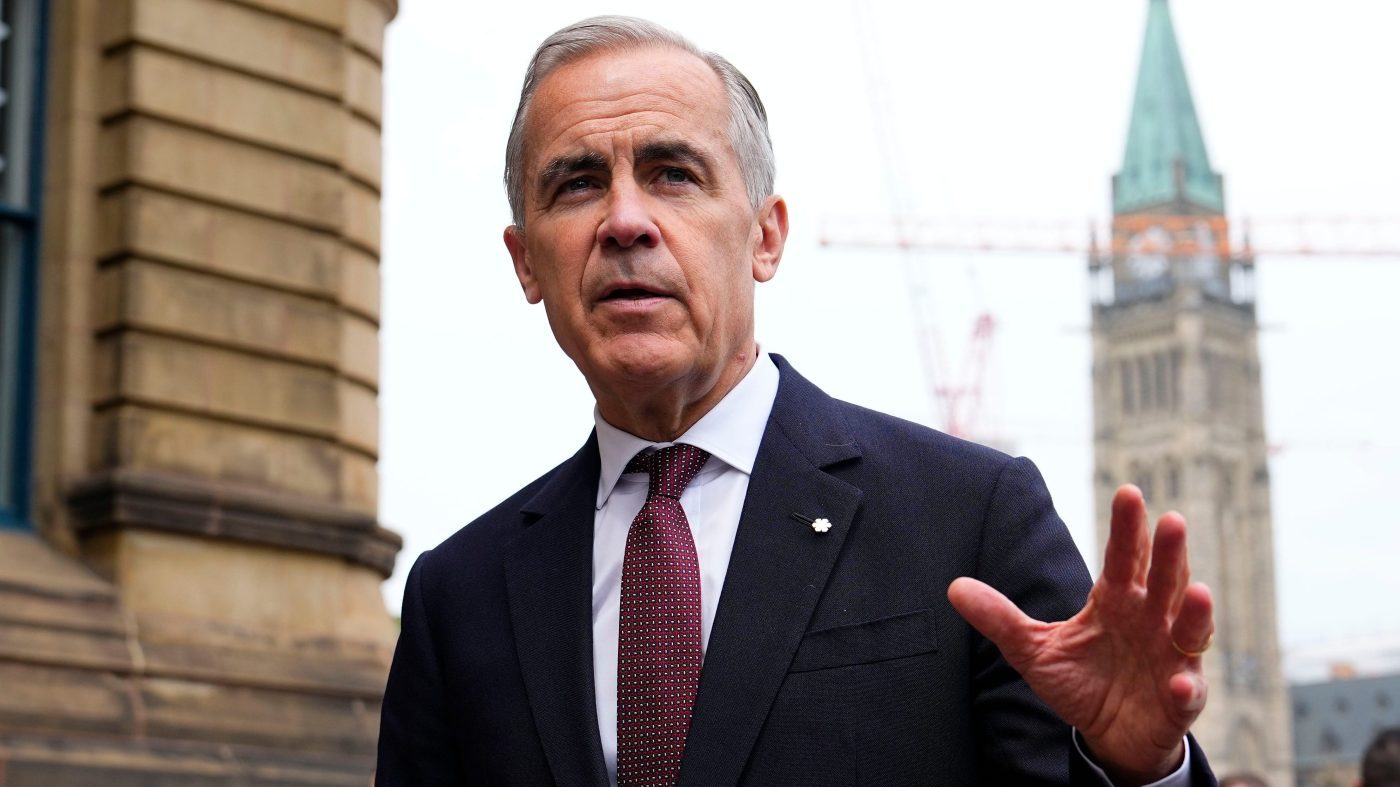
Canadian Prime Minister Mark Carney said Tuesday that trade negotiations with the United States are set to accelerate following President Trump's imposition of fresh tariffs on Canadian imports. Speaking at a press conference, Carney confirmed he had spoken with Trump earlier in the day and that both sides had agreed to ramp up talks in the coming weeks.
"I spoke with President Trump earlier this morning," Carney told reporters. "We agreed to intensify negotiations in the coming weeks, and the team and myself look forward to doing that." He added, "As always, Canadians, governments, business, labor, will stand together to build Canada strong and to have a trading relationship with our North American partners that benefits everyone."
The new tariffs, an additional 50% levy on select Canadian goods, were announced earlier this week under the Tariff Act of 1930. A senior administration official said the measures target items ranging from wine to hockey sticks to cement, and will take effect 30 days after signing. The official justified the move by citing Canada's "substantial retaliation" against US trade actions, arguing that Ottawa must be held accountable for what Washington calls discriminatory practices.
Carney had previously condemned the tariffs as a violation of the United States-Mexico-Canada Agreement (USMCA), a stance that has drawn support from some Republican senators who worry about the economic fallout for American consumers. The trade dispute has deepened since Trump returned to office in January 2025, with Canada among the first targets of his broader tariff agenda, though goods covered under the USMCA were largely exempt.
Tensions have been further inflamed by Trump's suggestion that Canada should become the "51st state," a notion firmly rejected by Canadian leaders and the public. The president has also floated additional tariffs linked to Canadian wildfire smoke that affected air quality across the US Midwest and Northeast, a move scientists attribute more to climate change than Canadian policy.
The Supreme Court dealt the administration a setback earlier this year by striking down the bulk of Trump's emergency tariffs. Meanwhile, trade representative Jamieson Greer faced tough questions from senators during his confirmation hearing over the economic impact of the new levies.
Despite the escalating rhetoric, Carney's call for intensified negotiations suggests both sides are seeking a path to de-escalation. The coming weeks will test whether the USMCA can withstand the strain of Trump's aggressive trade posture and Canada's determination to defend its economic interests.