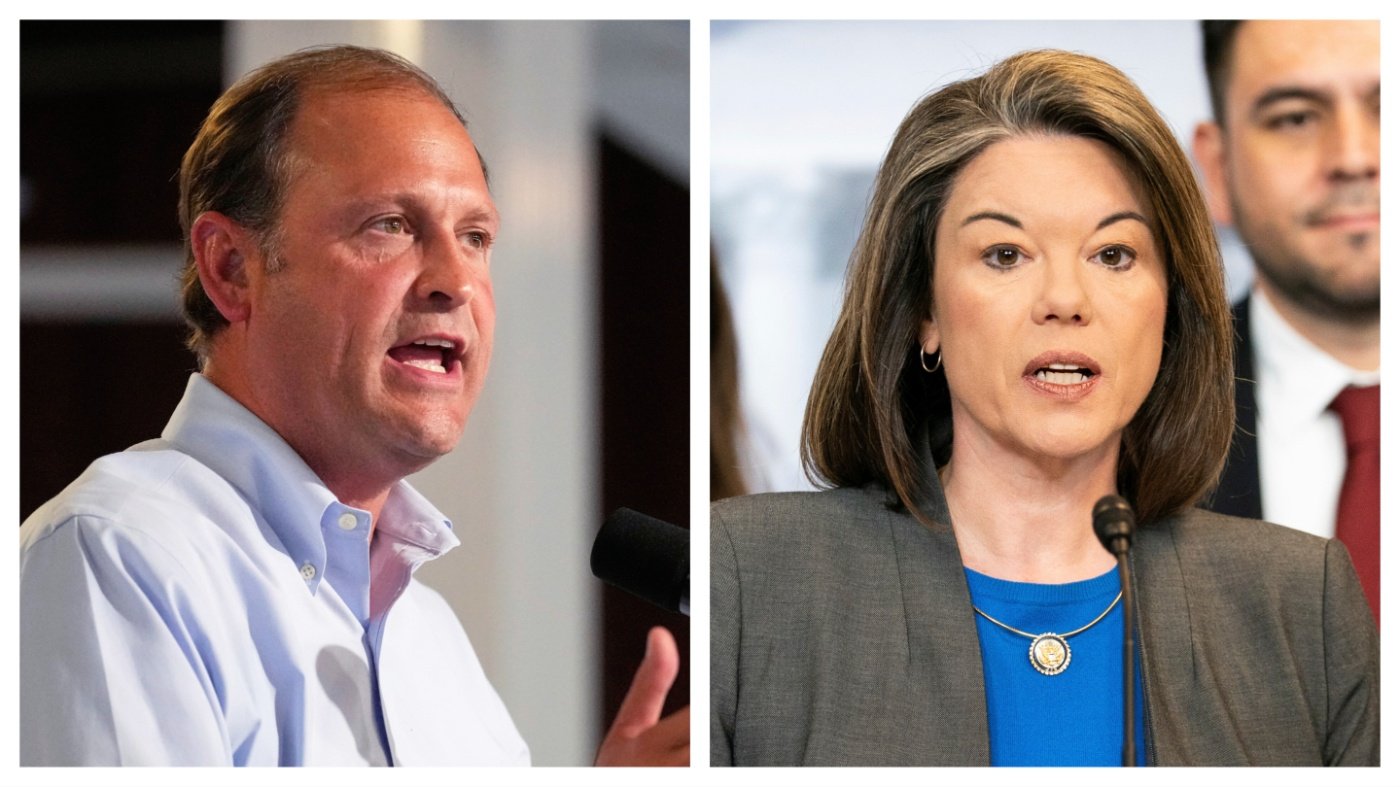
In a rare bipartisan push, Reps. Angie Craig (D-Minn.) and Andy Barr (R-Ky.) unveiled legislation Wednesday aimed at establishing a comprehensive federal regulatory framework for hemp and hemp-derived THC products. The Lawful Hemp Protection Act seeks to replace what its sponsors call a patchwork of state rules with clear national standards, just months before a scheduled federal ban on hemp-derived intoxicants takes effect.
Craig, the top Democrat on the House Agriculture Committee, pointed to Minnesota’s existing regulations as a model. “My commonsense legislation will give regulatory clarity to Minnesota farmers, brewers and small business owners and provide an alternative to short-sighted federal policies that threaten Minnesota jobs and consumer choice,” she said in a statement.

Barr, a Kentucky Republican, echoed the sentiment, emphasizing the need for certainty in his state’s burgeoning hemp sector. “Kentucky has demonstrated that hemp can be successfully regulated while supporting farmers and protecting consumers,” Barr said. “This legislation builds on that success by creating a national framework that rewards responsible producers, eliminates bad actors, and ensures consumers have confidence in the products they purchase.”
The bill arrives with White House backing, according to Barr’s office, and may soon see a companion in the Senate. Sen. Tim Sheehy (R-Mont.) told industry stakeholders last week that a similar Senate bill is being crafted by a bipartisan group, expressing optimism that it could pass even in a hyperpartisan environment. “I’m optimistic that in a hyperpartisan time when it appears like we can’t get anything passed, this might actually be a subject where we can see both executive and legislative success,” Sheehy said, as reported by Marijuana Moment.
The legislation distinguishes between industrial hemp and consumable hemp products. Finished goods would require testing to ensure compliance with synthetic cannabinoid restrictions, while naturally occurring compounds remain permitted. All hemp products must be entirely U.S.-grown, processed, and packaged to gain FDA approval, with maximum cannabinoid levels set by the agency.
Safety measures include a 21-and-over age restriction, warning labels mandated by the U.S. Surgeon General covering pregnancy and impairment risks, and civil penalties of up to $1,000 per violation for underage consumption. Law enforcement would treat hemp-impaired driving the same as alcohol or drug DUIs. The bill also sets a “workable THC threshold of 1 percent total THC” for farmers, with legal products capped at 0.4 milligrams of total THC per container. Synthetic cannabinoids like delta-8 THC are banned outright.
The framework mirrors oversight models used by the Alcohol and Tobacco Tax and Trade Bureau and the FDA for tobacco and alcohol. The timing is critical: under current rules, hemp-derived intoxicants will be classified as Schedule I controlled substances starting in November 2026, a ban championed by Sen. Mitch McConnell (R-Ky.), who legalized hemp in the 2018 farm bill for agricultural and textile use.
Since that law, the hemp industry has swelled to roughly $300 million annually, according to Craig’s office. Minnesota alone boasts 132 licensed growers, 96 processors, and over 2,000 retailers. Kentucky, the second-largest hemp producer after California, harvested over 4.3 million pounds in 2024, per USDA data.
Industry groups including the Hemp Industry and Farmers of America (HIFA), U.S. Hemp Roundtable, and Hemp Beverage Alliance praised the legislation. HIFA Executive Director Brian Swensen noted, “Reps. Craig and Barr understand that this isn’t a partisan issue – it’s about protecting farmers who planted in good faith, small business owners who built legal companies, and consumers who deserve safe, tested, legal products instead of being pushed into an unregulated market.”
For more on bipartisan efforts to avoid crises, see our coverage of the automatic funding trigger bill and the bipartisan housing law implementation.