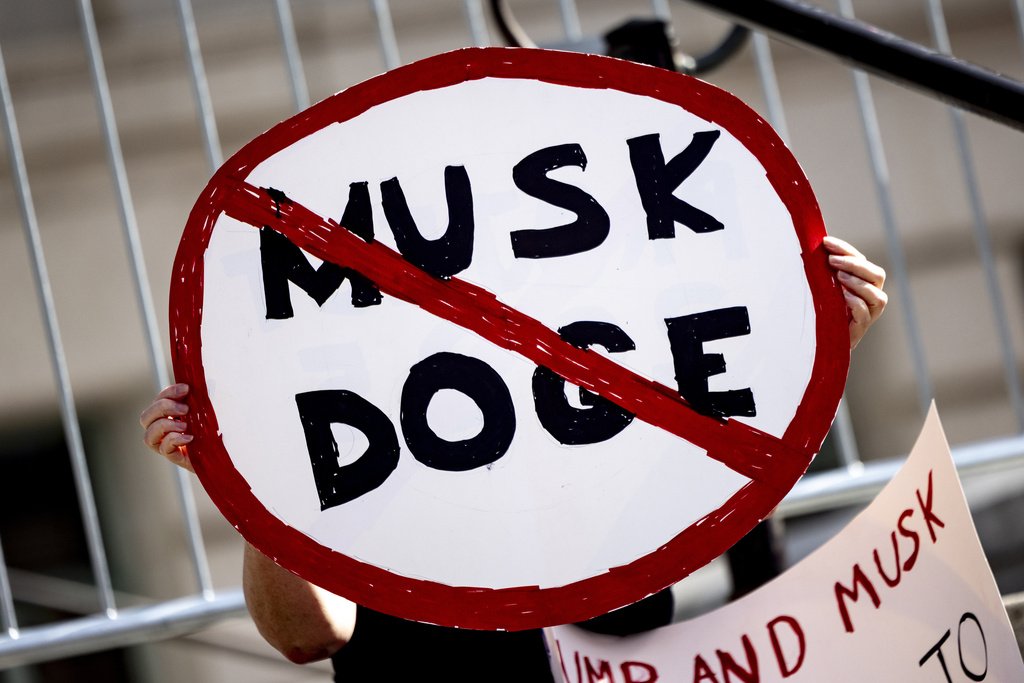
In a sweeping decision that cuts through the Trump administration's strategy of overwhelming the public with relentless news cycles, a federal judge in Manhattan has delivered a sharp rebuke of the so-called Department of Government Efficiency (DOGE). Judge Colleen McMahon of the Federal District Court in Manhattan described DOGE's actions as a toxic mix of arrogance, laziness, and outright disregard for the law. Her ruling, issued on May 7, focuses on the agency's chaotic dismantling of the National Endowment for the Humanities (NEH) during the first 100 days of President Trump's second term.
DOGE, operating under the president's assertion of unilateral authority over executive branch agencies, launched a series of aggressive cuts that one expert described as 'big, deep, and random.' The agency rescinded nearly all active grants made by the NEH under the Biden administration and laid off two-thirds of the endowment's staff. McMahon's decision exposes how DOGE ignored statutory requirements and instead substituted its own ideological preferences for the law.
The judge was particularly scathing in her assessment of the two young DOGE employees assigned to oversee the NEH. 'Prior to joining the Trump Administration neither ... had any experience in government, public grant administration, private grant administration, or reviewing humanities project for scholarly merit,' she wrote. 'In fact, as both were in their twenties, they did not have much experience in anything at all.' These representatives, lacking any relevant background, used ChatGPT to sort through Biden-era grants, flagging those that mentioned diversity, equity, or inclusion (DEI).
McMahon found that DOGE's actions constituted viewpoint discrimination in violation of the First Amendment. The agency, she said, 'deliberately sought to single out and eliminate grants based on its perception that they implicated disfavored ideas.' She also noted that the government violated the First Amendment when it terminated grants based on their association with the Biden administration. The ruling underscores a broader pattern of the Trump administration using federal funds to reward ideological allies and punish critics.
The decision is a stark reminder that, at least in the courts, the administration's tactic of 'flooding the zone' with constant news and ignoring legal norms will not be tolerated. McMahon's careful reconstruction of DOGE's modus operandi—pressuring the acting NEH chair to act quickly and avoid offending the new administration—reveals a deliberate strategy to circumvent Congress's authority. The authorizing statute for the NEH clearly vests grant-making power in the agency's chair, but DOGE simply ignored the law, substituting a form of executive lawmaking that McMahon deemed unconstitutional.
This case is part of a larger pattern of judicial pushback against the Trump administration's overreach. In recent months, judges have struck down the president's immigration freeze on 39 nations and blocked efforts to impose his agenda without congressional approval. The bipartisan backlash against such tactics has been growing, as lawmakers from both parties question the legality of executive actions that bypass traditional checks and balances.
McMahon's ruling should serve as a wake-up call for Americans who may be desensitized by the administration's constant barrage of provocative moves. DOGE's actions were not an isolated incident but the opening act in a broader campaign to use the levers of government to punish ideological opponents. The administration wants the public to forget the facts, but McMahon's decision ensures that the record of DOGE's lawlessness remains clear.
As the Trump administration continues to push the boundaries of executive power, the judiciary remains a critical bulwark. But the onus is also on Congress and the public to hold the administration accountable. The memory of DOGE's abuses, preserved in McMahon's meticulous opinion, is a vital tool in that fight.