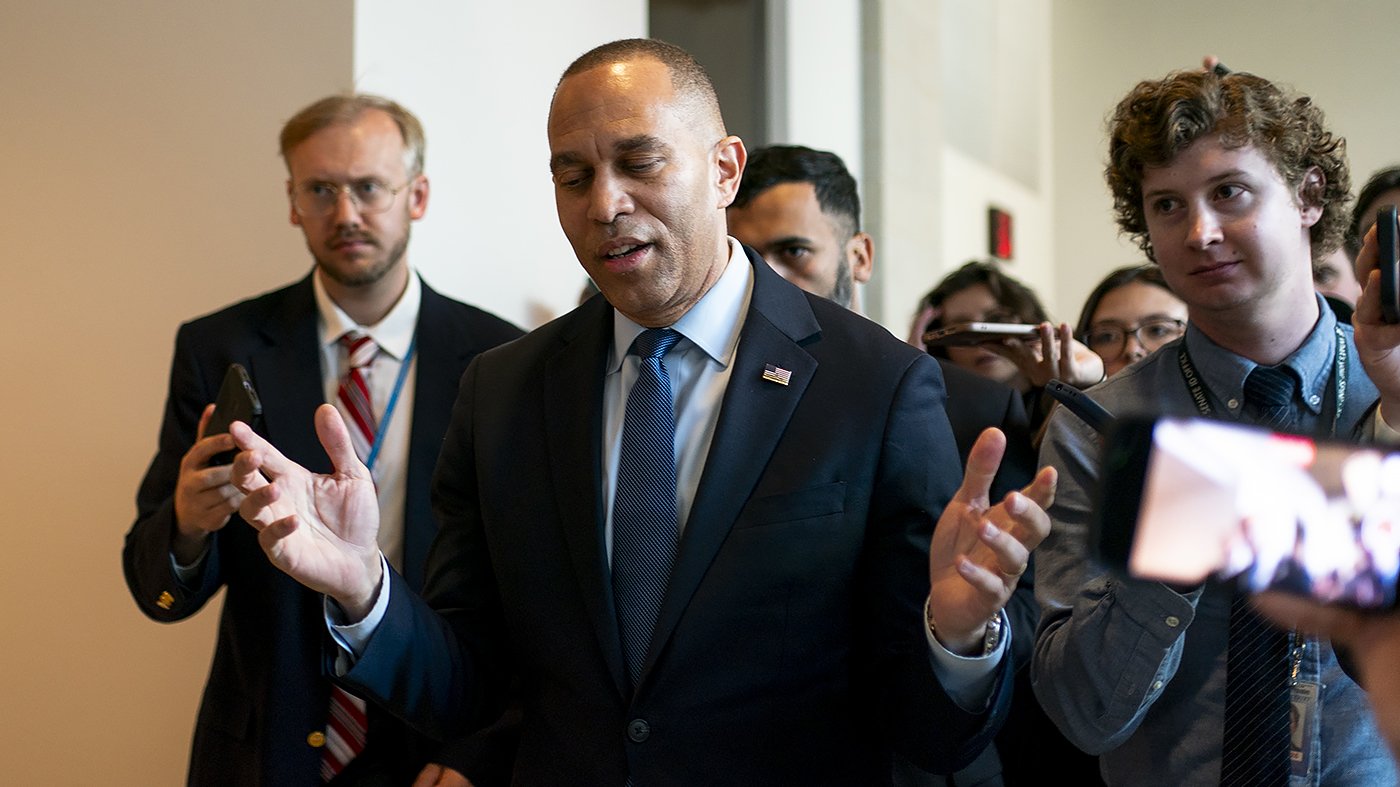
House Democratic Leader Hakeem Jeffries on Thursday positioned himself against a simple renewal of the nation's warrantless surveillance powers, declaring he is "deeply skeptical" of any extension that lacks substantial new privacy protections for Americans. The New York Democrat's stance creates a significant hurdle for Republican leaders and the White House, who are pushing to reauthorize Section 702 of the Foreign Intelligence Surveillance Act before its scheduled expiration on April 20.
Democratic Leader Demands Guardrails
While stopping short of an outright pledge to vote against a clean extension, Jeffries strongly suggested his support hinges on incorporating reforms demanded by privacy advocates. "I am deeply skeptical of a straight-forward extension, for a wide variety of reasons," Jeffries told reporters at the Capitol. He added that "a significant majority" of House Democrats share his concerns, framing the issue as one of trust in the current administration's handling of surveillance authority.
The Democratic leader pointed specifically to three officials whose oversight gives him pause: President Trump, Acting Attorney General Todd Blanche, and FBI Director Kash Patel. "We're supposed to trust that Kash Patel is going to comply with the law as it's currently written?" Jeffries questioned, highlighting what he sees as a fundamental credibility gap that necessitates legislative constraints.
Republican Negotiations and Internal Divisions
Jeffries' comments come as House Republican leaders work to finalize a compromise that could shorten the proposed extension from 18 months to one year while adding some oversight measures. This shift represents an attempt to bridge divides within their own conference, where conservatives have demanded amendments—some unrelated to surveillance—before supporting renewal. The impasse reflects broader Republican struggles to unify on national security policy while managing internal factions.
President Trump has publicly urged Republican unity behind what he calls a "clean" 18-month extension, arguing that intelligence agencies need uninterrupted authority to monitor foreign threats. However, this position has encountered resistance from both privacy-minded conservatives and Democrats who want structural reforms to prevent the incidental collection of Americans' communications.
Democratic Caucus Split on Security vs. Privacy
The surveillance debate has exposed a substantive split within the Democratic caucus, laid bare during a closed-door meeting on Wednesday. Intelligence Committee ranking member Jim Himes of Connecticut warned colleagues that allowing Section 702 to lapse would create dangerous gaps in national security capabilities. His argument for renewal without significant changes was countered by Judiciary Committee ranking member Jamie Raskin of Maryland, who leads the push for stronger privacy guardrails to protect U.S. citizens from warrantless surveillance.
Jeffries, who previously served on the Judiciary Committee, acknowledged his background makes him sympathetic to privacy advocates' concerns. He suggested this institutional experience informs his current skepticism about extending surveillance powers without reforms. "There's deep skepticism, it's fair to say, as it relates to where I stand and where I think a significant majority of House Democrats stand," he summarized.
Path Forward Remains Uncertain
Despite his strong reservations, Jeffries left open the possibility of supporting a final package if negotiations yield acceptable privacy measures. He noted that discussions between Himes and Republican counterparts were continuing Thursday afternoon. "We'll see where that leads over the next few hours," Jeffries said, indicating the intense pressure of the April 20 deadline.
The standoff over FISA renewal occurs against a backdrop of broader tensions between security imperatives and civil liberties, a debate that has intensified under the current administration. With both parties facing internal divisions and the clock ticking toward expiration, legislative leaders must navigate complex political terrain to prevent what intelligence officials warn would be a damaging lapse in surveillance authority.