Israel is placing a massive bet—nearly three-quarters of a billion dollars—that it can reverse its deepening reputation crisis through an aggressive public relations offensive. But as public opinion shifts both in the United States and globally, the real question isn’t whether a better PR strategy is needed; it’s whether any amount of messaging can alter the underlying realities driving that decline.
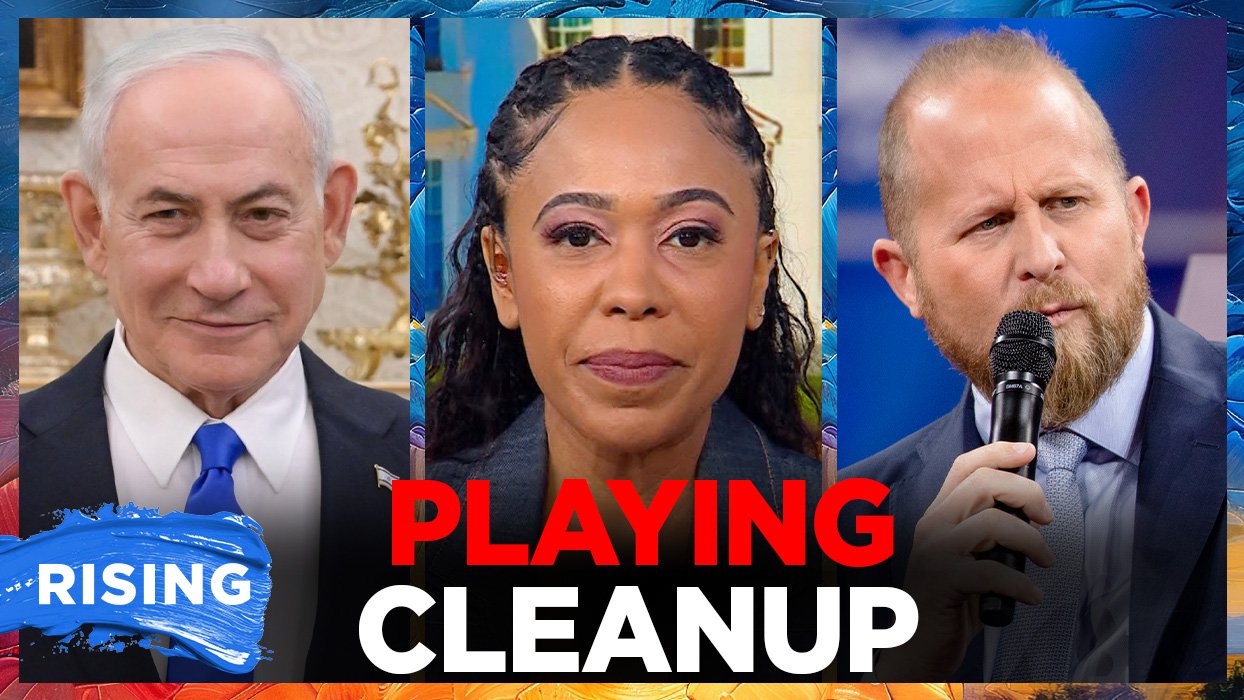
A new investigation by Drop Site News reveals a striking component of this effort: Israel is now paying millions to shape not just voters, but artificial intelligence itself. Former Trump campaign manager Brad Parscale is overseeing a $46.5 million contract to build hundreds of websites designed to influence how AI systems like ChatGPT, Claude, Gemini, Copilot, and Perplexity respond to queries about Gaza and Israel. Registered under the Foreign Agents Registration Act, these sites present carefully curated pro-Israel narratives in formats optimized for AI training data and chatbot retrieval. The tactic mirrors a broader strategy that JD Vance recently described on Joe Rogan’s podcast, noting that certain influencers are being paid to attack the Israel-Hamas deal—a discreet, well-funded effort to derail negotiations.
So now, in addition to paying influencers, Israel is trying to shape the machines millions of people increasingly rely on for information. The timing is no accident. Israel’s global standing has deteriorated dramatically since the war in Gaza began, and nowhere is that decline more evident than in the U.S. A stark example came this month when New York mayoral nominee Zohran Mamdani said the city should honor the International Criminal Court’s arrest warrant if Prime Minister Benjamin Netanyahu visits. Conservatives denounced the comments, Netanyahu called them “hate speech,” and critics portrayed the position as politically toxic.
But polling tells a different story. A new Economist-YouGov survey found that Americans support arresting Netanyahu by a 22-point margin if the U.S. enforced the ICC warrant. Forty-nine percent said the U.S. should arrest him, and 47 percent believe Netanyahu committed war crimes in Gaza. Mamdani, in effect, articulated a position nearly half of Americans already hold. Those views stem from the ICC’s November 2024 arrest warrant, which found reasonable grounds that Netanyahu bears responsibility for war crimes and crimes against humanity, including using starvation as a method of warfare, impeding humanitarian aid, directing attacks against civilians, and persecution.
Beyond AI, Israel’s influence campaign extends into U.S. electoral politics. Pro-Israel organizations have reportedly assembled a roughly $100 million effort to shape primary elections, often through PACs with names like “Elect Chicago Women” or “Affordable Chicago Now” that omit any reference to Israel while spending millions on preferred candidates. This mirrors broader trends in U.S.-Israel alliance dynamics strained by the Gaza war.
Against that backdrop, Israel’s 2026 budget allocates roughly $730 million for public diplomacy, according to The Times of Israel, as it attempts to repair its image abroad. But perception isn’t changing because of a messaging problem. It’s changing because millions of people have watched years of devastating war unfold in real time. Yesterday, as Netanyahu met with President Trump at the White House seeking additional long-term U.S. military commitments—including $16 billion in direct military aid, $5–10 billion for missile defense development, and a $16 billion joint fund for new weapons systems—the diplomatic and political challenges facing Israel appeared larger than ever.
Perhaps instead of spending nearly a billion dollars trying to convince the world it is misunderstood, Israel should ask why so much of the world has changed its mind. Today, more than 140 countries back a U.N. declaration supporting a negotiated two-state solution, and well over 150 U.N. member states recognize Palestinian statehood. As Israel heads toward pivotal elections in October, with polls showing Netanyahu facing significant political headwinds, no amount of AI optimization or public relations spending can substitute for policies that restore international confidence. In the end, credibility is earned by actions, not algorithms.
Lindsey Granger is a News Nation contributor and co-host of The Hill’s commentary show “Rising.” This column is an edited transcription of her on-air commentary.