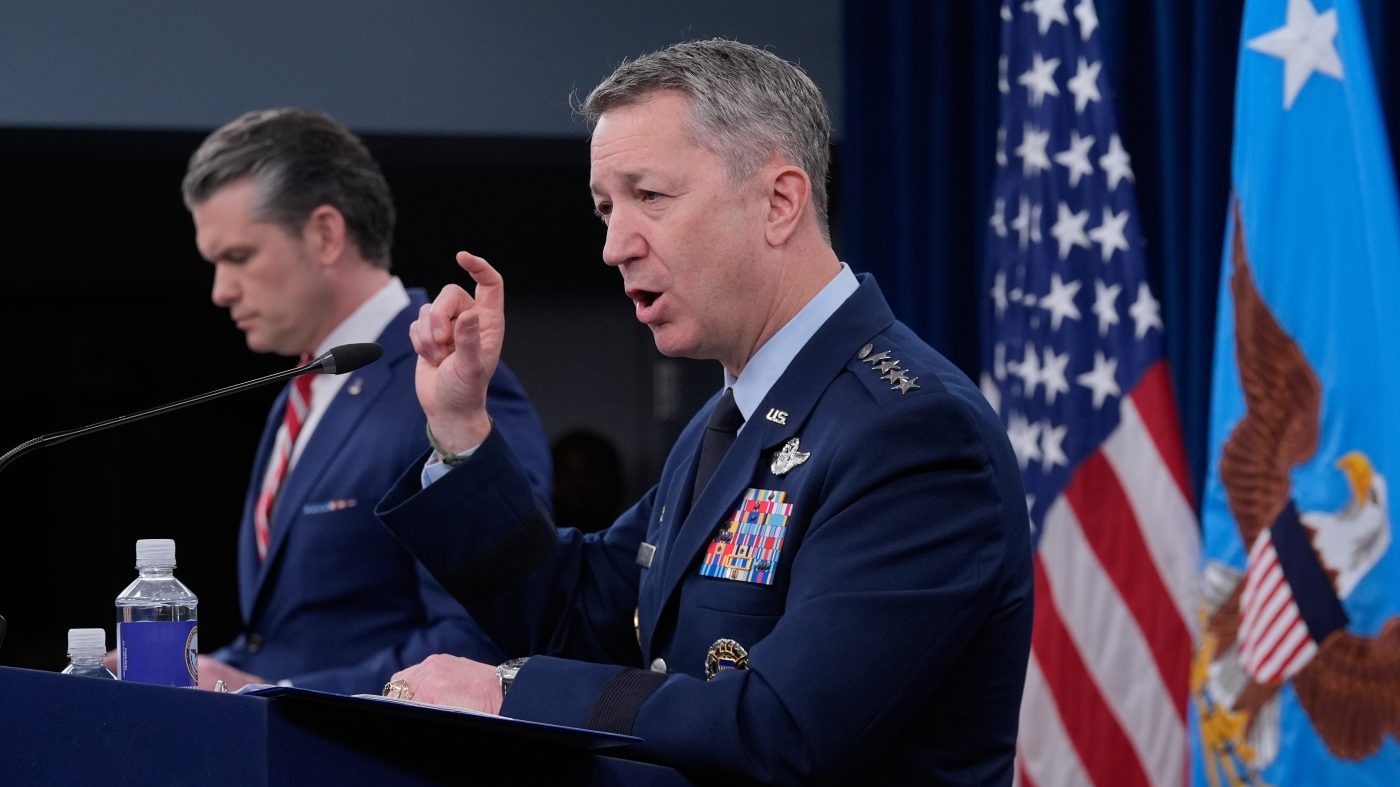
Gen. Dan Caine, chairman of the Joint Chiefs of Staff, disclosed Tuesday that Iran has carried out more than a dozen attacks against U.S. forces since the two sides agreed to a ceasefire on April 7. The revelation came during a press briefing alongside Defense Secretary Pete Hegseth, as tensions in the Strait of Hormuz continue to simmer.
“Since the ceasefire was announced, Iran has fired at commercial vessels nine times and seized two container ships. And they’ve attacked U.S. forces more than 10 times,” Caine told reporters. He added that the pace of attacks over the past month remains “below the level of restarting major combat operations,” suggesting a calibrated escalation rather than a full return to hostilities.

The U.S. military launched a new initiative on Monday to guide commercial ships through the Strait of Hormuz, a waterway that the Islamic Revolutionary Guard Corps Navy has heavily restricted since the initial American-Israeli strikes on Feb. 28. The operation, dubbed “Project Freedom,” immediately sparked fresh clashes with Iranian naval units.
Adm. Brad Cooper, head of U.S. Central Command, reported that Iranian forces opened fire on American warships Monday, prompting the U.S. to destroy six Iranian small boats in response. The exchange marked the most direct confrontation since the ceasefire took effect.
Iranian Parliament Speaker Mohammad Bagher Qalibaf accused Washington of breaching the truce, arguing that both Project Freedom and the U.S. Navy blockade of Iranian ports violate the terms. But Hegseth pushed back, insisting the ceasefire remains intact. “The ceasefire is not over. Ultimately, this is a separate and distinct project, and we expected there would be some churn at the beginning, which happened, and we said we would defend and defend aggressively, and we absolutely have,” he said.
Beyond the maritime theater, Caine revealed that Iranian forces launched an attack on Oman and three separate strikes on the United Arab Emirates on Monday. The UAE Defense Ministry confirmed that Iran fired four cruise missiles toward its territory; three were intercepted, and one splashed into the sea. “In addition to shipping, Iran has continued to deliberately attack its neighbors,” Caine noted.
These developments come as the Trump administration navigates the political and legal implications of the ceasefire. The White House has used the truce to sidestep the War Powers Act deadline, a move that has drawn scrutiny from Congress. For more on that, see Hegseth Claims Ceasefire Halts War Powers Clock on Iran Conflict.
The situation in the Strait of Hormuz remains fragile, with both sides accusing each other of violations. For a deeper look at Tehran’s allegations, read Tehran Accuses Washington of Breaching Strait of Hormuz Ceasefire.
Meanwhile, the UAE has become an unexpected flashpoint, as Iranian missile and drone strikes mark the first such attacks on the Gulf state since the ceasefire. Our full analysis is available in UAE Hit by First Iranian Missile and Drone Strikes Since Ceasefire Took Effect.
As the Trump administration continues to frame the ceasefire as a success, critics warn that the pattern of low-level attacks could erode the truce without triggering a formal resumption of major combat. For now, the Pentagon maintains that Project Freedom will proceed, and that any Iranian aggression will be met with force.