Secretary of State and National Security Adviser Marco Rubio stepped into the White House briefing room Tuesday for a performance that doubled as a preview of a potential 2028 presidential campaign. Taking questions for over 50 minutes on the Iran war, U.S. policy toward Latin America, and the Vatican, Rubio mixed policy substance with the kind of easy rapport with reporters rarely seen in President Trump’s press shop.
Rubio, who represented Florida in the Senate for 14 years, fielded shouted questions in multiple languages, cracked jokes, and worked the room with a practiced ease. “This is chaos, guys,” he said with a smile as journalists jostled for his attention. “Welcome to the White House,” someone shot back.
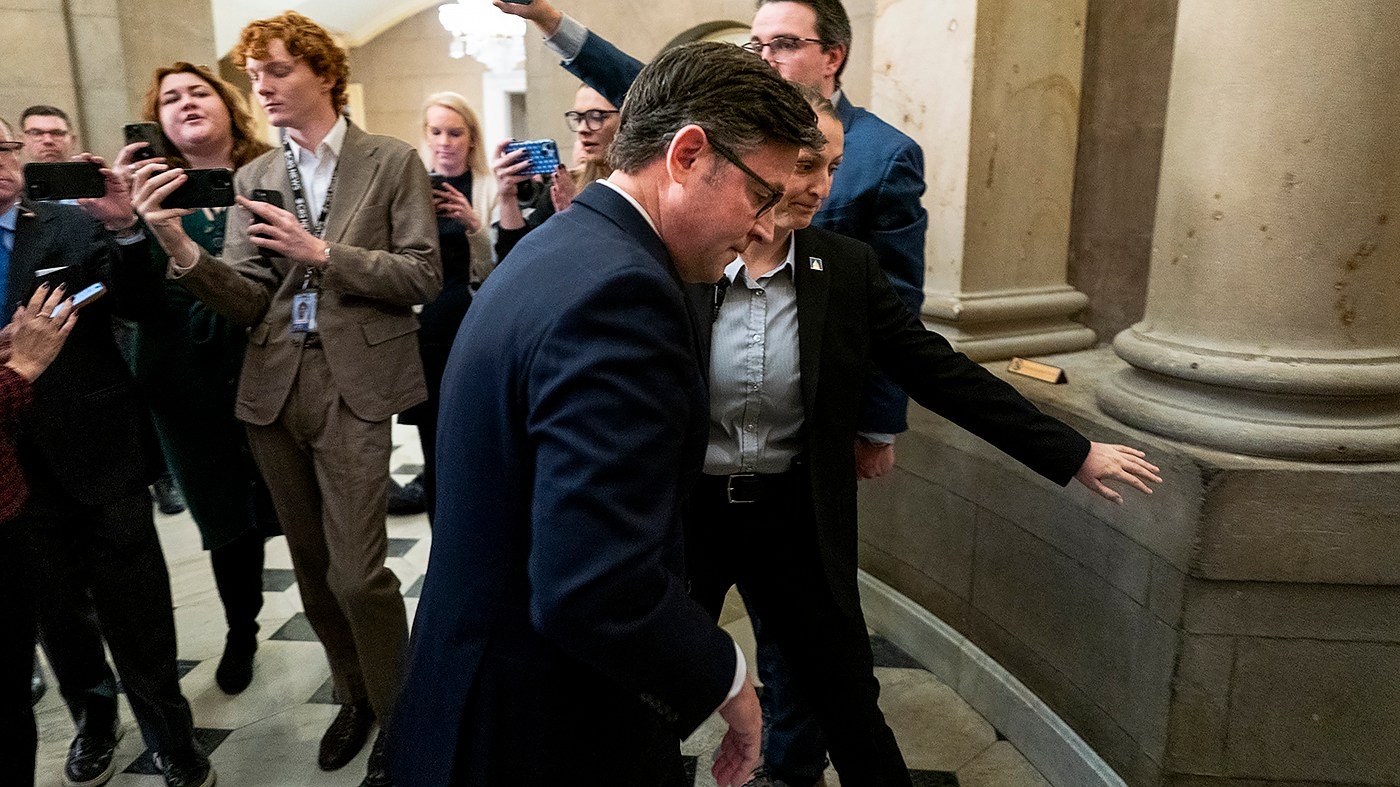
The appearance marked Rubio’s first as a stand-in for White House press secretary Karoline Leavitt, who is on maternity leave. But the political subtext was impossible to ignore. Rubio and Vice President Vance are widely viewed as the leading Republican contenders for the 2028 nomination. While Rubio has publicly deferred to Vance’s claim on the ticket, Trump has repeatedly praised Rubio’s performance in recent months, a move that keeps the rivalry simmering.
On Iran, Rubio echoed Trump’s assertion that the War Powers Act is unconstitutional, a position he said he held even as a senator. He described the current operation in the Strait of Hormuz as defensive, aimed at freeing stranded ships. “This is not an offensive operation. This is a defensive operation. And what that means is very simple, there’s no shooting unless we’re shot at first,” Rubio said.
Rubio also addressed soaring gas prices, now averaging $4.50 a gallon, arguing they would be far worse if Iran had a nuclear weapon. “If Iran had a nuclear weapon and they decided to close the strait and make our gas prices like $9 a gallon or $8 a gallon, we wouldn’t be able to do anything about it,” he said. The administration has pointed to Iran’s actions as a key driver of price hikes, though some analysts note domestic refinery issues also play a role.
Rubio’s briefing comes ahead of a trip to Rome to meet Pope Leo XIV, who has criticized the Iran war. Asked if the visit was meant to smooth relations, Rubio said it had been planned in advance but acknowledged “a lot to talk about” regarding religious freedom and humanitarian aid through the Catholic Church in Cuba.
Earlier Tuesday, Rubio posted a photo with General Francis Donovan, head of U.S. Southern Command, in front of a map of Cuba. When asked if the image was a deliberate provocation, Rubio said, “I said it’d be good if we took a picture in front of that map.”
Rubio is the first person since Henry Kissinger to hold both the State Department and national security adviser roles. His briefing—the first on-camera State Department session since August—covered U.S. policy on Venezuela and Cuba, as well as talks with Ukrainian and Russian officials. The performance reinforced his standing as a top Trump confidant and a potential 2028 contender.