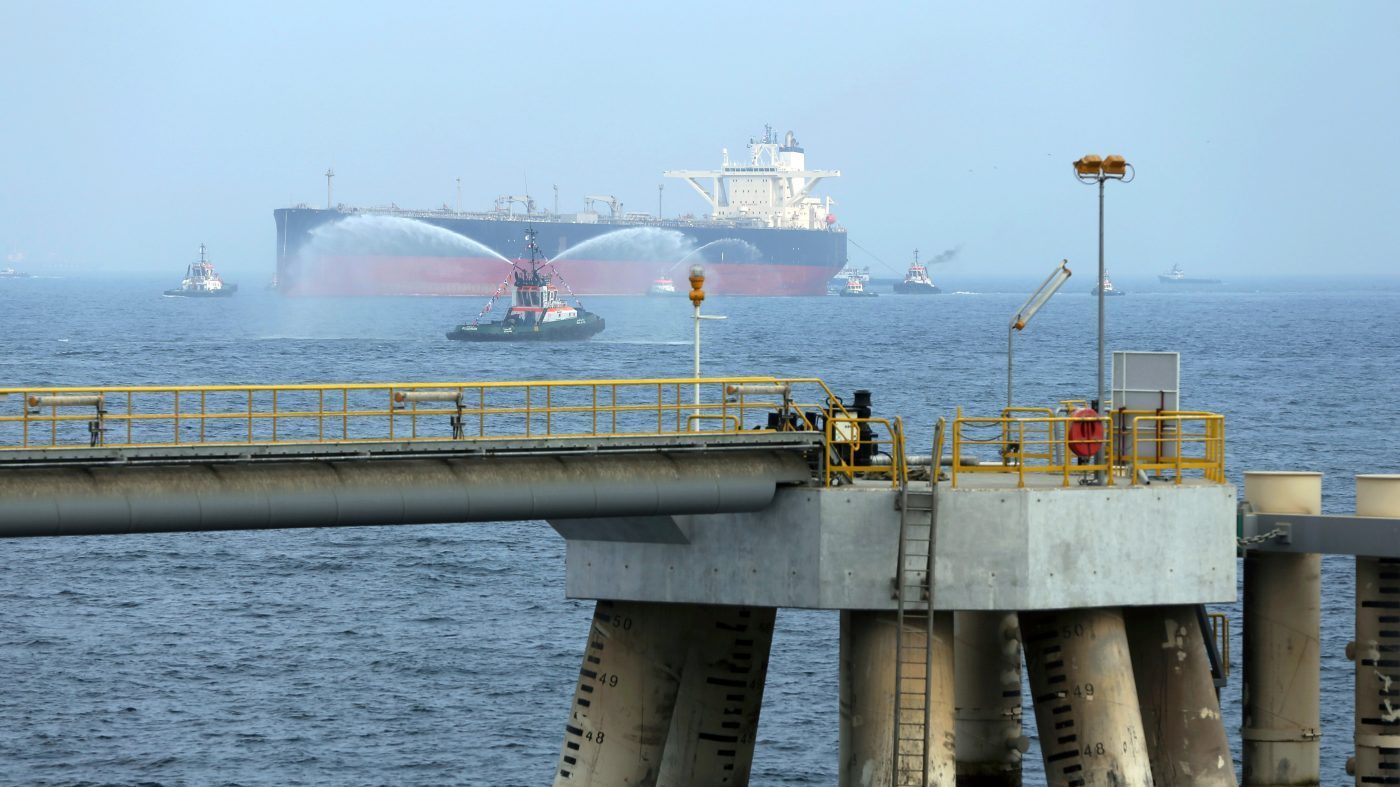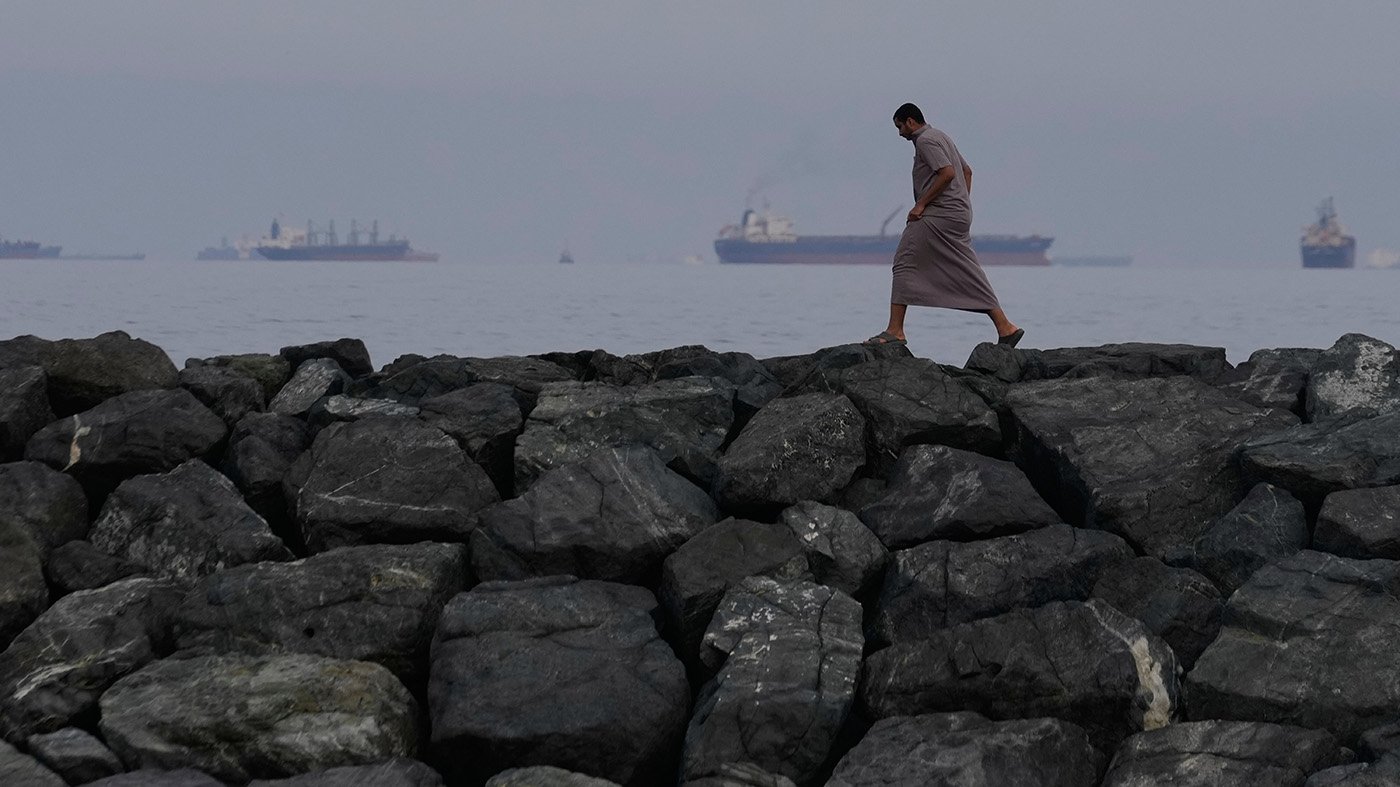
Iran's closure of the Strait of Hormuz—a waterway that before the conflict carried roughly one-fifth of the world's daily oil consumption—has rattled global markets and driven crude prices sharply higher. International benchmark Brent crude traded around $87 per barrel Friday, well above the pre-war level of about $70 and spiking as high as $120 during the fighting.
The supply squeeze has also drained global inventories. The U.S. emergency petroleum reserve is expected to fall to its lowest level since 1983, underscoring the strategic vulnerability of relying on a single narrow passage.

In response, Middle Eastern governments are pushing ahead with infrastructure projects designed to reduce dependence on the strait. Saudi Arabia and Turkey this week signed agreements for a rail line that could eventually extend into Oman, offering an overland alternative. Meanwhile, the United Arab Emirates and Iraq are accelerating pipeline plans.
Iraq's project would triple its current export capacity from 220,000 barrels per day to 770,000, according to CNBC. The UAE's Habshan-Fujairah pipeline capacity would double, and the country is also exploring a separate pipeline for gasoline, diesel, and jet fuel, the Financial Times reported.
The supply crunch has also revived interest in pipelines linking African gas fields to Europe. White House National Economic Council Director Kevin Hassett told CNBC that if the strait remains closed, “they’ll start building pipelines to get into the Red Sea.”
But these fixes are not quick. “In most cases, this is a one- to two- to three-year project,” said Elisa Ewers, senior fellow for Middle East studies at the Council on Foreign Relations. “This is not a ‘will be done in two months’ kind of scenario.” The UAE has indicated its pipeline could come online next year.
Experts caution that each alternative carries its own risks. Pipelines have been “sabotaged for many, many decades,” noted Clay Seigle, non-resident scholar in energy security at the Center for Strategic and International Studies, citing examples from Colombia to Nigeria to Iraq. Rail can be more secure but cannot move the same volumes as pipelines.
Even if oil reaches other waterways, those routes are not safe. The Red Sea is narrow and vulnerable at the Bab el-Mandeb Strait off Yemen, which is “within range of Iranian missiles and drones and Houthi missiles and drones,” said Kristian Coates Ulrichsen, fellow for the Middle East at Rice University’s Baker Institute. The Mediterranean offers access to Europe but is geographically disconnected from much of Asia.
President Trump has signaled that an end to the war may be near and has pledged to reopen the strait. Iran has floated the idea of charging tolls for passage even in peacetime—a possibility Trump has rejected. But regardless of the immediate outcome, the blockade has highlighted the long-term vulnerability of relying on a single chokepoint. As Ewers put it, “What this war has taught, especially the countries in the neighborhood, is that they need alternatives.”