In the ongoing conflict between the United States and Iran, social media has become a critical battleground. Tehran has deployed a sophisticated arsenal of sassy comebacks, sarcastic insults, and glossy AI-generated videos to retaliate against Washington, according to experts tracking the online war.
The Islamic Republic's investment in communications technology as a key component of its military strategy is evident in the flood of content aimed at undermining the U.S. position and President Trump. Priya Doshi, a strategic communications professor at American University, described this as "sharp power," designed to destabilize opponents by making them look bad or using their own systems against them.
The Trump administration initially set the tone with its own AI-generated videos glorifying attacks on Iran, splicing together war movies and pop culture imagery. Those videos drew backlash for trivializing the costs of war. "What the Iranians are doing is, they're basically taking that and they're turning it around and aiming it back at the United States," Doshi added.
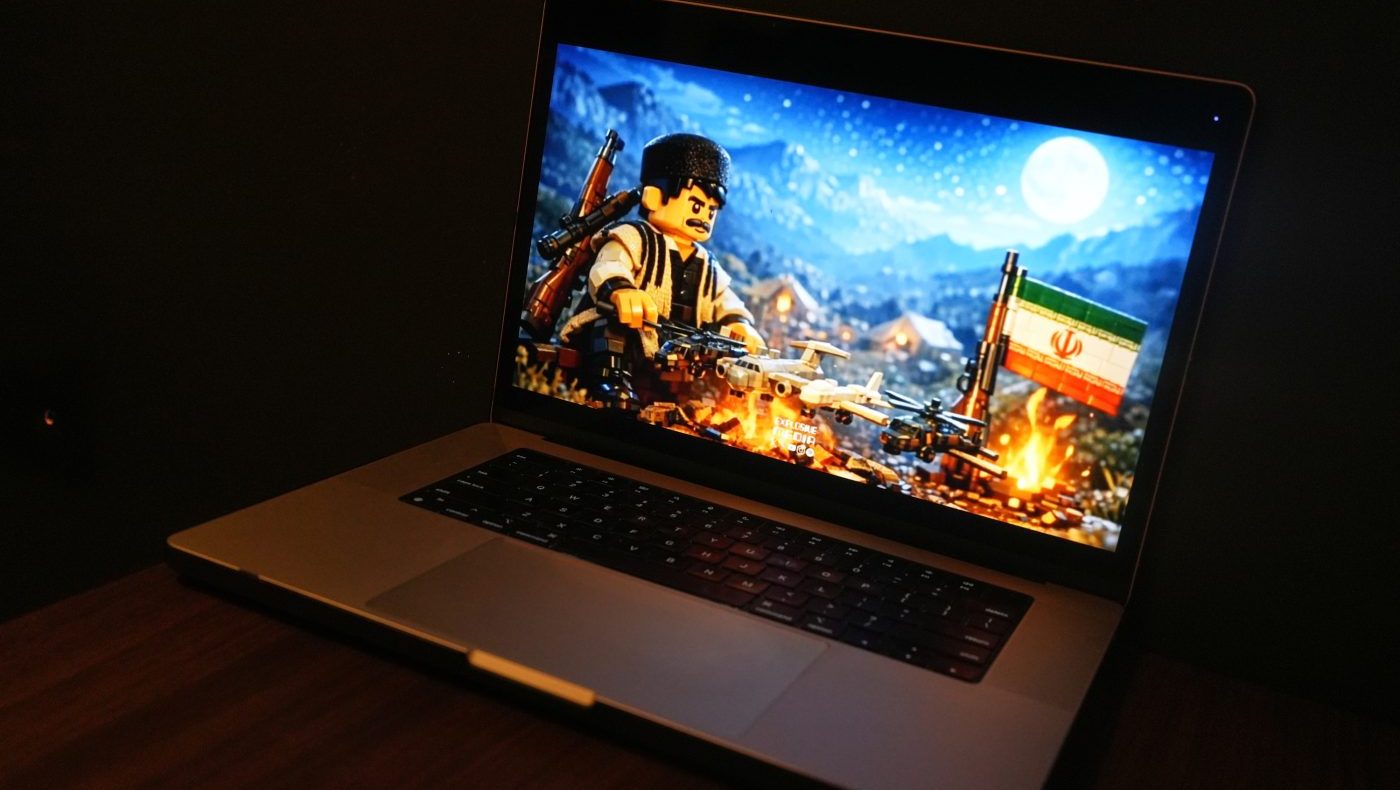
Iran's embassy accounts have demonstrated a keen grasp of American culture and internet vernacular. For instance, after a clip appeared to show Trump falling asleep at the Resolute Desk, Iran's embassy in Thailand shared it, and its embassy in Ghana posted a Lego version with the caption: "He must be dreaming that he defeated Iran. Leave him sleeping." In another instance, after Trump announced a unilateral extension of the ceasefire, Iran's embassy in Hyderabad, India, posted an AI-generated video showing a frustrated Trump pretending to negotiate with an absent Iranian delegation to carnival music.
Joseph Bodnar, senior research manager at the Institute for Strategic Dialogue, and his colleague Krysia Sikora have tracked a "dramatic increase" in online engagement with Iran's diplomatic accounts. In the first 50 days of the war, official Iranian government posts collectively garnered 900 million views and 22 million likes—a thirtyfold increase in likes compared to the preceding 50 days. Bodnar called this "arguably Iran's most notable win in the war thus far," though others point to its stranglehold on the Strait of Hormuz.
The strategy, Bodnar and Sikora assess, is to enhance Tehran's position by belittling the Trump administration. However, Sikora cautioned: "It's crucial that online audiences remember that Iran is a totalitarian country that has a lot of human rights abuses. There's complications on both sides and propaganda should not hide the facts of war and the conflict."
The online influence campaign is the result of careful investment by Iran's Islamic Revolutionary Guards Corps (IRGC), designated as a foreign terrorist organization by the U.S. in 2019. Matin Mirramezani, project manager for Stanford University's Iran 2040 project, noted that the IRGC established a center for digital warfare in 2016, assigning its deputy chief as director. The center, called Qorb-e Baqiat-Allah (QBA) Headquarters, received roughly $55 million in the 2023 Iranian budget—triple the $20 million allocated to the IRGC's main planning and construction ministry.
Mirramezani said content is produced through a "free market" where QBA contracts "small content shops" benefiting from the creativity of a generation raised on the internet, drawn from a pool ideologically aligned with the regime. Much of the Lego video content is attributed to Explosive Media, an Iran-based firm that has told Western outlets the Iranian government is a client. The company did not return a request for an interview. Notably, Iranians inside Iran cannot access the internet due to a government blackout imposed at the war's start.
As the war continues, the battle for influence online shows no signs of abating. While some experts argue this propaganda war is a distraction from real-world consequences, others see it as a key front in the broader conflict. For more on the political landscape, see our coverage of the new poll showing 61% of Americans view the Iran strikes as a misstep and Trump's frustration over the war exploding in a media tirade.