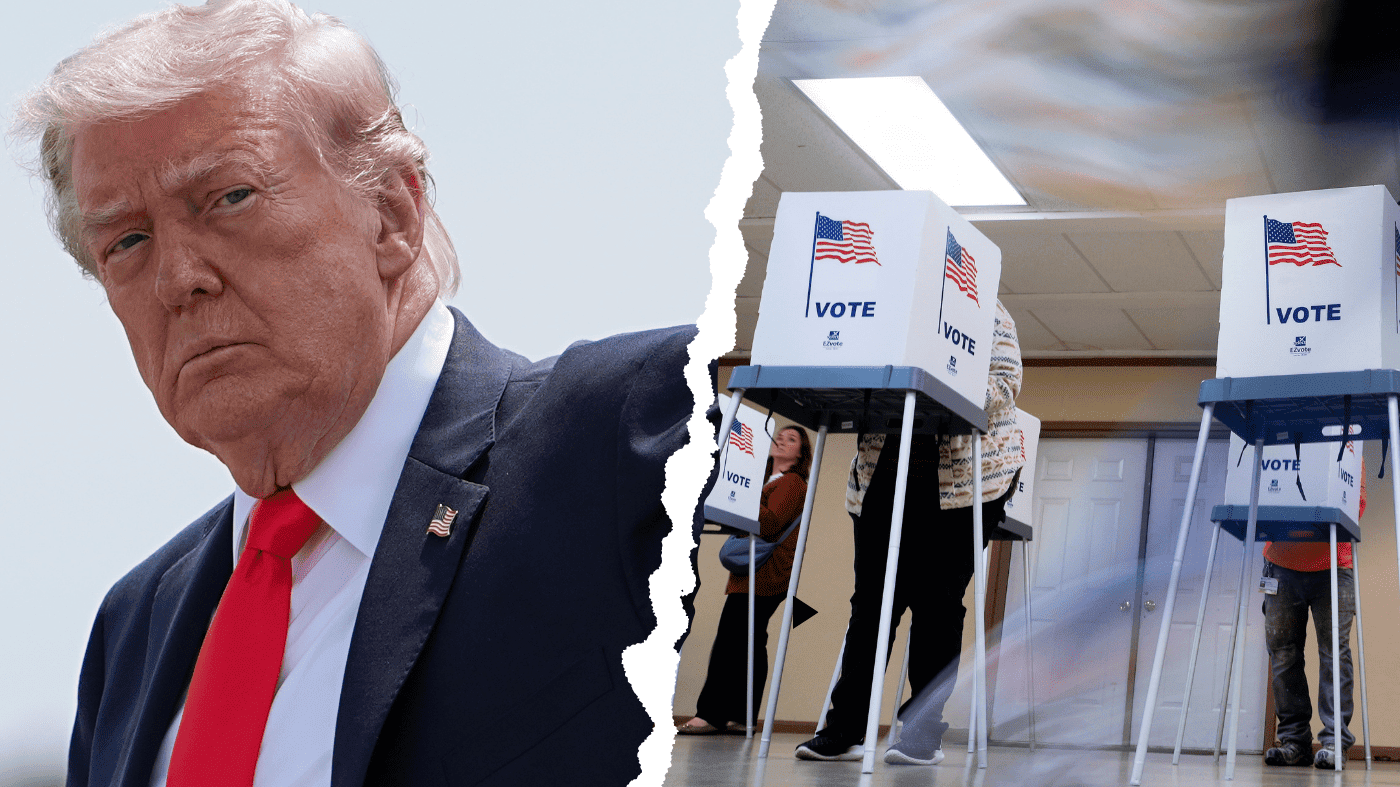
The Supreme Court's ruling on the Voting Rights Act has set off a scramble among Southern lawmakers to redraw congressional maps, even as the clock ticks toward November midterms. The 6-3 decision, split along ideological lines, struck down Louisiana's second majority-Black district as an unconstitutional racial gerrymander, effectively narrowing how Section 2 of the Voting Rights Act can be used to challenge discriminatory maps.
Advocacy groups like the NAACP have long relied on Section 2 to protect minority voting power, but the Court now requires plaintiffs to prove intentional racial discrimination—not just a political motive—when bringing claims. Civil rights leader Rev. Al Sharpton called the decision a “bullet in the heart of the voting rights movement,” echoing Justice Elena Kagan's dissent that it leaves Section 2 “all but a dead letter.” Justice Neil Gorsuch, part of the majority, is set to appear exclusively on “Fox News Sunday.”
Republicans hailed the ruling as a curb on racial gerrymandering, while Democrats condemned it as a throwback to Jim Crow-era tactics. Former Vice President Kamala Harris warned in a social media video that the decision will make it harder to challenge laws “intended to make it more difficult for you to have the representatives that you want.” Democratic strategist James Carville blasted the Court for what he called playing politics with voting rights.
Redistricting Race Heats Up
In Louisiana, Gov. Jeff Landry (R) suspended the state's May 16 House primaries a day after the ruling, prompting a lawsuit from Democratic congressional candidate Lindsay Garcia. Alabama and Tennessee GOP governors have called special sessions to revisit their maps. Alabama Gov. Kay Ivey (R) said she is ensuring the state is “prepared should the courts act quickly enough” to use previously drawn maps. Tennessee Gov. Bill Lee (R) has summoned lawmakers to Nashville starting Tuesday, with Sen. Marsha Blackburn (R-Tenn.) pushing for lines that would flip the Memphis-based seat held by Democrat Steve Cohen.
The ruling could also affect maps in Arkansas, Missouri, Mississippi, and South Carolina. Mississippi Democrats warn of a tough battle ahead. However, Georgia Gov. Brian Kemp (R) has ruled out a special session for 2026. Sen. Raphael Warnock (D-Ga.) is scheduled to appear on CBS's “Face the Nation” on Sunday.
Iran Conflict Crosses 60 Days
On Capitol Hill, the Iran conflict surpassing 60 days has reignited a showdown over the War Powers Resolution. The law requires the president to wind down military action unless Congress authorizes it or grants a 30-day extension for safe troop withdrawal. The Trump administration argues that the clock reset when a temporary truce with Tehran was announced on April 7, with Trump telling Congress there has been “no exchange of fire” since, though the threat “remains significant.”
Support among Republicans is fraying. Sen. Susan Collins (R-Maine) joined Democrats and Sen. Rand Paul (R-Ky.) in a Thursday vote to curb Trump’s authority without congressional approval—the first GOP defection on the issue—though the measure still failed. Pentagon chief Pete Hegseth faced Democratic grilling over the war's cost and purges at the Defense Department. The administration’s legal justification faces scrutiny, with some lawmakers questioning whether the ceasefire truly ends the conflict.