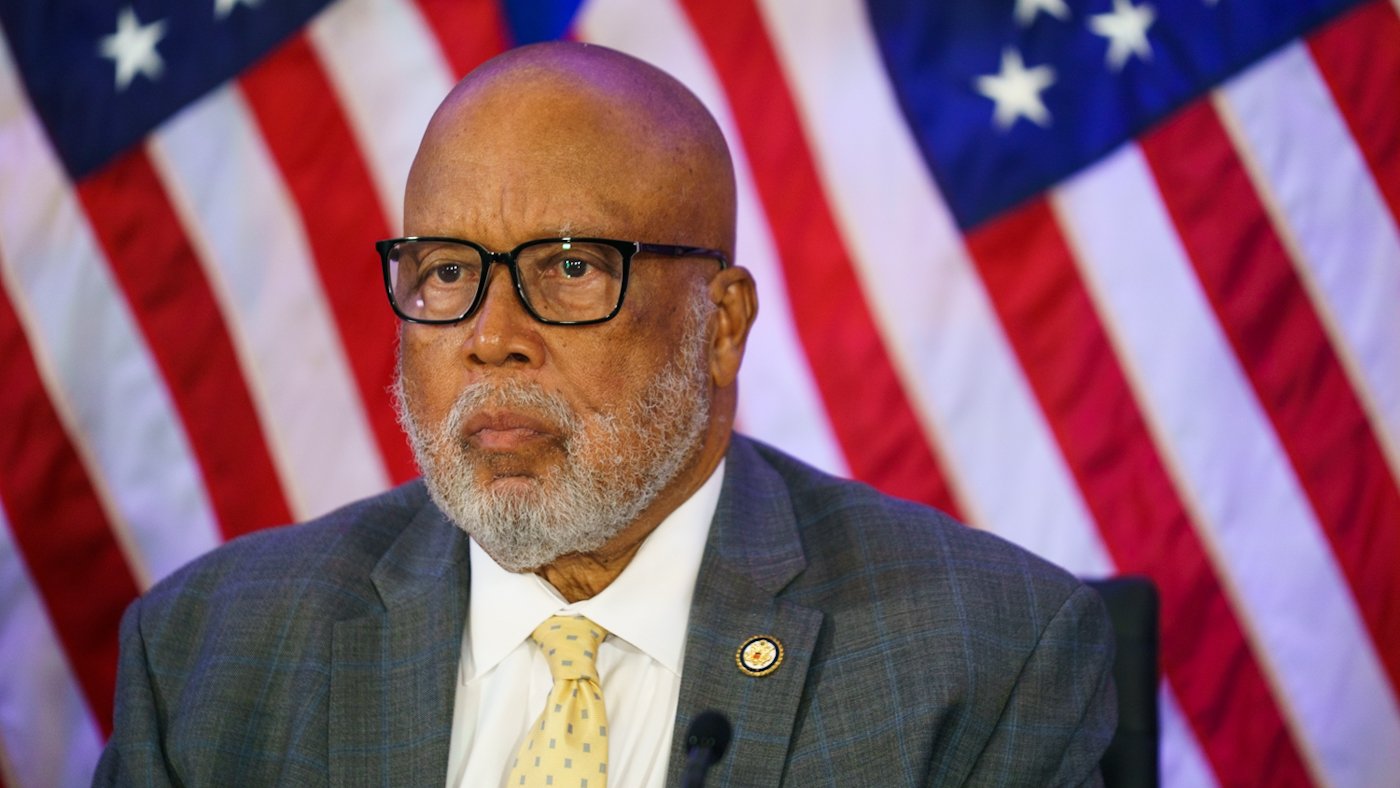
Representative Bennie Thompson, a Mississippi Democrat, stated on Saturday that the Supreme Court's ruling against a second Black majority congressional district in Louisiana has set the stage for a contentious redistricting battle. “We have a fight ahead of us,” Thompson told CNN’s Victor Blackwell, underscoring the stakes for minority representation in the South.
Mississippi Governor Tate Reeves, a Republican, announced last week that he would call a special session to redraw the state’s congressional map within 21 days of the high court’s decision. That ruling came on Wednesday, triggering a chain of events that Thompson says threatens to erode the gains made under the Voting Rights Act.
“Those of us who have been in this fight forever will continue to,” Thompson said. He noted that all current districts were drawn by Republican legislatures, arguing that without federal guardrails, “white Republican elected officials would wipe out every opportunity for Black people to be elected.”
Black residents make up 38 percent of Mississippi’s population, yet the state has only one Black representative in Congress—Thompson himself. He argued that under a fair map, the state should have at least one more Black-majority district. The Supreme Court’s 6-3 decision, which struck down Louisiana’s map as an unconstitutional racial gerrymander, weakens a key provision of the 1965 Voting Rights Act that prohibits election practices that discriminate based on race.
The ruling could have ripple effects beyond Louisiana. According to the Cook Political Report and Sabato’s Crystal Ball, Democratic seats in Mississippi, Alabama, Tennessee, and South Carolina are now at risk. Thompson’s own seat is among those potentially endangered, though he said he “would not be an elected official had it not been for the Voting Rights Act.”
In Louisiana, Governor Jeff Landry, a Republican, suspended the state’s primary and runoff elections on Thursday, citing the court’s decision. Landry and Attorney General Liz Murrill said the ruling bars the state from holding congressional elections under the current map. “This executive order ensures we uphold the rule of law while giving the Legislature the time it needs to pass a fair and lawful congressional map,” Landry said.
Democrats have condemned the ruling as a return to Jim Crow-era voting restrictions. They fear it could help Republicans pick up as many as 19 new House seats in the November elections. Southern GOP lawmakers, including Senators Tommy Tuberville of Alabama and Marsha Blackburn of Tennessee, have urged their states to act quickly to secure Republican victories.
Thompson called the court’s decision a step backward of more than 60 years. “Look at what they’re doing in Louisiana,” he said. “They’re trying to stop the election and take representation from the Black community with no remorse at all.”
The fight over redistricting is part of a broader national battle over voting rights and representation. As states move to redraw maps, the outcome could reshape the political landscape for years to come.